1992 · Los Angeles, USA
The Los Angeles riots began, sparked by the acquittal of police officers involved in the beating of Rodney King.
August 11, 1965
The Watts Riots begin in Los Angeles, California, lasting for six days.
Los Angeles, United States | Los Angeles Police Department
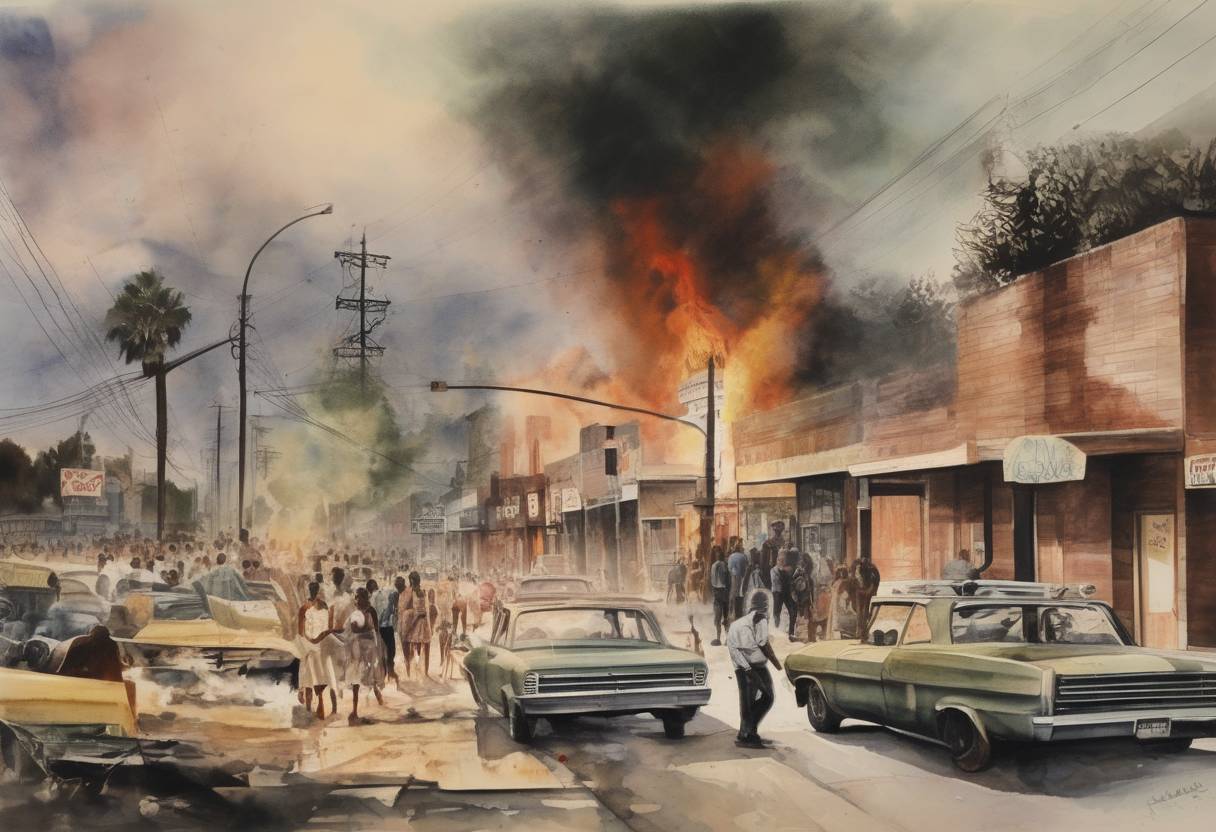
The Watts Riots, also known as the Watts Rebellion, began on August 11, 1965, in the Watts neighborhood of Los Angeles, California. This significant event in American history lasted for six days, from August 11 to August 17, and marked a pivotal moment in the civil rights movement, highlighting racial tensions and socio-economic disparities in urban America.
The Watts Riots were rooted in a complex mix of factors, including systemic racism, economic inequality, and police brutality. During the 1960s, African Americans in Los Angeles faced significant discrimination in housing, employment, and education. The Watts neighborhood, predominantly African American, was plagued by poverty and inadequate public services.
Tensions between the African American community and the Los Angeles Police Department (LAPD) were particularly high due to frequent incidents of racial profiling and police misconduct. These underlying issues set the stage for the unrest that would unfold in August 1965.
The immediate catalyst for the riots was the arrest of Marquette Frye, a 21-year-old African American man, by a white California Highway Patrol officer on suspicion of driving under the influence. The arrest took place on the evening of August 11, 1965, and quickly escalated into a confrontation involving Frye’s family and a growing crowd of onlookers.
As tensions rose, the situation spiraled out of control, leading to violent clashes between the police and community members. The unrest rapidly spread throughout the Watts neighborhood and beyond.
Over the next six days, the Watts Riots engulfed the area in chaos. Thousands of residents participated in the uprising, which involved widespread looting, arson, and clashes with law enforcement. The National Guard was eventually deployed to restore order.
The Watts Riots had a profound impact on the nation, drawing attention to the deep-seated racial and economic issues facing African American communities. The event prompted a reevaluation of urban policy and policing practices, leading to increased federal attention on civil rights and poverty.
In the broader context of the civil rights movement, the Watts Riots underscored the limitations of nonviolent protest and highlighted the frustrations of African Americans who felt marginalized and oppressed. The riots also influenced future urban uprisings and contributed to the rise of more militant voices within the movement.
The Watts Riots remain a significant chapter in American history, serving as a reminder of the ongoing struggle for racial equality and justice.
Source: en.wikipedia.org