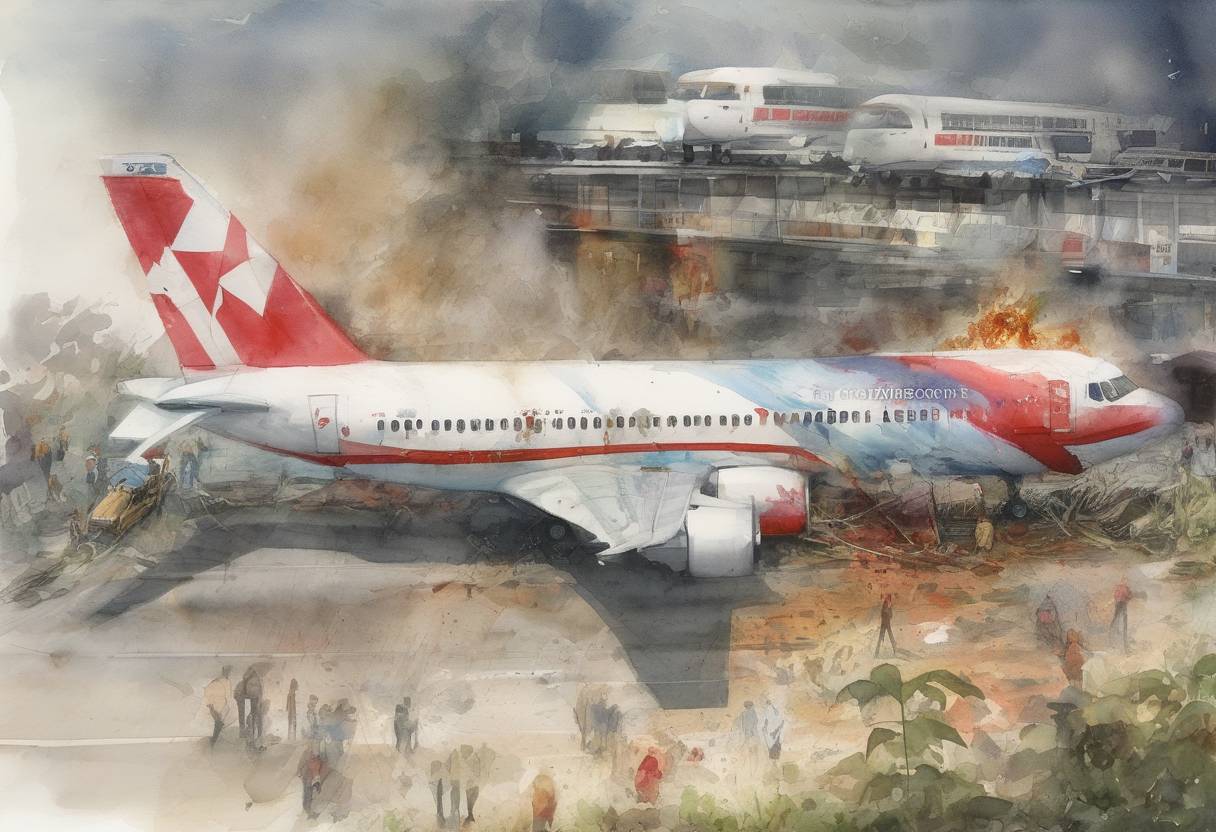
TAM Airlines Flight 3054 Crash - July 17, 2007
On July 17, 2007, TAM Airlines Flight 3054, an Airbus A320, tragically crashed while attempting to land at Congonhas Airport in São Paulo, Brazil. This catastrophic event resulted in the deaths of all 187 passengers and crew on board, as well as 12 individuals on the ground, marking it as the deadliest aviation accident in Brazil’s history.
Background
- Aircraft: The aircraft involved was an Airbus A320-233, registered as PR-MBK. It was operated by TAM Linhas Aéreas, Brazil’s largest airline at the time.
- Flight Details: The flight originated from Salgado Filho International Airport in Porto Alegre, Brazil, and was bound for Congonhas Airport, one of the busiest airports in Brazil, known for its short runways and challenging landing conditions.
Events Leading to the Crash
- Weather Conditions: On the day of the crash, São Paulo was experiencing rainy weather, which contributed to the wet runway conditions at Congonhas Airport.
- Runway Conditions: The main runway at Congonhas had recently been resurfaced, but the grooves that help drain water and improve aircraft traction had not yet been cut, leading to concerns about its safety during wet conditions.
The Crash
- Landing Attempt: As Flight 3054 attempted to land on runway 35L, it failed to decelerate properly. The aircraft veered off the runway, crossed a busy avenue, and collided with a TAM Express warehouse and a nearby gas station.
- Immediate Aftermath: The impact and subsequent fire resulted in the complete destruction of the aircraft and significant damage to the surrounding area.
Investigation and Findings
- Flight Data Analysis: The investigation, led by Brazil’s Aeronautical Accidents Investigation and Prevention Center (CENIPA), revealed that the right thrust reverser was deactivated, and the right engine was inadvertently set to takeoff power instead of idle during landing. This asymmetrical thrust caused the aircraft to veer off the runway.
- Contributing Factors: The lack of runway grooves and the wet conditions were identified as contributing factors to the aircraft’s inability to stop.
Aftermath and Consequences
- Regulatory Changes: The crash prompted significant scrutiny of airport safety standards in Brazil. It led to improvements in runway maintenance and operational procedures at Congonhas and other airports.
- Public and Political Reaction: The disaster sparked public outrage and led to calls for accountability and improvements in aviation safety standards across the country.
Broader Historical Significance
The TAM Airlines Flight 3054 crash highlighted critical issues in aviation safety, particularly concerning runway conditions and aircraft operation protocols. It underscored the importance of rigorous safety standards and the need for continuous improvements in aviation infrastructure and regulatory oversight to prevent similar tragedies in the future.