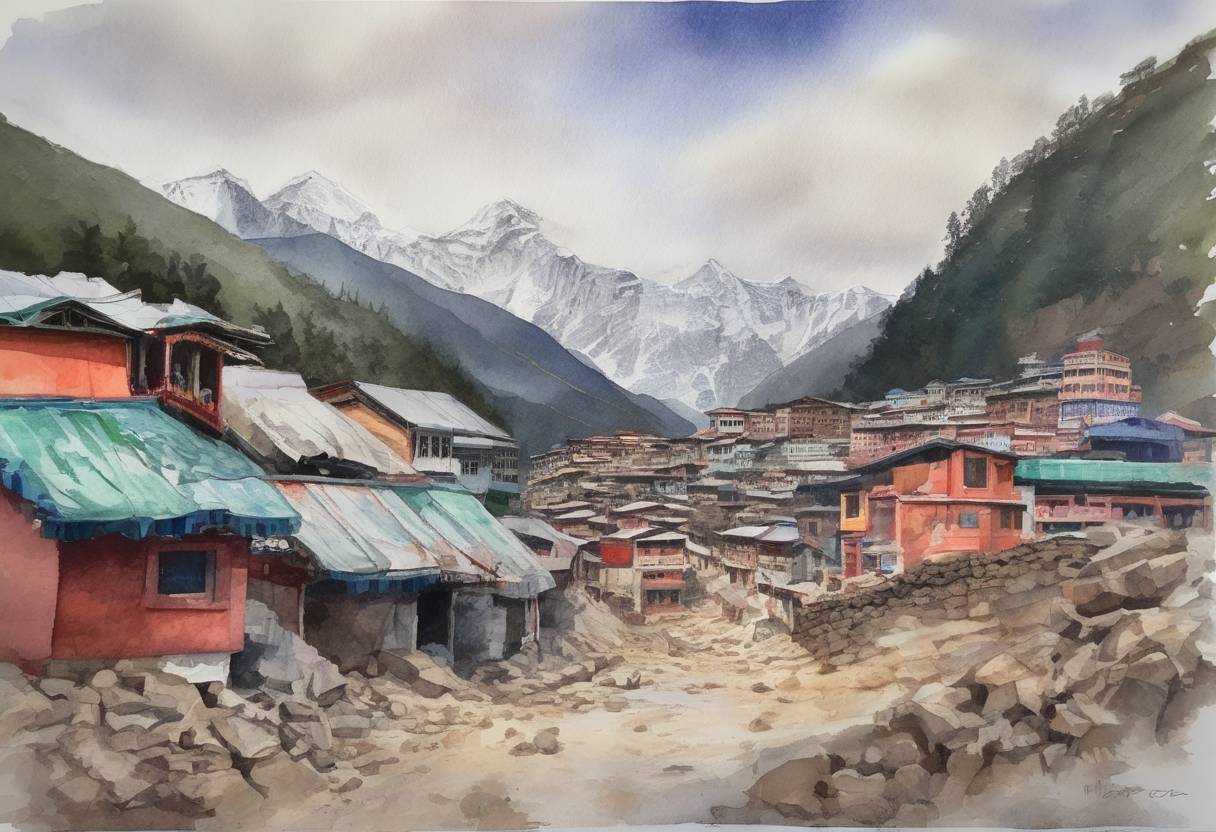
The Second Major Earthquake in Nepal - May 12, 2015
On May 12, 2015, Nepal was struck by a powerful earthquake measuring 7.3 on the Richter scale. This seismic event occurred just weeks after a devastating earthquake on April 25, 2015, which had already caused widespread destruction and loss of life. The May earthquake compounded the challenges faced by the nation as it struggled to recover from the earlier disaster.
Context and Background
- April 25, 2015 Earthquake: The initial earthquake, with a magnitude of 7.8, struck near the city of Kathmandu, causing massive destruction and resulting in nearly 9,000 fatalities. It was the worst natural disaster to strike Nepal since the 1934 Nepal–Bihar earthquake.
- Geological Setting: Nepal is situated in a seismically active region due to the collision of the Indian and Eurasian tectonic plates, making it prone to earthquakes.
The May 12 Earthquake
- Epicenter and Impact: The epicenter of the May 12 earthquake was near the town of Namche Bazaar, close to Mount Everest, at a depth of approximately 18.5 kilometers (11.5 miles). The tremor was felt across northern India, Tibet, and Bangladesh.
- Casualties and Damage: The earthquake resulted in at least 218 deaths and over 3,500 injuries. It exacerbated the destruction in areas already affected by the April quake, causing further collapses of buildings and infrastructure.
- Aftershocks: The earthquake was followed by numerous aftershocks, adding to the anxiety and difficulties faced by the survivors and rescue teams.
Response and Aftermath
- Humanitarian Efforts: The international community, including neighboring countries and global organizations, continued to provide aid and support. Relief efforts were challenged by the difficult terrain and damaged infrastructure.
- Reconstruction Challenges: The back-to-back earthquakes highlighted the need for improved building codes and disaster preparedness in Nepal. The reconstruction process was slow, hindered by logistical challenges and the scale of the devastation.
- Long-term Consequences: The earthquakes had lasting impacts on Nepal’s economy, tourism industry, and social fabric. They also prompted discussions on disaster risk reduction and the importance of resilient infrastructure.
Broader Historical Significance
The 2015 earthquakes in Nepal underscored the vulnerability of the region to natural disasters and the critical importance of international cooperation in disaster response and recovery. They also served as a stark reminder of the need for preparedness and resilience in the face of natural calamities.
The events of April and May 2015 remain etched in the collective memory of Nepal and the world, highlighting both the fragility and resilience of human societies in the face of nature’s forces.