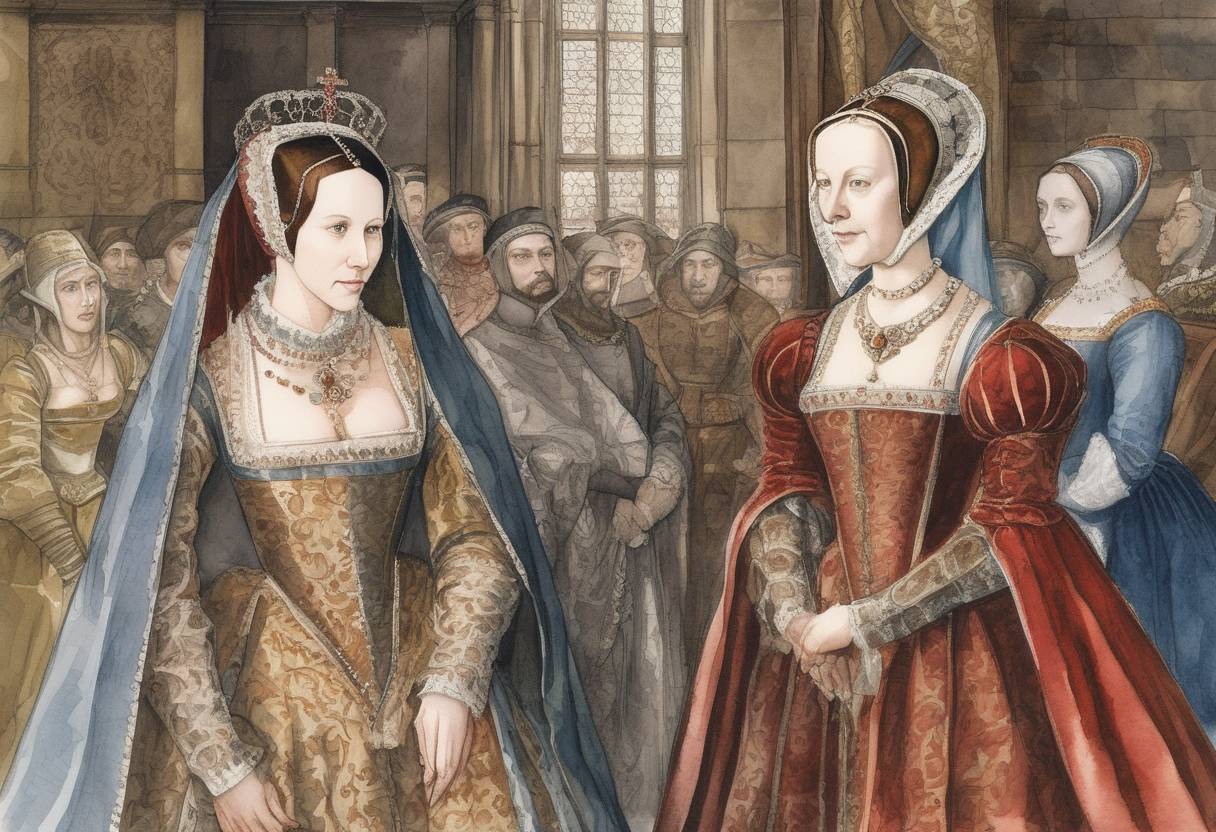
Anne Boleyn’s Coronation as Queen of England
On June 1, 1533, Anne Boleyn was crowned Queen of England in a grand ceremony at Westminster Abbey, marking a pivotal moment in both the English Reformation and the history of the Tudor dynasty. This event was not only significant for its immediate political implications but also for its long-lasting impact on the religious and cultural landscape of England.
Context and Background
Anne Boleyn’s rise to queenship was deeply intertwined with King Henry VIII’s desire to annul his marriage to Catherine of Aragon. Catherine had failed to produce a male heir, and Henry’s infatuation with Anne, coupled with his determination to secure a male successor, led him to seek an annulment from the Pope. When the Pope refused, Henry took radical steps that would alter the course of English history.
The King’s Great Matter: Henry’s quest for annulment, often referred to as “The King’s Great Matter,” resulted in a break with the Roman Catholic Church. This schism laid the groundwork for the English Reformation, as Henry established the Church of England, with himself as its Supreme Head.
Anne’s Influence: Anne Boleyn was a key figure in these religious and political upheavals. Her influence over Henry and her support for reformist ideas helped to shape the emerging Church of England.
The Coronation Ceremony
Anne’s coronation was a lavish affair, designed to legitimize her position as queen and to celebrate the anticipated birth of a male heir. The ceremony included:
Procession: Anne’s coronation festivities began with a grand procession through the streets of London, where she was greeted by cheering crowds and elaborate pageantry.
Westminster Abbey: The coronation itself took place at Westminster Abbey, where Anne was anointed and crowned by the Archbishop of Canterbury, Thomas Cranmer. The use of the ancient crown of St. Edward, traditionally reserved for reigning monarchs, underscored the significance of the event.
Public Celebrations: The coronation was followed by days of feasting and tournaments, reflecting the importance of the occasion to the Tudor court and the nation.
Aftermath and Historical Significance
Anne’s coronation was a high point in her life, but her tenure as queen was fraught with challenges. Despite the grandeur of her coronation, Anne’s failure to produce a male heir and her eventual fall from favor led to her execution in 1536.
Impact on the Reformation: Anne’s marriage to Henry and her subsequent coronation were instrumental in the establishment of the Church of England, which had profound and lasting effects on English society and governance.
Legacy: Anne Boleyn’s daughter, Elizabeth I, would later ascend to the throne and become one of England’s greatest monarchs, further cementing Anne’s legacy within the Tudor dynasty.
Anne Boleyn’s coronation remains a significant event in English history, symbolizing the dramatic shifts in power, religion, and culture that characterized the Tudor era.