The Eighth Crusade and the Death of King Louis IX
1270 · Tunis, Tunisia
The Eighth Crusade, led by King Louis IX of France, ends with his death from dysentery in Tunis.
April 28, 1192
Conrad of Montferrat, King of Jerusalem, was assassinated in Tyre, two days after his title to the throne was confirmed by election.
Tyre, Kingdom of Jerusalem | Assassins
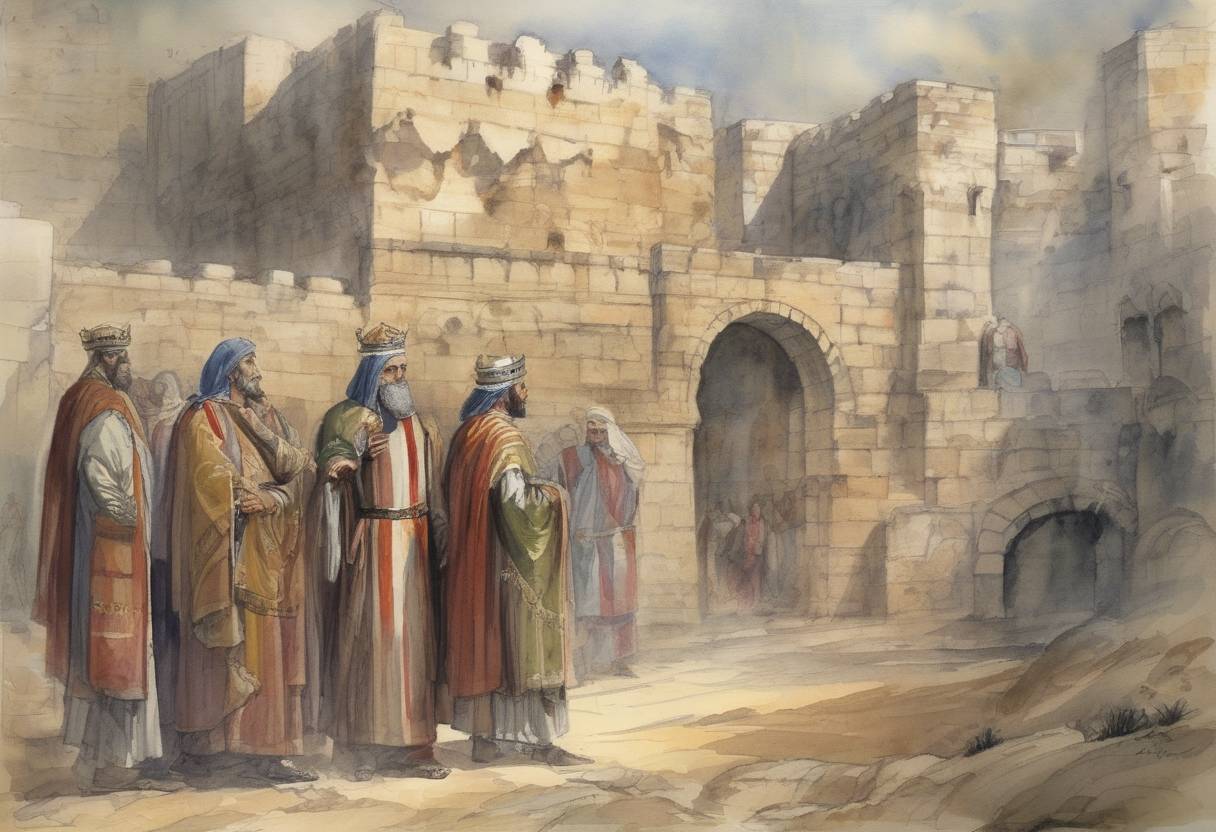
On April 28, 1192, Conrad of Montferrat, a prominent figure during the Third Crusade, was assassinated in the city of Tyre. His death came just two days after his election as King of Jerusalem, marking a significant moment in the turbulent history of the Crusader states.
Conrad of Montferrat was born into a noble Italian family around 1140. He became a key player in the politics of the Crusader states due to his military prowess and strategic acumen. Conrad arrived in the Holy Land in 1187, a critical time following the catastrophic defeat of the Crusader forces at the Battle of Hattin and the subsequent fall of Jerusalem to Saladin.
Conrad’s arrival in Tyre was timely, as he successfully defended the city against Saladin’s forces, earning him a reputation as a capable leader. His marriage to Isabella I of Jerusalem in 1190 further solidified his claim to the throne. However, the political landscape was complex, with rival factions supporting different claimants, including Guy of Lusignan, the previous king.
The political tensions culminated in Conrad’s election as King of Jerusalem on April 24, 1192. This decision was backed by the Haute Cour, the feudal council of the Kingdom of Jerusalem, recognizing Conrad’s leadership and strategic importance in the ongoing conflict with Saladin.
Just two days after his election, on April 28, 1192, Conrad was assassinated in Tyre. The murder was carried out by two Assassins, members of the Nizari Ismaili sect, known for their targeted killings. The motives behind the assassination remain a subject of historical debate, with theories suggesting political intrigue involving rival factions or external influences.
Conrad’s assassination had immediate and long-term implications for the Crusader states. His death left a power vacuum and further complicated the already fragile political situation. Isabella I quickly remarried Henry II of Champagne, who assumed the kingship, ensuring continuity of leadership.
The assassination underscored the volatile nature of Crusader politics and the precarious position of the Latin states in the Levant. It also highlighted the influence of the Assassins, whose actions could alter the course of history through targeted killings.
Conrad of Montferrat’s life and untimely death remain emblematic of the complex interplay of power, religion, and politics during the Crusades, reflecting the broader struggles of the era.
Source: en.wikipedia.org