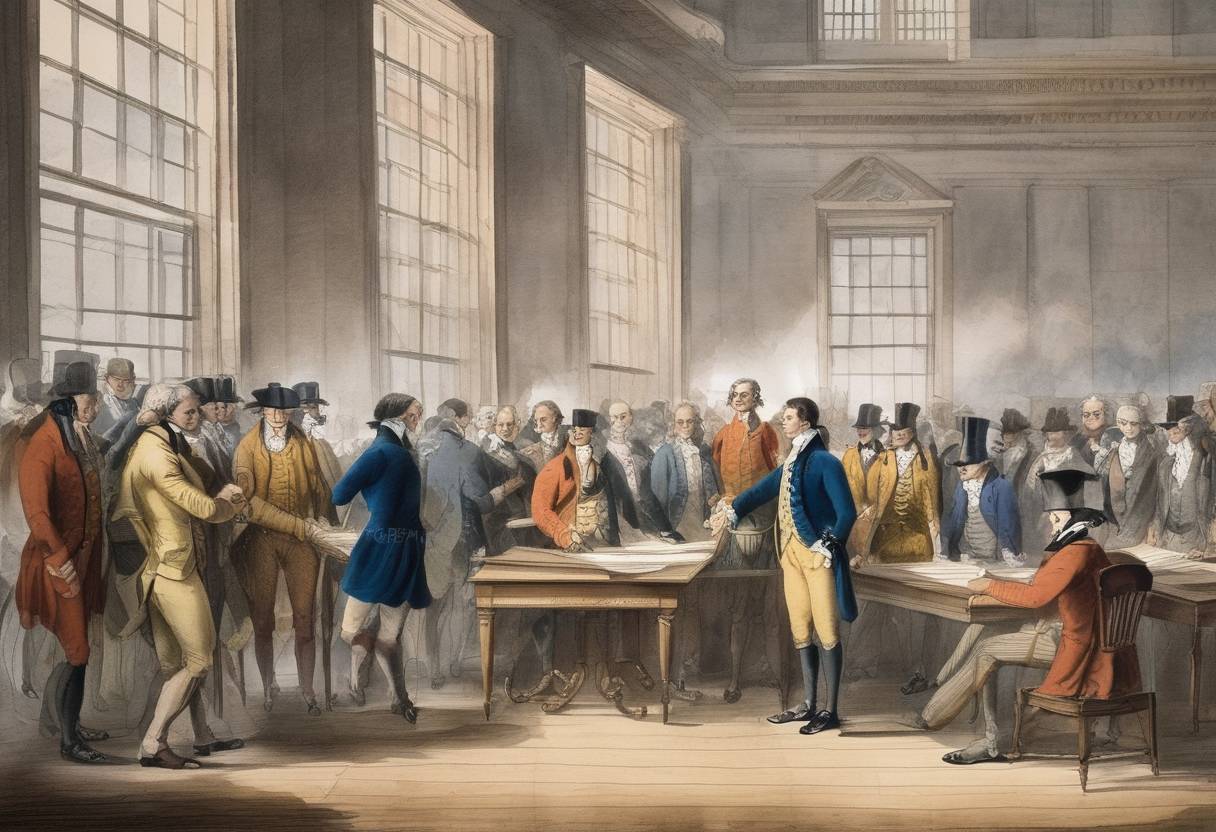
On May 17, 1792, a pivotal moment in financial history occurred with the signing of the Buttonwood Agreement. This event marked the inception of what would eventually evolve into the New York Stock Exchange (NYSE), one of the world’s largest and most influential financial markets.
Context and Background
In the late 18th century, New York City was emerging as a burgeoning commercial hub. The need for a structured and reliable system for trading securities became increasingly apparent as the United States economy began to grow. Prior to the Buttonwood Agreement, securities trading was informal and often conducted in coffee houses or on the street, leading to inconsistent practices and a lack of regulation.
The Agreement
The Buttonwood Agreement was signed by 24 stockbrokers and merchants under a buttonwood tree (a type of sycamore) outside 68 Wall Street. This location was significant as Wall Street was already becoming a central point for financial activity in New York City.
Key Provisions of the Agreement
Fixed Commission Rates: The signatories agreed to charge a standard commission rate for buying and selling securities, which helped to eliminate undercutting and establish fair competition.
Exclusive Trading Among Members: The agreement stipulated that the brokers would only trade securities with each other, creating a closed network that ensured trust and reliability among its members.
Significance and Aftermath
The Buttonwood Agreement laid the groundwork for the formalization of securities trading in the United States. It introduced a level of organization and professionalism that was previously absent in the market. Over time, this agreement led to the establishment of the New York Stock & Exchange Board in 1817, which would later be renamed the New York Stock Exchange.
Broader Historical Impact
Economic Growth: The creation of a structured stock exchange facilitated capital raising for businesses, contributing significantly to the economic development of the United States.
Financial Innovation: The NYSE became a model for other stock exchanges around the world, influencing the development of global financial markets.
Regulatory Framework: The practices initiated by the Buttonwood Agreement eventually led to more comprehensive regulatory frameworks to ensure market stability and protect investors.
Conclusion
The signing of the Buttonwood Agreement was a foundational event in the history of global finance. It not only marked the beginning of the New York Stock Exchange but also set the stage for the evolution of modern financial markets. The principles of trust, standardization, and exclusivity established by the agreement continue to underpin the operations of stock exchanges worldwide.