The Khas Buland Treaty of 1839
1839 · Peshawar, Afghanistan
A treaty known as the Khas Buland Treaty was signed in Afghanistan between the Kingdom of Punjab and the Emirate of Afghanistan, concerning the control of the region of Peshawar.
April 24, 1837
The Treaty of the Sixty Articles, also known as the Baft Convention, was signed between Persia and Britain.
Isfahan, Persia
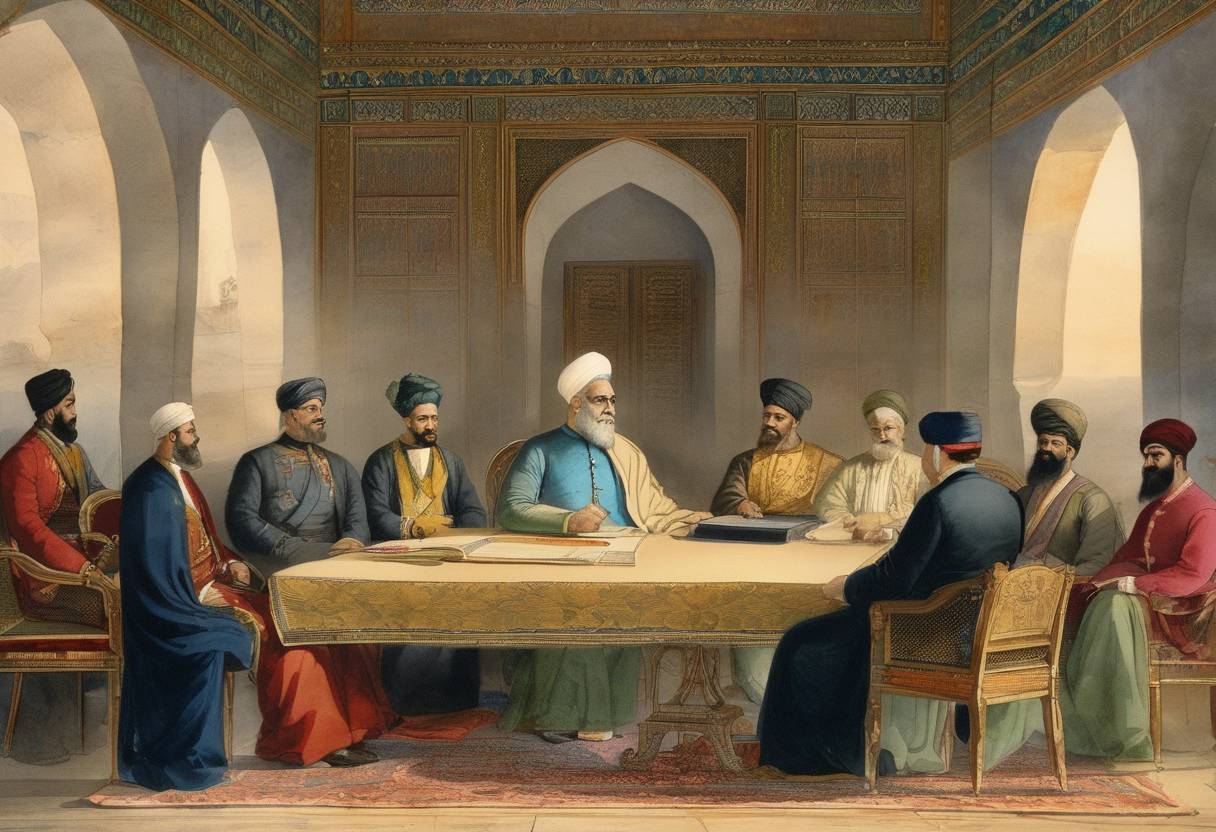
The Treaty of the Sixty Articles, also known as the Baft Convention, was a significant agreement signed on April 24, 1837, between Persia (modern-day Iran) and the British Empire. This treaty primarily addressed trade relations, political cooperation, and other diplomatic engagements between the two nations.
During the early 19th century, Great Britain was expanding its influence in the Middle East and South Asia, aiming to protect its interests in India from other European powers and regional threats. Persia, under the Qajar dynasty, was strategically positioned between British territories in India and the expanding influence of Russia in Central Asia. Thus, maintaining a stable and favorable relationship with Persia was crucial for British imperial strategy.
Trade Agreements: The treaty sought to enhance commercial exchanges between Persia and Britain. It laid down regulations for the movement of goods, tariffs, and the rights of merchants, which aimed at boosting trade.
Diplomatic Cooperation: The convention solidified diplomatic ties, reflecting both nations’ interests in countering Russian expansion.
Military Assistance and Advice: The treaty allowed for the exchange of military advisors and assistance, aiming to fortify Persian defenses against regional threats, which were of mutual interest to British strategic considerations.
Increased British Influence: The treaty strengthened British influence in Persia, providing a counterbalance to Russian expansion in the region. It also paved the way for subsequent agreements and interventions by Britain in Persian affairs.
Geopolitical Impact: The treaty was part of the Great Game, the strategic rivalry and conflict between the British Empire and the Russian Empire for supremacy in Central Asia. It contributed to shaping the geopolitical landscape of the region during the 19th century.
The Baft Convention was illustrative of the broader geopolitical strategies of the British Empire during this period, highlighting the blend of diplomatic engagement and strategic alliances that characterized British relations in the Middle East and South Asia.
Source: iranicaonline.org