World War II: Operation Carpetbagger
1944 · England, United Kingdom
World War II: Operation Carpetbagger, involving the dropping of supplies and agents for resistance groups in Europe, begins.
January 26, 1942
The first American forces arrive in Europe during World War II as part of Operation Bolero, marking a significant phase in the Allied effort.
Belfast, United Kingdom | United States Army
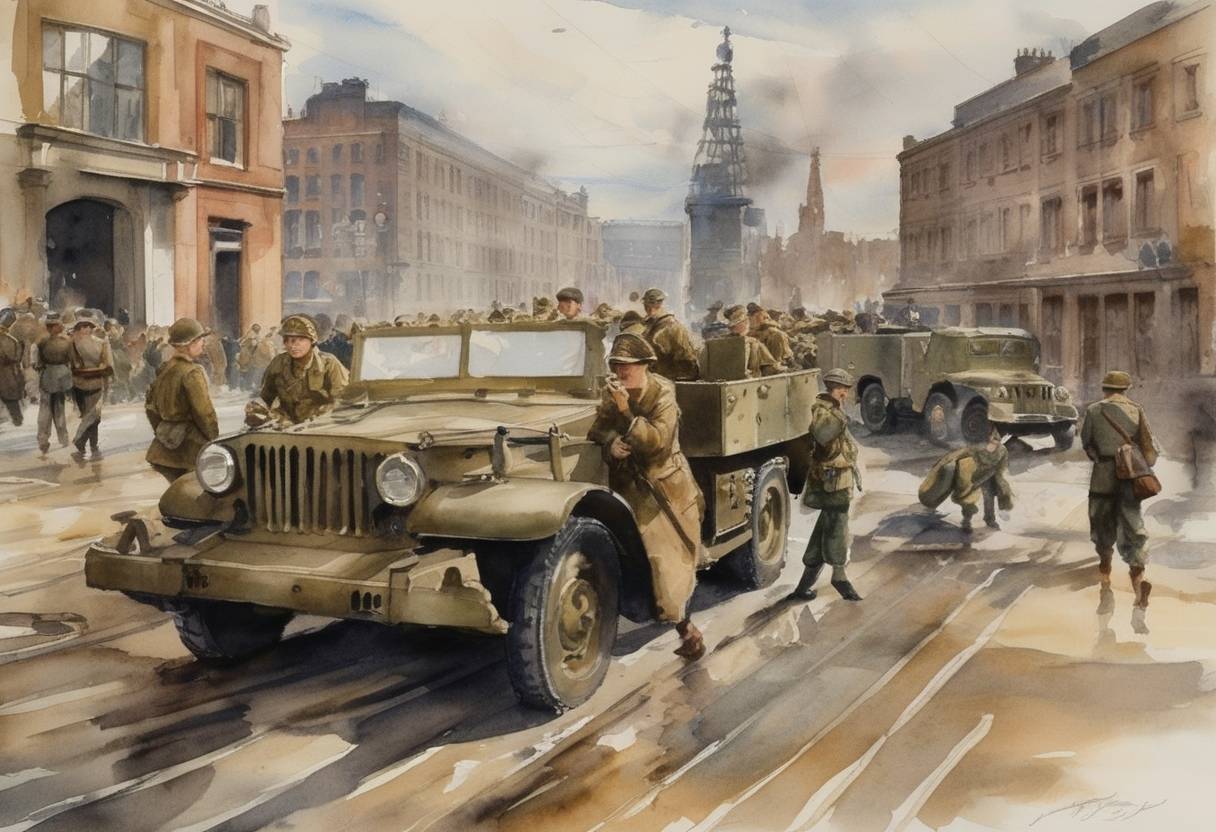
On January 26, 1942, a pivotal event in World War II transpired with the arrival of the first American forces in Europe as part of Operation Bolero. This operation marked a significant phase in strengthening the Allied military presence against the Axis Powers.
After the United States formally entered World War II following the attack on Pearl Harbor on December 7, 1941, there was an urgent need to increase military cooperation with the Allied forces. Operation Bolero was the codename assigned to the build-up of U.S. military forces in the United Kingdom in preparation for future operations. This initiative was rooted in the strategic decision to form a robust base for launching an extensive military campaign on the European continent.
Building a European Foothold: A primary goal was to establish a formidable U.S. military presence in Europe, specifically in the UK, which was considered a secure staging ground for upcoming assaults on German-occupied territories.
Supply and Logistics: Another objective focused on coordinating the transport of troops, equipment, and essential supplies across the Atlantic, which was critical for sustaining military operations and ensuring a successful campaign.
Preparatory Training: Ensuring that American troops were well-trained and familiar with European theaters of war was crucial for integrating effectively with British and other Allied forces in coordinated operations.
Symbolic of Allied Unity: The landing of American troops in Europe underlined the deepening alliance between the United States and the United Kingdom. It also represented a commitment to a combined effort to defeat the Axis Powers.
Strategic Build-Up: The operation facilitated a massive build-up of troops and military strength, paving the way for future operations, including the Normandy Invasion, which would eventually lead to the liberation of Western Europe.
Boost to Morale: The arrival of American forces provided a boost to both military and civilian morale in the United Kingdom, reinforcing the belief that victory against the Axis forces was achievable through collaboration.
Operation Bolero continued to serve as a foundational element of Allied strategy, exemplifying the logistical prowess required for large-scale military operations. It set a precedent for the collaboration that would characterize the Allied effort throughout the war, contributing significantly to the eventual Allied victory in Europe.
Source: www.historynet.com