Capture of Brielle by the Watergeuzen - April 1, 1572
1572 · Brielle, Netherlands
The Watergeuzen (Sea Beggars), a group of Dutch rebels, captured the city of Brielle from the Spanish, marking a significant event in the Eighty Years' War.
August 7, 1600
The Battle of Nieuwpoort took place as part of the Eighty Years' War. This battle was a key conflict involving the Spanish forces led by Archduke Albert of Austria and Dutch rebel forces under Prince Maurice of Nassau. It ended with a Dutch victory.
Nieuwpoort, Netherlands | Dutch rebels; Spanish forces
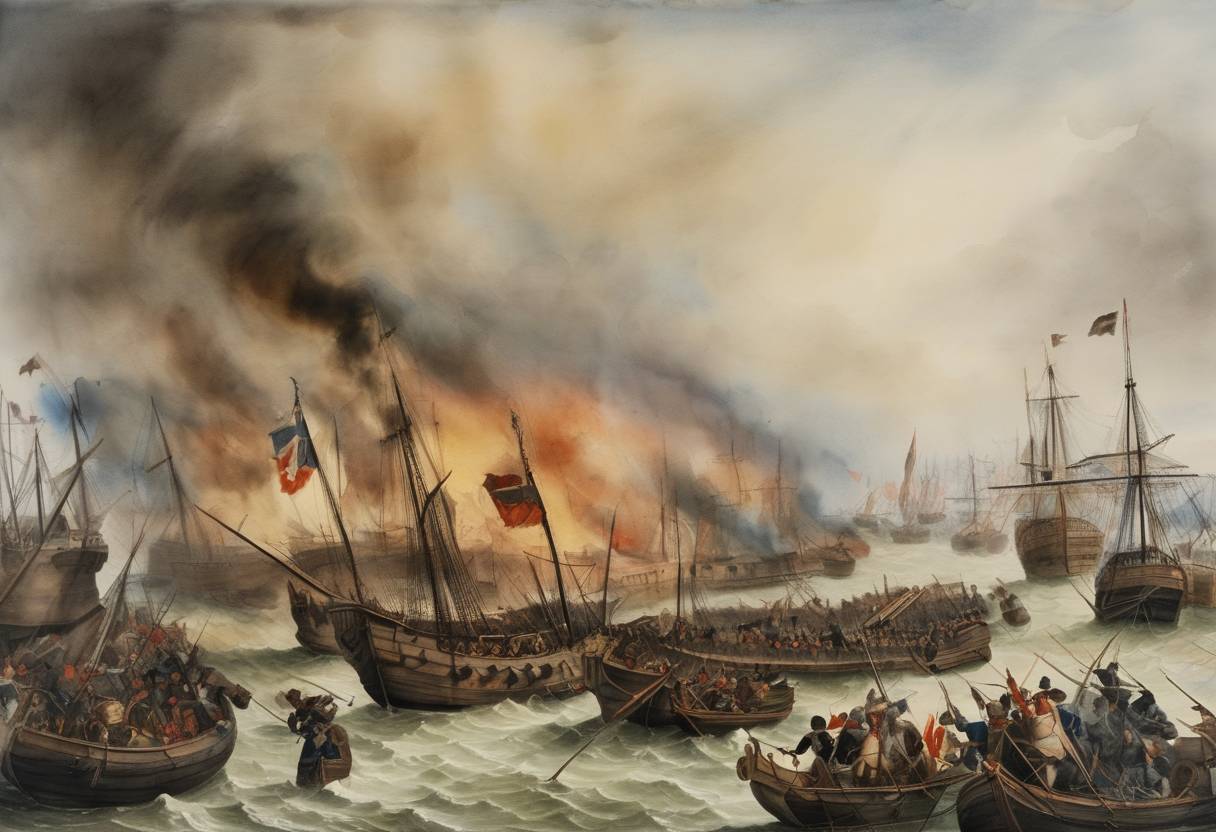
The Battle of Nieuwpoort, fought on July 8, 1600, was a significant engagement during the Eighty Years’ War between the Spanish forces led by Archduke Albert of Austria and the Dutch rebel army under the command of Maurice of Nassau. This confrontation marked an important victory for the Dutch, emphasizing the growing military prowess of the nascent Dutch Republic.
The Eighty Years’ War, which began in 1568, was a protracted conflict between the Spanish Empire and the northern provinces of the Low Countries striving for independence. By the late 16th century, under the leadership of figures like William of Orange and later his son Maurice of Nassau, the Dutch forces began gaining momentum against Spanish rule.
The strategic plan for the Battle of Nieuwpoort was initially to capture the city of Dunkirk, a hub for Spanish privateers preying on Dutch and English shipping. However, upon landing in Flanders, Maurice’s troops found the Spanish army prepared to engage.
As Maurice’s army, which had landed along the coast, advanced towards Dunkirk, they were met by the forces of Archduke Albert of Austria. Anticipating the Dutch strategy, the Spanish launched a counter-march to intercept them. Maurice, initially planning to avoid large-scale combat, found his forces suddenly compelled to engage as both armies positioned near the sand dunes close to Nieuwpoort.
On the day of the battle, Maurice arranged his forces into a defensive posture, utilizing the terrain of dunes to their advantage. The battle that unfolded was fierce and chaotic, with both sides suffering significant casualties. The Spanish infantry, renowned for their discipline and combat effectiveness, encountered a resilient Dutch force determined to secure a decisive victory.
Despite the challenging conditions and the superior numbers of the Spanish, the Dutch forces gradually gained the upper hand. Clever use of terrain and tactical maneuvering, coupled with leadership and discipline, allowed the Dutch to break the momentum of the Spanish advance.
The Battle of Nieuwpoort concluded with a pivotal Dutch victory. This triumph bolstered the morale of the Dutch forces and showcased their military capabilities on the European stage. The victory disrupted Spanish dominance in the region and encouraged further support for the Dutch cause.
Although the battle did not lead to the immediate capture of Dunkirk and resulted in substantial losses for both armies, it marked a turning point in the Eighty Years’ War. For the Dutch Republic, it reinforced the legitimacy of their fight for independence, setting the stage for further successes in their struggle for sovereignty.
The Battle of Nieuwpoort demonstrated the shifting balance of power in the war for Dutch independence. It highlighted the effective military leadership of Maurice of Nassau, whose tactics and strategic vision would influence military thought for years to come. The victory at Nieuwpoort stood as a testament to the determination and resilience of the Dutch forces in their pursuit of securing a free and self-governing republic.
Source: en.wikipedia.org