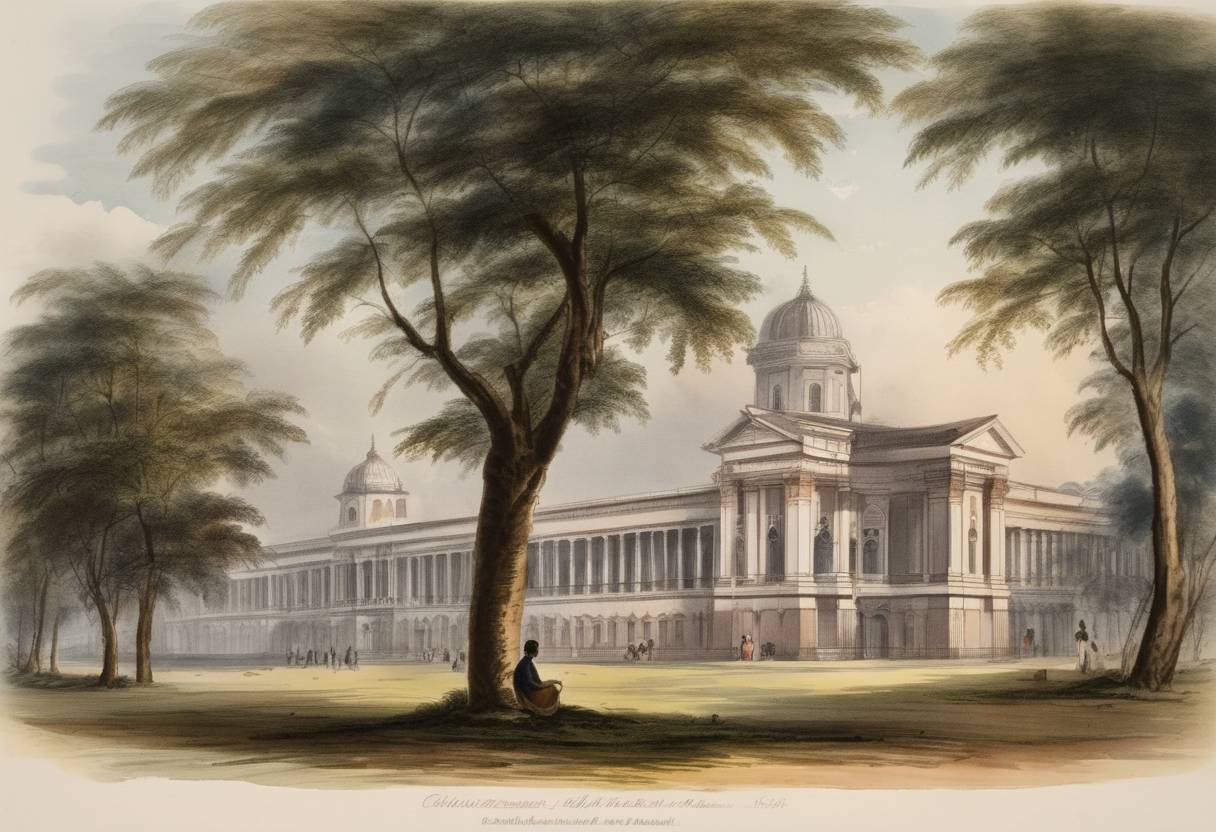
Establishment of the University of Calcutta on January 24, 1857
The University of Calcutta was established on January 24, 1857, in Calcutta, British India. This significant event marked the founding of the first full-fledged modern university in South Asia, signifying a major step in the region’s education system under British colonial rule.
Historical Context
- Colonial Influence: The mid-19th century in British India was a period when the colonial government recognized the necessity of establishing institutions for higher education to promote Western-style education.
- Macaulay’s Minute: Thomas Babington Macaulay’s “Minute on Indian Education” in 1835 laid important groundwork for English education in India. It emphasized the need for producing a class of English-educated Indians who could assist in administering the region.
Founding and Objectives
- Charter: The University of Calcutta was established by the incorporation of an Act of the Legislative Council of India, inspired by the model of the University of London.
- Educational Goals: The university aimed to educate Indian students in accordance with European university standards, offering degrees in various disciplines.
- Initial Structure: Initially, it operated primarily as an examining body for affiliated colleges scattered throughout the Bengal Presidency, which included regions in present-day India, Bangladesh, and Myanmar.
Academic and Societal Impact
- Pioneering Role: As the first Western-style university in India, it set educational standards and served as a model for subsequent universities in the subcontinent.
- Cultural Exchange: The university facilitated a broader exchange of ideas and contributed to the development of a Western-educated Indian elite.
- Legacy: It became instrumental in fostering reformative ideas amongst young Indians, which eventually played a role in the socio-political transformations leading up to India’s independence movement.
- First Vice-Chancellor: James William Colvile, a British lawyer and judge, was appointed as its first vice-chancellor.
- Prominent Alumni: The University of Calcutta boasts of numerous influential figures among its alumni, including several Nobel Laureates such as Rabindranath Tagore and Amartya Sen.
Consequent Developments
- Expansion and Affiliation: Over the years, more colleges became affiliated with the university, expanding its influence and reach.
- Modern Education System: The establishment laid the groundwork for the modern education system in India, combining elements of traditional curricula with Western methodologies.
The foundation of the University of Calcutta on January 24, 1857, represents a pivotal moment in the evolution of education in South Asia, contributing significantly to scholarly and cultural development in the region.