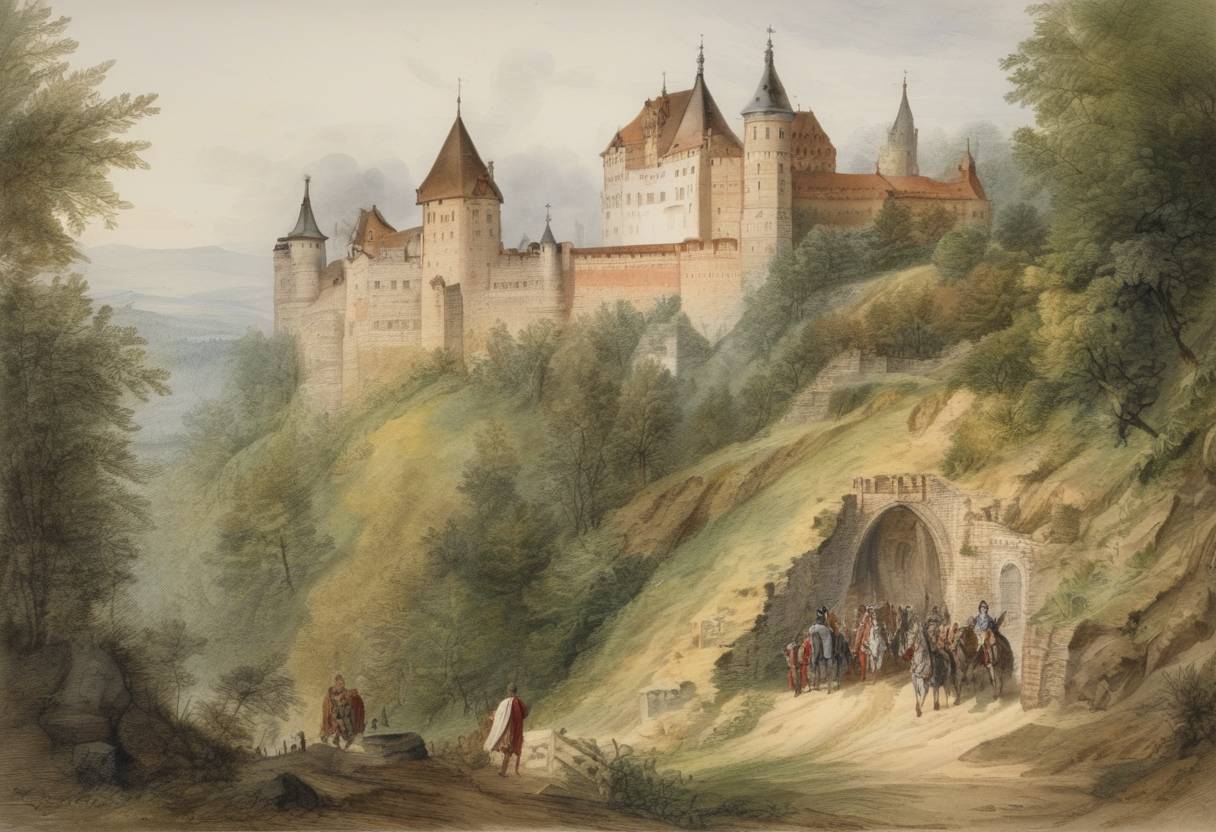
Death of Henry Raspe, Anti-King of Germany
On May 22, 1246, Henry Raspe, who served as the anti-king of Germany, passed away. His death marked a significant moment in the political landscape of the Holy Roman Empire during the mid-13th century, which was characterized by intense conflict between the papacy and the empire.
Background
Henry Raspe was born around 1204 and became the Landgrave of Thuringia in 1227. He gained prominence due to his noble lineage and substantial territorial control, which made him a powerful player within the realm of the Holy Roman Empire. Initially, Henry was a supporter of Emperor Frederick II, backing the emperor in his conflicts against papal authority. However, the tides of power shifted as the papacy sought to diminish Frederick’s influence.
Rise as Anti-King
The conflict between Frederick II and Pope Innocent IV intensified over issues of imperial control and papal authority. In this context, Henry Raspe was elected as the anti-king by a faction of rebellious German princes on February 22, 1246, at the urging of the pope. His election was part of a broader strategy by the papal states and their allies to challenge Frederick II’s rule by promoting alternative leadership within Germany.
Henry Raspe, during his brief tenure as anti-king, engaged in attempts to consolidate his authority against Frederick II but faced considerable opposition. Despite being declared king, his rule was never universally recognized, and his power remained contested.
Death and Aftermath
Henry’s reign as anti-king was short-lived, culminating in his death on May 22, 1246. His demise effectively ended his bid for control over Germany, leaving the region once again embroiled in uncertainty. With Henry’s passing, Konrad IV, Frederick II’s son, continued efforts to assert Hohenstaufen dominance, although the internal conflicts within the Holy Roman Empire persisted.
The broader context of his reign and its conclusion serves as a reflection of the era’s ongoing struggle between regional rulers and the overarching imperial and papal authorities, a struggle that would continue to influence European politics beyond Henry Raspe’s lifetime.