May 10, 2008

The Wenchuan earthquake, also known as the Great Sichuan Earthquake, struck causing widespread devastation in China, with tremors felt on May 12.


Chengdu, China
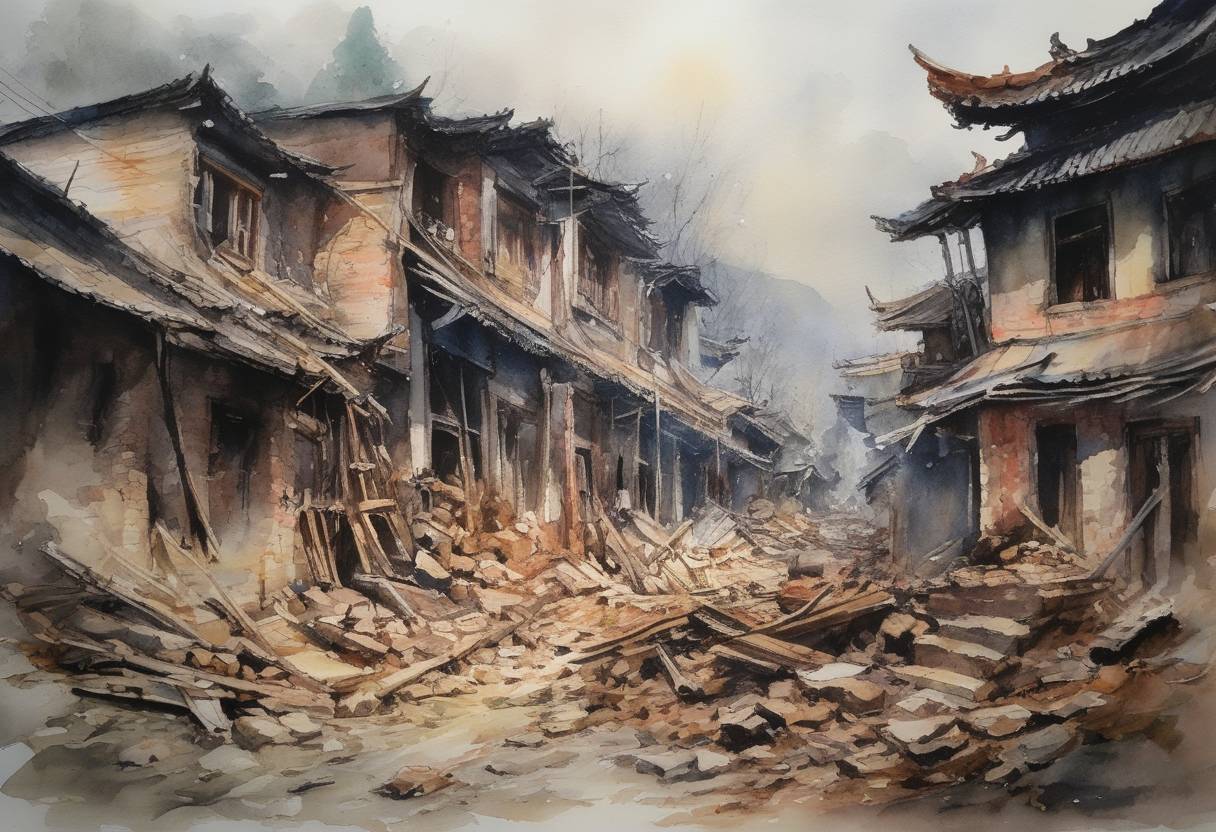
Watercolor painting based depiction of The Wenchuan earthquake, also known as the Great Sichuan Earthquake, struck causing widespread devastation in China, with tremors felt on May 12. (2008)

The Great Sichuan Earthquake

The Great Sichuan Earthquake, also known as the Wenchuan Earthquake, struck China on May 12, 2008, at 14:28:01 China Standard Time (CST). It was a devastating event with far-reaching effects.

Epicenter and Magnitude

  • Location: The earthquake’s epicenter was located in Wenchuan County in the mountainous region of Sichuan province.
  • Magnitude: It registered a magnitude of 7.9 on the Richter scale, making it one of the most powerful earthquakes to hit China in recent history.

Impact

  • Casualties: The earthquake claimed the lives of approximately 69,000 people. Over 18,000 were reported missing, and about 374,000 were injured.
  • Displacement: Millions were left homeless as countless buildings, homes, and infrastructure were destroyed or severely damaged.
  • Geological Effects: The quake caused numerous landslides and widespread ground displacement, complicating rescue and recovery efforts.

Response and Recovery

  • National Efforts: The Chinese government launched a massive emergency response, deploying tens of thousands of troops and rescue workers to aid in search and rescue efforts.
  • International Assistance: Many countries and international organizations offered assistance and relief in the form of financial aid, supplies, and humanitarian support.
  • Reconstruction: The rebuilding process was extensive, focusing on constructing safer and more resilient infrastructure to withstand future seismic events.

Historical Significance

The earthquake highlighted the vulnerabilities of infrastructure in earthquake-prone regions, leading to reforms in construction standards and disaster preparedness. It also demonstrated the importance of rapid response and international cooperation in the face of natural disasters.

By emphasizing the resilience and solidarity shown by the Chinese people and the global community, the Great Sichuan Earthquake remains a poignant example of the challenges and responses to natural calamities in the modern era.