The Great Hanshin Earthquake: January 17, 1995
1995 · Kobe, Japan
The Great Hanshin earthquake struck the Kobe region of Japan, resulting in over 6,000 deaths.
June 22, 1948
A 7.3 magnitude earthquake struck the Fukui Prefecture in Japan, causing significant damage and loss of life.
Fukui, Japan
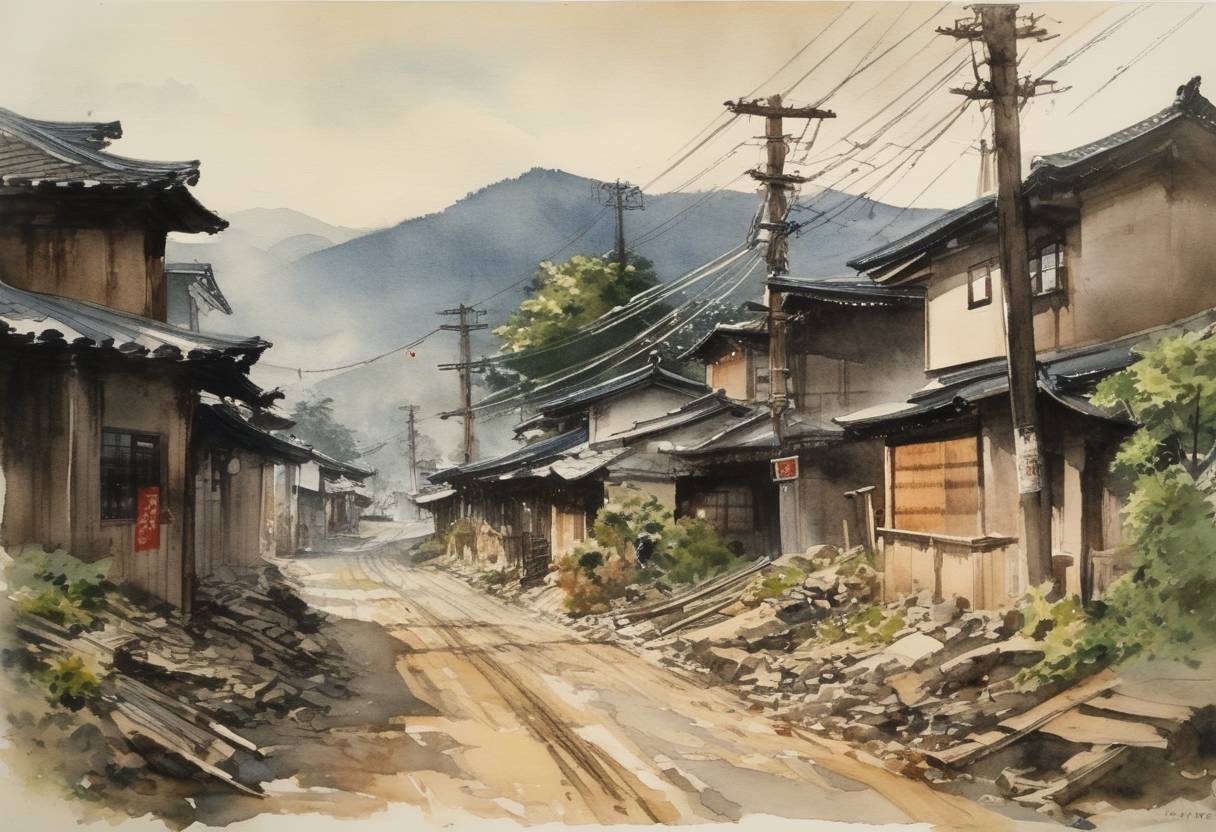
On June 22, 1948, a powerful earthquake measuring 7.3 on the Richter scale struck the Fukui Prefecture on the west coast of Japan’s Honshu Island, causing catastrophic damage and significant loss of life. The event is profoundly remembered for its impact on the region and its role in shaping Japan’s disaster preparedness policies.
Fukui Prefecture is located on the Sea of Japan coast and is part of a seismically active zone due to the complex tectonic interactions in the region. The precise epicenter of the earthquake was located near the city of Fukui, prominently impacting the city and its surrounding areas.
The earthquake resulted in the near-total destruction of Fukui city. Approximately 36,000 homes were destroyed, leading to the displacement of a significant portion of the city’s population. The official death toll was reported at around 3,769 people, with thousands more injured. Additionally, the quake triggered landslides and fires, exacerbating the devastation.
The Fukui earthquake of 1948 was followed by numerous aftershocks, complicating rescue operations and causing additional damage to already weakened structures. The Japanese government, along with local and international aid agencies, conducted rescue and relief operations amidst the significant challenges presented by the scale of the disaster.
The Fukui earthquake profoundly impacted Japan’s approach to earthquake preparedness and urban planning. It served as a catalyst for advancements in earthquake-resistant construction techniques and stricter building codes. Furthermore, it highlighted the importance of emergency preparedness, contributing to the development of more sophisticated disaster response systems in Japan.
The Fukui earthquake is a pivotal event in Japan’s history of natural disasters. It is reflective of the ongoing challenges posed by the nation’s geological setting, prompting enduring changes in policy-making and engineering practices aimed at mitigating future risks associated with earthquakes. The event remains a critical reference point for disaster preparedness and resilience strategies in Japan and beyond.