1649 · London, England
King Charles I of England went on trial for treason and other high crimes against the realm. This trial eventually led to his execution.
January 6, 1649
The English Rump Parliament votes to put Charles I on trial for high treason and other high crimes.
London, England | Rump Parliament
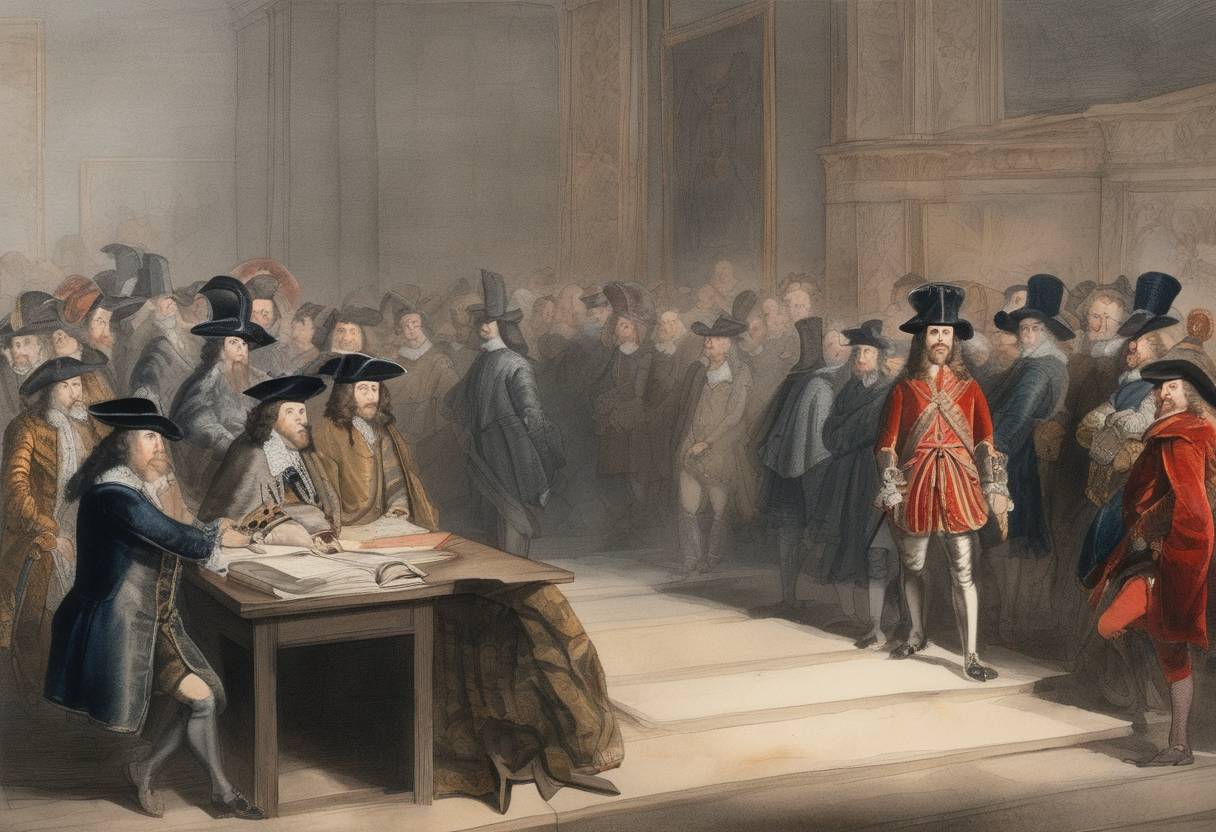
On January 6, 1649, a pivotal moment in English history unfolded as the Rump Parliament voted to bring King Charles I to trial for high treason and other high crimes. This decision marked one of the significant turning points in the English Civil War and the broader struggle between the monarchy and Parliament.
The trial of Charles I was the culmination of a series of escalating conflicts between the monarchy and Parliament. The English Civil War, which began in 1642, was driven by deep political, religious, and social tensions. Key issues included royal authority, parliamentary power, and religious freedoms. The war pitted the Royalists, loyal to King Charles I, against the Parliamentarians, led by figures such as Oliver Cromwell.
By 1648, the Parliamentarians had gained the upper hand. Charles I had been captured, and his captivity led to increased demands from within Parliament for accountability regarding his role in the civil unrest and bloodshed.
Following intense political maneuvering and military interventions, including Pride’s Purge in December 1648, the Parliament was purged of members sympathetic to the king. This purge left a remnant, known as the Rump Parliament, consisting mainly of those who supported the Parliamentary cause and the trial of the king.
On January 6, 1649, the Rump Parliament took the unprecedented step of voting to put King Charles I on trial for high treason. The charge was rooted in accusations that the king had abused his power, waged war against his people, and acted tyrannically in violation of England’s ancient laws and liberties.
The decision to try the king was highly controversial. It marked the first time in English history that a reigning monarch would be tried for treason by his subjects. This action underscored the shifting dynamics of power and governance, placing the sovereignty of Parliament above that of the king.
The trial of Charles I commenced on January 20, 1649, shortly after the vote, culminating in his execution on January 30, 1649. The events following the January 6 vote highlighted the profound transformations taking place within England’s political landscape.
The trial and execution of Charles I effectively ended the monarchy’s claim to absolute authority and led to the temporary establishment of the Commonwealth of England, a republican form of government. This period, known as the Interregnum, lasted until the monarchy was restored in 1660.
The trial of Charles I remains a significant moment in the history of constitutional governance, influencing future debates about the balance of power between rulers and their subjects.
Source: www.britannica.com