Capture of Damascus: October 1, 1918
1918 · Damascus, Syria
Arab forces under T.E. Lawrence capture Damascus during World War I, leading to the end of 400 years of Ottoman rule in the city.
July 6, 1917
T. E. Lawrence, also known as Lawrence of Arabia, coordinates the attack and capture of the Red Sea port of Aqaba during the Arab Revolt.
Aqaba, Jordan | Arab Revolt
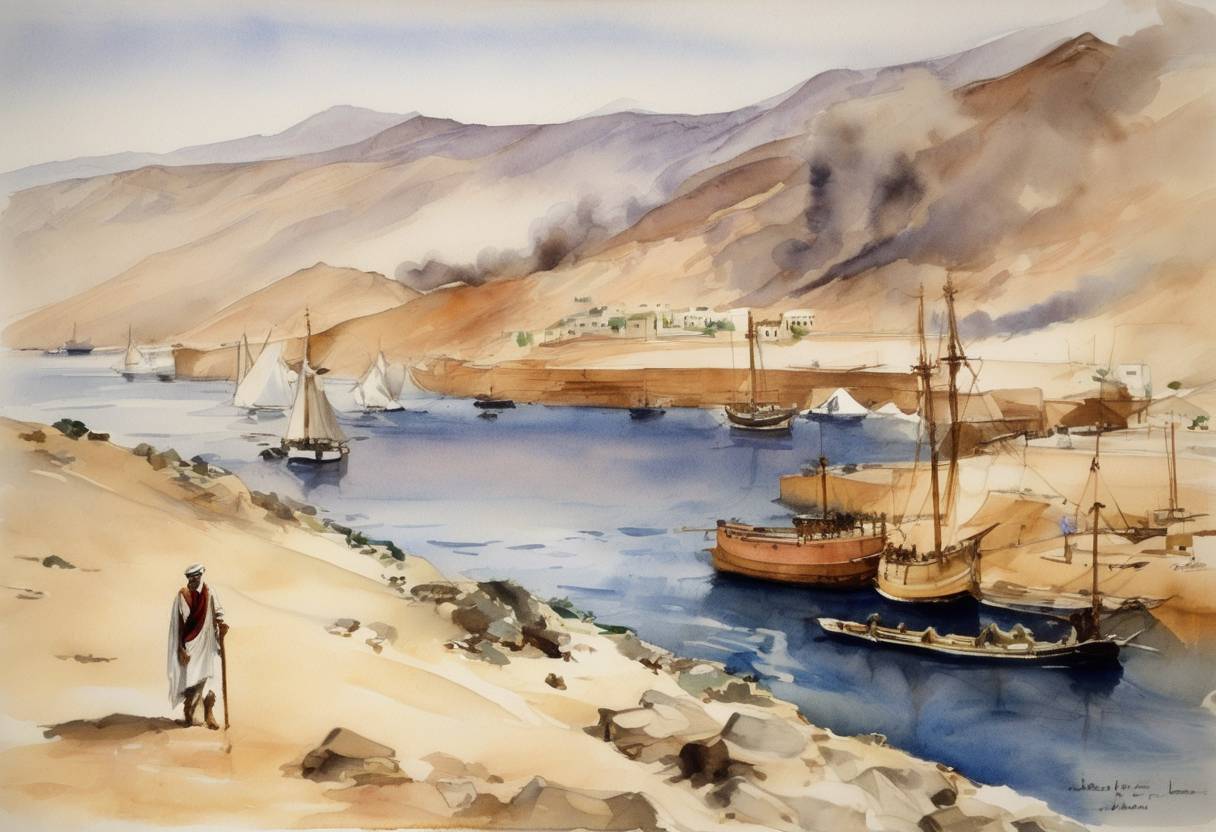
On July 6, 1917, the Red Sea port of Aqaba, a strategically significant location during World War I, was captured by Arab forces led by T. E. Lawrence, famously known as Lawrence of Arabia. This successful operation was a pivotal moment in the Arab Revolt against the Ottoman Empire.
The capture of Aqaba was part of a broader strategy to undermine Ottoman control over the Arab territories. The Arab Revolt, supported by the British, aimed to destabilize the Ottoman Empire during World War I by fostering rebellion in its Arab provinces. Control of Aqaba was strategically important because it would provide the British and Arab forces a valuable foothold along the Red Sea, easing the delivery of supplies and reinforcements.
T. E. Lawrence, a British officer, played a crucial role in the Arab Revolt. He had forged strong alliances with key Arab leaders and was instrumental in coordinating guerrilla warfare tactics that the conventional Ottoman forces found hard to counter.
The operation to capture Aqaba involved an arduous march through the harsh environment of the Arabian Peninsula. Prior to the attack, Lawrence and the Arab forces embarked on a treacherous journey from Wejd, proceeding through the desert to avoid direct confrontation with stronger Ottoman forces. This route was unexpectedly difficult, involving difficult terrain and extreme weather conditions.
Lawrence’s ability to inspire the local tribes and his tactical acumen in navigating through the treacherous landscape were critical to the operation. His group consisted of mainly Bedouin fighters, united under the common cause of Arab independence from Ottoman rule.
The final assault on Aqaba was made possible by surprise. Ottoman forces did not anticipate an attack from the landward side due to the natural barriers presented by the surrounding desert. The successful capture was marked by the taking of the garrison and effective naval support from British warships in the Red Sea, which prevented Ottoman reinforcements via the coast.
Lawrence’s leadership and the bravery of the Arab fighters ensured that the port fell with minimal resistance, cementing a major victory for the Arab Revolt.
The capture of Aqaba opened critical supply lines to support further campaigns against Ottoman forces, aiding in subsequent victories. This victory also demonstrated the feasibility of irregular warfare that became a hallmark of the Arab Revolt under Lawrence’s influence. It underscored the effectiveness of guerrilla tactics against a traditionally trained military force.
Furthermore, the event elevated Lawrence’s status as an iconic figure in the war, contributing to his legendary reputation as “Lawrence of Arabia.” The capture of Aqaba was a significant step towards achieving greater autonomy for Arab nations post-World War I, setting in motion political shifts in the region that resonated in the ensuing peace conferences.
In summary, Lawrence’s strategic insight and the undeterred resolve of the Arab contingents were crucial to the success of this military achievement on July 6, 1917, carving a path for subsequent endeavors in their quest for independence.
Source: www.britannica.com