Margaret Thatcher's Passing: End of an Era in British Politics
2013 · London, United Kingdom
Former British Prime Minister Margaret Thatcher passed away at the age of 87, marking the end of an era for British politics.
July 2, 1850
Robert Peel, the British statesman and Prime Minister, passed away after a riding accident.
London, United Kingdom
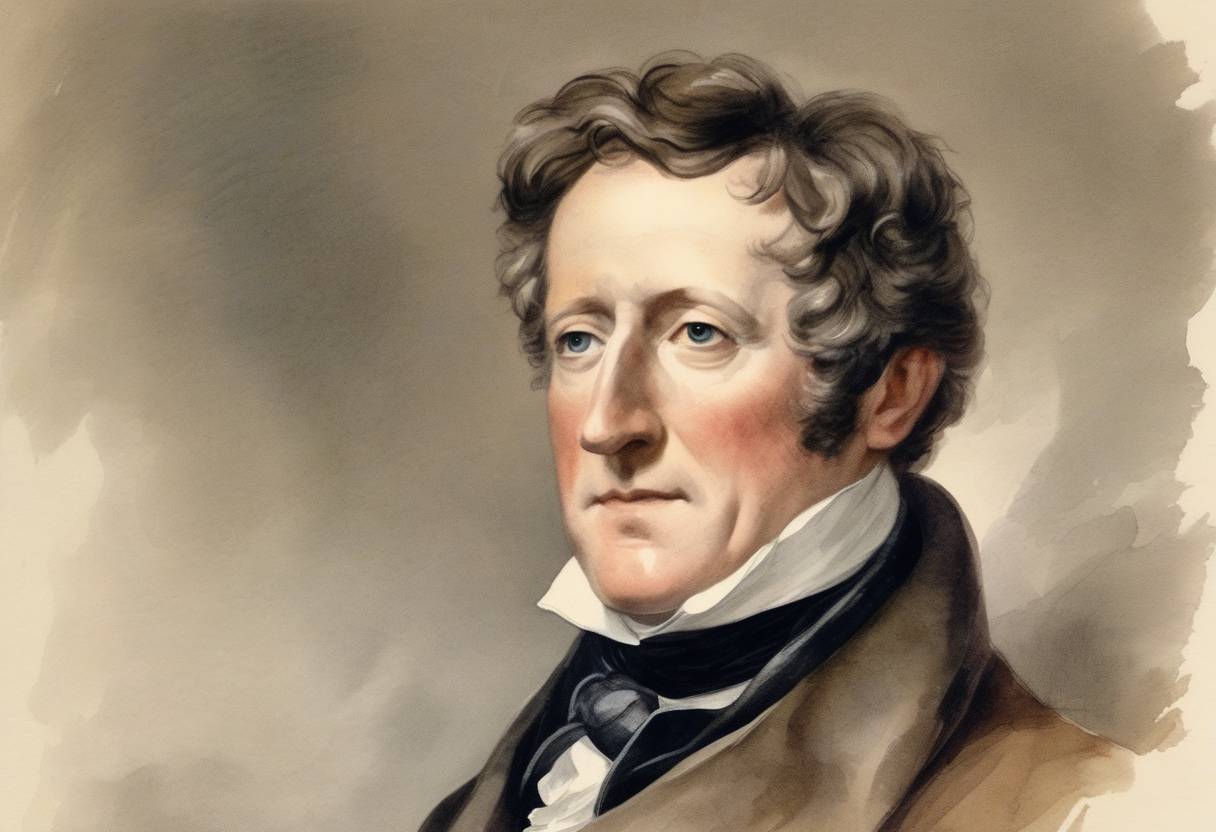
Date: July 2, 1850
Sir Robert Peel, a prominent British statesman who served twice as Prime Minister of the United Kingdom, died on July 2, 1850. His death resulted from injuries sustained in a riding accident at Constitution Hill in London. Peel’s contributions to British politics were substantial, most notably his involvement in modernizing the British Conservative Party and his role in the repeal of the Corn Laws.
On June 29, 1850, Peel was riding his horse when it stumbled and fell, causing him to be thrown off the animal. He sustained severe injuries, including a broken collarbone and other complications. Although medical attention was promptly provided, Peel’s condition deteriorated over the following days. Despite the efforts to save him, he succumbed to his injuries on July 2, 1850, at the age of 62.
Sir Robert Peel is best remembered for several key reforms during his political career:
Formation of the Modern Conservative Party: Peel’s leadership laid the groundwork for the development of the modern Conservative Party. His efforts emphasized pragmatic approaches and responding to public needs, which helped transform the Tory Party into a more progressive political force.
Peel’s Reforms in Policing: As Home Secretary, Peel established the Metropolitan Police Service in 1829. The force, organized along professional lines, became a model for modern policing in Britain and abroad, and its officers were popularly known as “Bobbies” in Peel’s honor.
Repeal of the Corn Laws: Perhaps the most significant achievement of his second tenure as Prime Minister (1841-1846) was the contentious but crucial repeal of the Corn Laws in 1846. These laws had imposed tariffs on imported grain, and their repeal was pivotal in fostering free trade and marking a shift towards economic liberalism in Britain.
Peel’s death was a significant loss to British politics. His pragmatic approach and willingness to reform, sometimes against the wishes of his own party, left an indelible mark on the nation’s political landscape. The reactions to his death were mixed; while Peel had supporters who admired his forward-thinking policies, he also faced significant opposition from traditionalists within his party.
Sir Robert Peel’s death marked the end of an influential political career. His efforts in reforming party politics, policing, and economic policy had lasting effects on British governance and society. His legacy as a reformer continues to influence political thought and policy.
Source: en.wikipedia.org