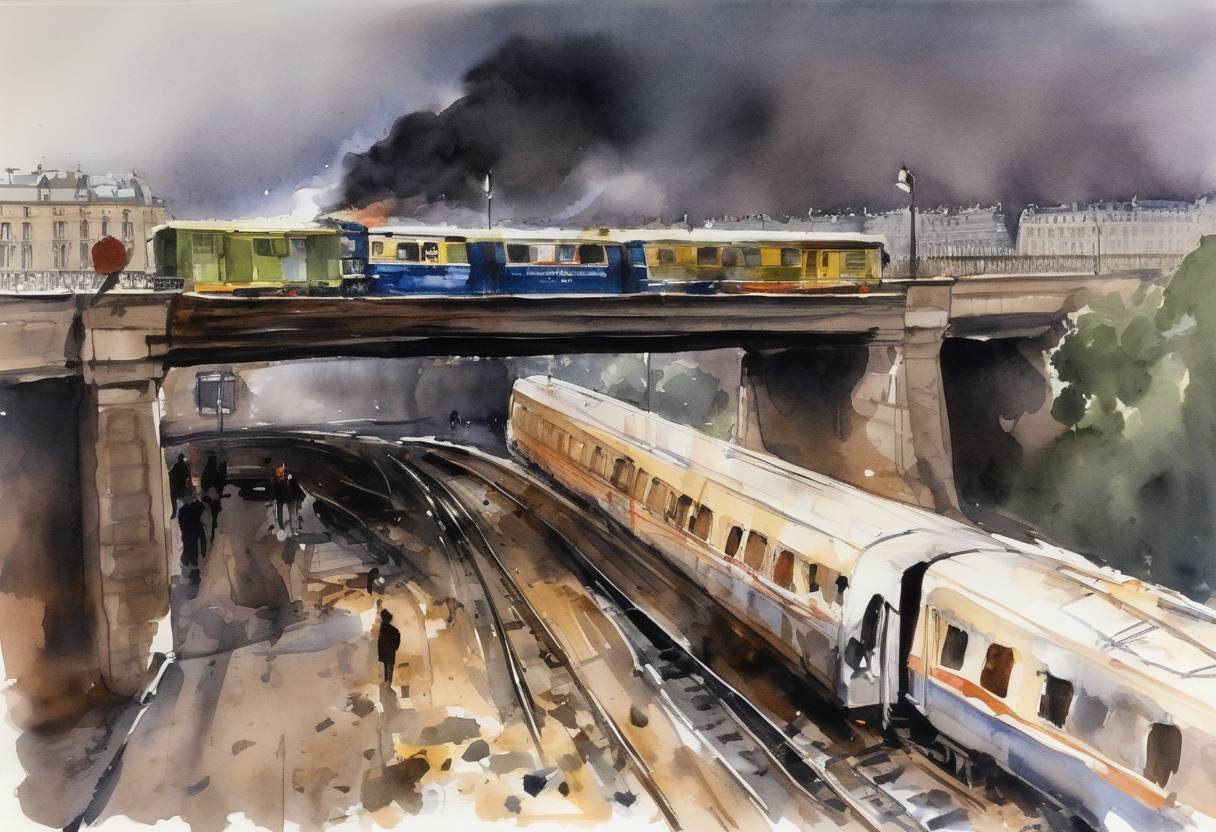
Parisian Train Derailment on October 27, 1984
On October 27, 1984, the Parisian commuter train system experienced one of its deadliest disasters when a train derailed on the Pont de Neuilly bridge. This tragic event claimed the lives of 43 individuals and resulted in injuries to over 200 passengers, marking it as a significant calamity in the history of French public transportation.
The Incident
The derailment occurred on the Réseau Express Régional (RER) Line A, which is a crucial component of the Paris metropolitan area’s commuter train network, connecting the city’s center with its suburbs. The train was traveling on the Pont de Neuilly, a bridge that spans the Seine River, and services parts of the western Parisian suburbs.
Cause of the Derailment
Investigations revealed that the derailment was caused by a failure in the train’s brake system. This malfunction led to the train traveling at excessive speeds as it approached the bridge. Unable to slow down sufficiently, the train could not navigate a curve correctly, resulting in the derailment.
Rescue and Response
Emergency response teams quickly arrived on the scene to assist and rescue passengers trapped in the train wreckage. The severity of the incident required significant manpower and resources, including firefighters, paramedics, and police, as they worked tirelessly to aid the victims and attend to the injured.
The disaster prompted a thorough investigation and led to comprehensive reviews of safety protocols on the RER network. The French authorities took action by implementing stricter safety standards and upgrading technology across the Parisian train system to prevent a recurrence of such accidents. This included improvements in train maintenance procedures and enhancement of the existing braking systems.
In memory of the victims and as a point of reflection, the derailment served as a catalyst for increased focus on passenger safety, not only in Paris but also in comparable transit systems worldwide. This tragic event highlighted the critical importance of regular maintenance and thorough checks of public transportation infrastructure.