1801 · Paris, France
French Concordat of 1801 is signed, ending the breach caused by the church reforms during the French Revolution.
March 14, 1800
Cardinal Giovanni Battista Caprara, the papal legate of Pope Pius VII, arrives in Paris to negotiate with Napoleon Bonaparte for the Concordat of 1801, an agreement aimed at consolidating the Catholic Church's position in Napoleonic France.
Paris, France | Catholic Church
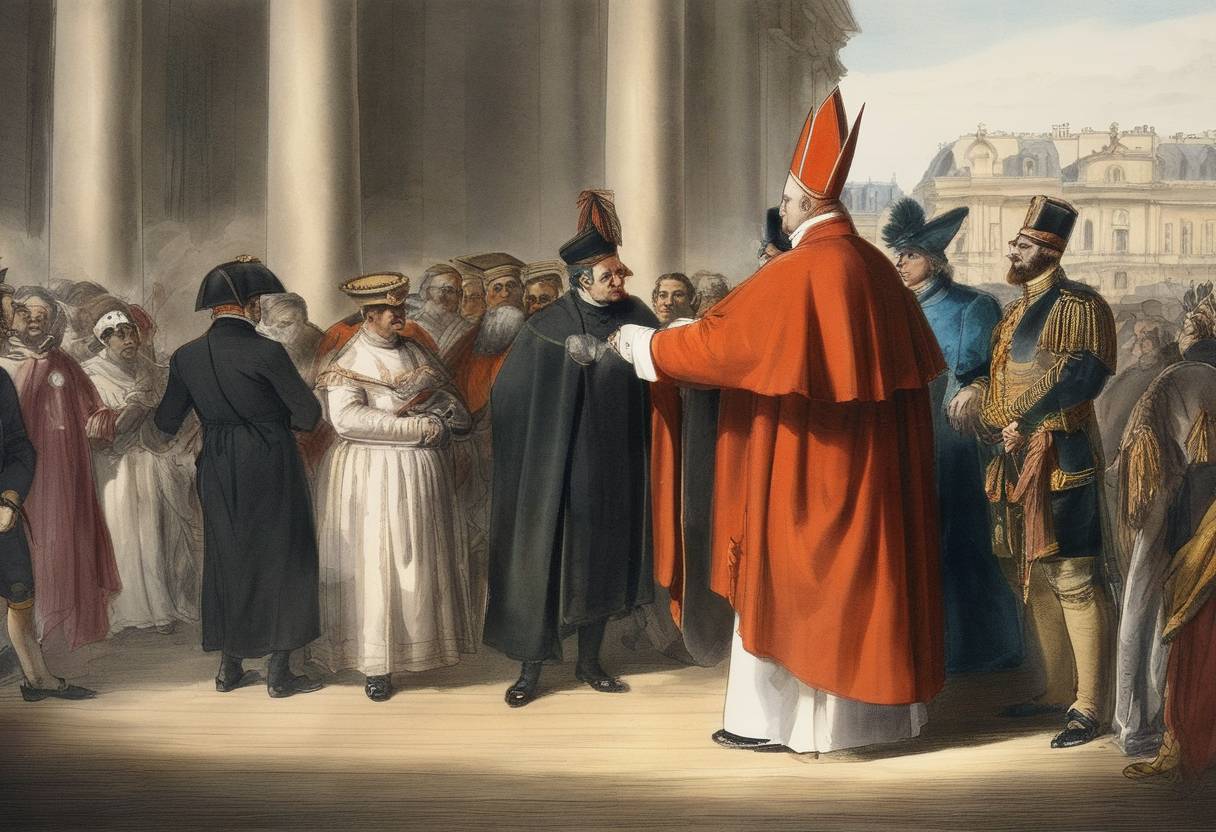
On March 14, 1800, Cardinal Giovanni Battista Caprara, appointed by Pope Pius VII as the papal legate, arrived in Paris with the critical mission of negotiating a concordat with France’s First Consul, Napoleon Bonaparte. This diplomatic endeavor aimed to reestablish the Catholic Church’s position in France following the tumultuous years of the French Revolution, which had significantly diminished the Church’s influence and led to the secularization of societal institutions.
During the French Revolution (1789–1799), the Catholic Church faced systemic suppression, with revolutionary leaders promoting secular and deistic ideologies. Church property was confiscated, clergy faced persecution, and religious practices were substantially restricted. The Civil Constitution of the Clergy (1790) further estranged the Church by making the clergy essentially employees of the state.
With Napoleon’s rise following the fall of the Directory, and his efforts to consolidate power and stabilize the nation, he recognized the need to reconcile the revolutionary state with the Catholic Church to gain public support and legitimize his regime.
Caprara’s arrival marked the beginning of complex negotiations aiming to achieve several objectives:
The successful negotiation culminated in the Concordat of 1801, signed on July 15, 1801. It represented a significant turning point:
The Concordat of 1801 thus marked a critical effort in bridging revolutionary ideals with traditional religious authority, demonstrating the intertwined destinies of state and church, and shaping the trajectory of France during the Napoleonic era.
Source: www.britannica.com