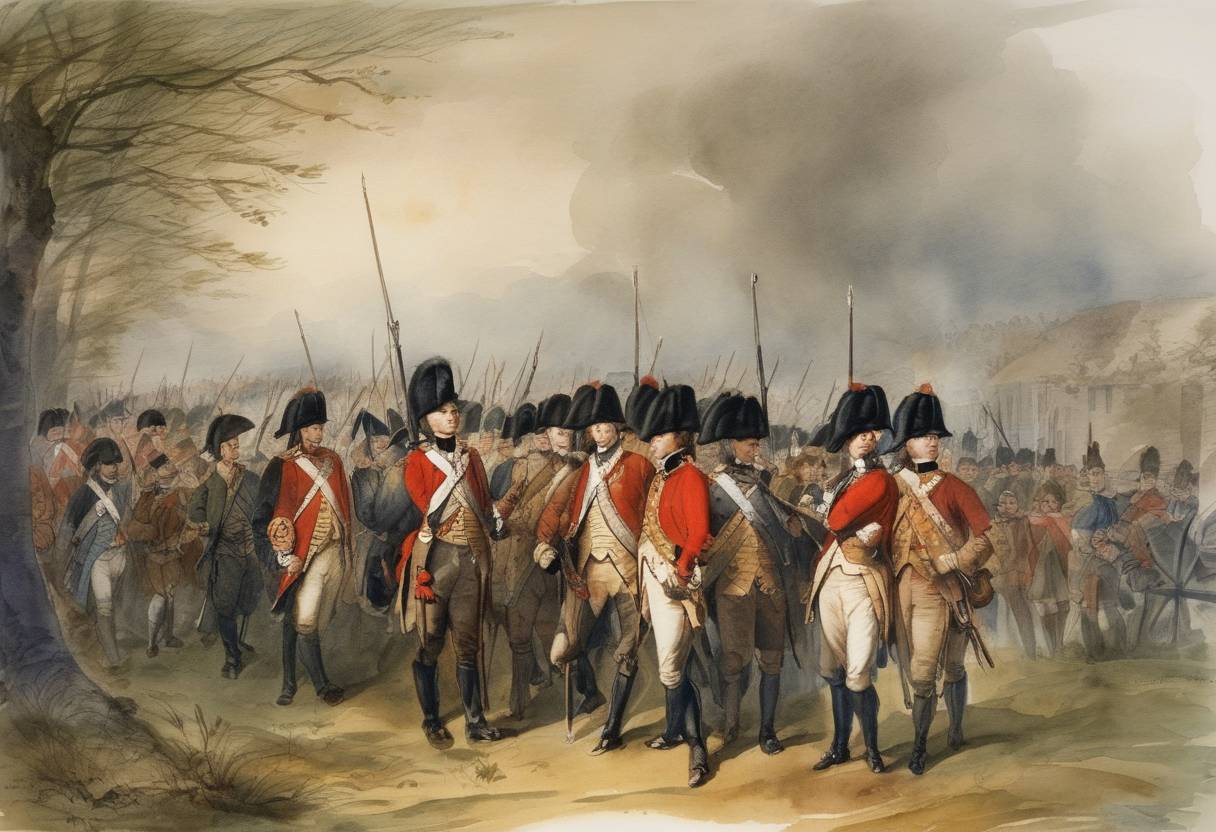
Bonnie Prince Charlie’s Withdrawal to Scotland from Derby
On December 6, 1745, during the Jacobite Rising of 1745, Charles Edward Stuart, known as Bonnie Prince Charlie, made the pivotal decision to retreat from Derby back to Scotland. This event marked a turning point in the Jacobite campaign to reclaim the British throne for the Stuart line.
Background
The Jacobite Rising of 1745 aimed to restore the Stuart monarchy, with Charles Edward Stuart, the grandson of the deposed King James II of England and VII of Scotland, spearheading the cause. The uprising gained momentum as Charles landed in Scotland in July 1745, raising an army predominantly composed of Scottish Highlanders. The Jacobite forces achieved significant victories at Prestonpans and advanced into England, reaching as far south as Derby by December 4, 1745.
The Decision to Retreat
Despite their successes, the Jacobite forces found themselves in a precarious situation at Derby. They were approximately 125 miles from London, yet faced several strategic dilemmas:
- Lack of Support: Hopes for mass English and French support were dashed. Few English recruits joined, and promised French reinforcements failed to materialize.
- Government Forces: The British government, led by King George II, regrouped under the command of William Augustus, the Duke of Cumberland. With a strengthened army, they posed a real threat to the Jacobite forces.
- Logistical Challenges: The Jacobite army faced supply shortages and lengthy supply lines, complicating their advance and sustaining operations in hostile territory.
These factors culminated in the Jacobite council meeting on December 5th. Despite Charles’s initial insistence on pressing forward, the consensus leaned toward a strategic withdrawal to consolidate their position in Scotland, highlighting internal divisions among the leadership.
The Retreat
On December 6, 1745, the retreat from Derby commenced. Although the withdrawal was organized, it marked the decline of the Jacobite campaign:
- Continued Pursuit: The retreat was closely pursued by the Duke of Cumberland’s forces. The Jacobites managed to reach Scotland after a grueling retreat, with skirmishes and rearguard actions along the way.
- Strategic Withdrawal: Key decisions during the retreat included the abandonment of siege plans on towns such as Carlisle, which was left garrisoned but eventually recaptured by British forces.
Aftermath and Historical Significance
The retreat to Scotland signaled the end of the Jacobite advance into England and a shift to a more defensive posture:
- Battle of Culloden: Ultimately, the retreat set the stage for the Battle of Culloden on April 16, 1746, where the Jacobite forces were decisively defeated by government troops under the Duke of Cumberland.
- End of the Jacobite Cause: Culloden effectively ended major Jacobite attempts to restore the Stuart monarchy, leading to severe repercussions for the Highland clans and a systematic campaign to dismantle their power structures.
- Legacy: The Jacobite Rising of 1745 left a lasting impact on British history and culture, immortalizing figures like Bonnie Prince Charlie in folklore and ongoing discussions about the legitimacy of monarchy and resistance.
The decision to withdraw from Derby exemplifies the complex interplay of military strategy, political aspirations, and leadership challenges faced during the Jacobite Rising, emphasizing the broader historical significance of this pivotal episode in British history.