The People's Republic of China's Announcement on November 16, 1990
1990 · Beijing, China
The People's Republic of China announced that it would release 211 political prisoners and reduce sentences for 48 others.
June 5, 1989
The famous 'Tank Man' incident occurred during the protests in Tiananmen Square, where an unidentified man stood in front of a column of tanks the day after the Chinese government's crackdown.
Beijing, China | People's Liberation Army
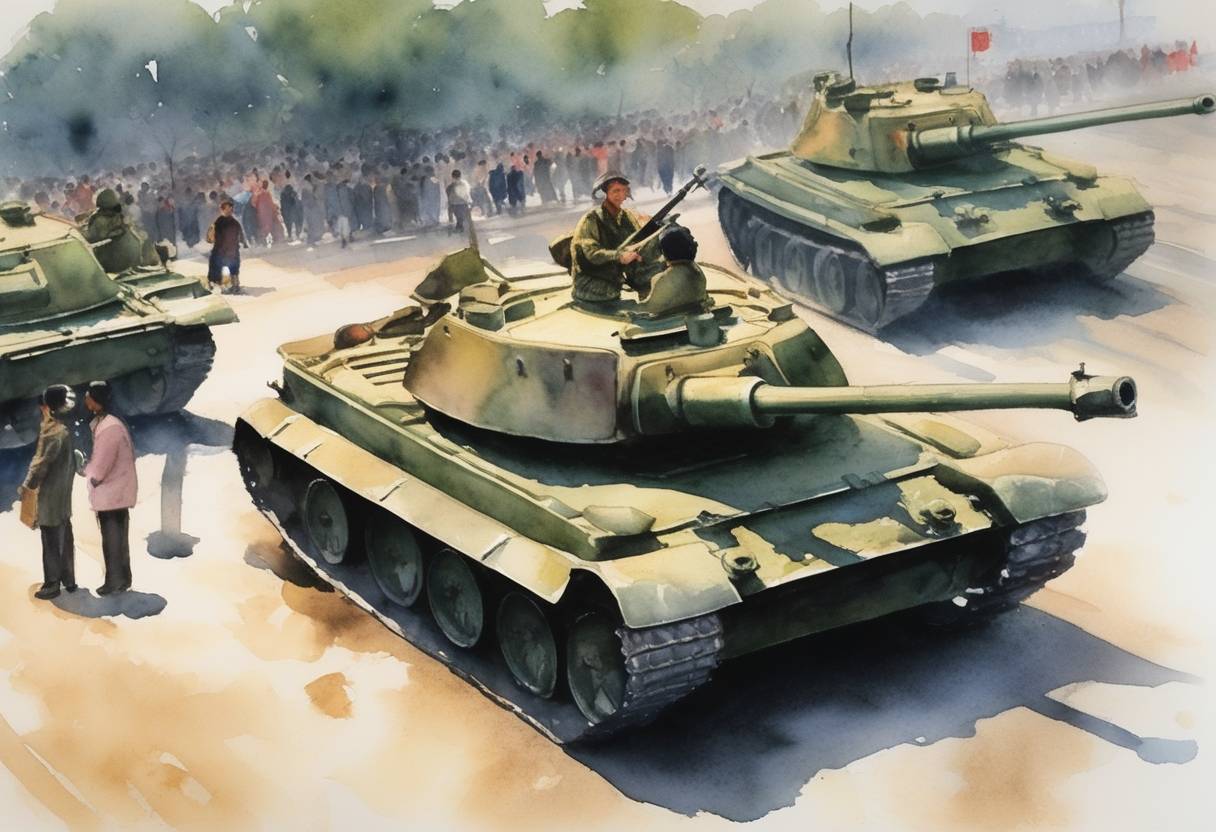
On June 5, 1989, an indelible image was seared into the global consciousness during the aftermath of the Tiananmen Square protests in Beijing, China. An unidentified man, who would become known as “Tank Man,” stood alone in front of a column of Type 59 tanks. This iconic moment occurred on Chang’an Avenue, the major thoroughfare near Tiananmen Square, just a day after the Chinese military’s violent crackdown on pro-democracy demonstrators.
In the spring of 1989, a wave of pro-democracy protests swept across China, largely led by students advocating for political reform, freedom of speech, and greater personal freedoms. These demonstrations peaked at Tiananmen Square, Beijing’s vast public plaza, with tens of thousands of participants. As the movement gained momentum over several weeks, the Chinese government declared martial law and, on June 3-4, deployed troops and tanks to quell the protests, resulting in significant casualties.
The morning after the crackdown, the “Tank Man” made his stand as a column of tanks advanced along Chang’an Avenue. The man, carrying shopping bags, positioned himself directly in the path of the tanks. In an extraordinary display of defiance, he blocked the lead tank, forced it to stop, and seemed to engage the driver in a brief conversation. As the tank attempted to maneuver around him, the man repeatedly stepped into its path, effectively halting the column’s progress.
Despite provoking international attention and becoming a symbol of resistance, the identity and fate of “Tank Man” remain unknown. After his confrontation with the tanks, he was whisked away by bystanders, and his subsequent whereabouts have never been confirmed, leading to numerous speculations.
The “Tank Man” incident captured global headlines and became one of the defining images of the 20th century, emblematic of peaceful resistance against oppression. It highlighted the severe measures the Chinese government took against dissent and remains a poignant reminder of the ongoing struggle for human rights and political freedoms in China and beyond.
Source: en.wikipedia.org