The Death of Wat Tyler: The Peasants' Revolt of 1381
1381 · London, England
During the Peasants' Revolt in England, Wat Tyler, the leader of the revolt, was killed at Smithfield by officers loyal to King Richard II.
July 15, 1381
King Richard II of England issues a royal pardon to many of the participants in the Peasants' Revolt, in an effort to pacify the unrest and restore order. The rebellion had been fueled by socio-economic grievances.
London, England | Kingdom of England
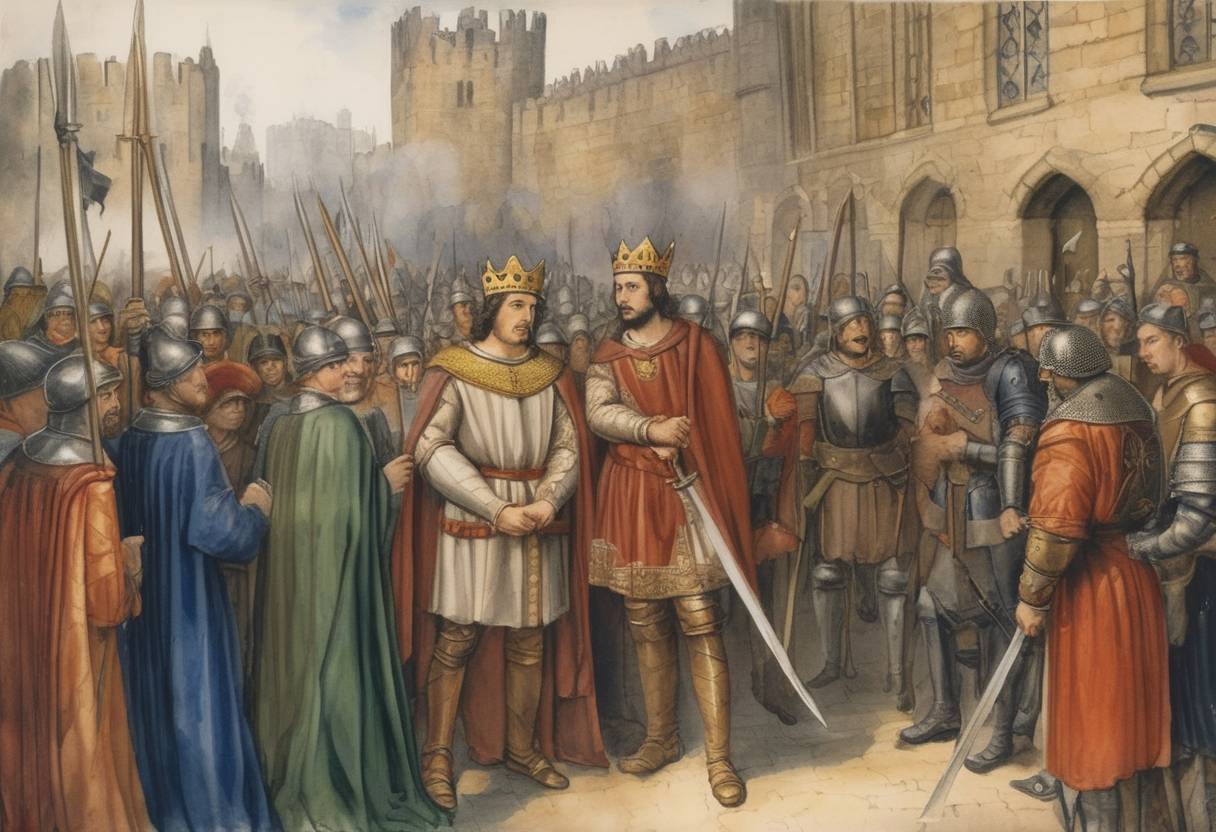
On July 15, 1381, King Richard II of England issued a royal pardon to many of the participants involved in the Peasants’ Revolt. This significant event took place amidst one of England’s most notable uprisings, spurred by profound socio-economic discontent among the lower classes.
The Peasants’ Revolt of 1381 was largely driven by tensions rising from the harsh economic conditions following the Black Death, along with successive poll taxes imposed by the government. The revolt was catalyzed by these grievances, including labor shortages, the Statute of Labourers (1351), and the perceived corruption within the government. Discontent was widespread, but it found strong expression in the southeastern counties of England, particularly Kent and Essex.
The revolt saw its climax with the capture of London in June 1381 by insurgents led by figures such as Wat Tyler and John Ball. Within London, the rebels executed high-profile officials and demanded radical reforms.
King Richard II, though only 14 years old at the time, personally met the rebels at Mile End on June 14, where initial agreements were made. However, subsequent meetings resulted in Wat Tyler’s death during negotiations with the King’s party at Smithfield on June 15.
Following the unrest’s violent suppression, the King and his council sought to restore order and stability. On July 15, 1381, Richard II issued a general pardon. This act was part of a broader strategy to pacify the population and prevent future insurrections. The pardon was intended to quell fears and encourage the return to a peaceful societal norm by offering clemency to those involved in the disturbances.
Although the royal pardons were an immediate attempt to de-escalate the situation, many promises made by Richard II during the revolts were quickly renounced. The government retracted concessions regarding serfdom abolition and tax reforms. For instance, the royal charters of freedom were declared void later, and the previous socioeconomic conditions were largely reinstated.
The Peasants’ Revolt and the poise with which Richard II initially handled the uprising’s demands became a significant event in his reign, demonstrating both the government’s fragility and the social changes post-plague. This rebellion illustrated the emerging tensions between rulers and the ruled, which would continue to shape England’s socio-political landscape.
While the revolt did not immediately achieve its lofty goals, it underscored the power and potential of popular uprisings in challenging feudal structures and influenced future generations’ movements towards social change.
Richard II’s royal pardon on July 15, 1381, remains a pivotal moment in highlighting the balance between authority and clemency in periods of national turmoil.
Source: en.wikipedia.org