Virginia Dare: The First English Child Born in the Americas
1587 · Roanoke Island, Present-day United States
Virginia Dare became the first English child born in the Americas, in the Roanoke Colony.
October 16, 1590
John White, the governor of the Roanoke Colony, returns to England after an unsuccessful attempt to find the colonists who mysteriously disappeared while he was away, an event popularly known as the 'Lost Colony' of Roanoke.
England, England | Roanoke Colony
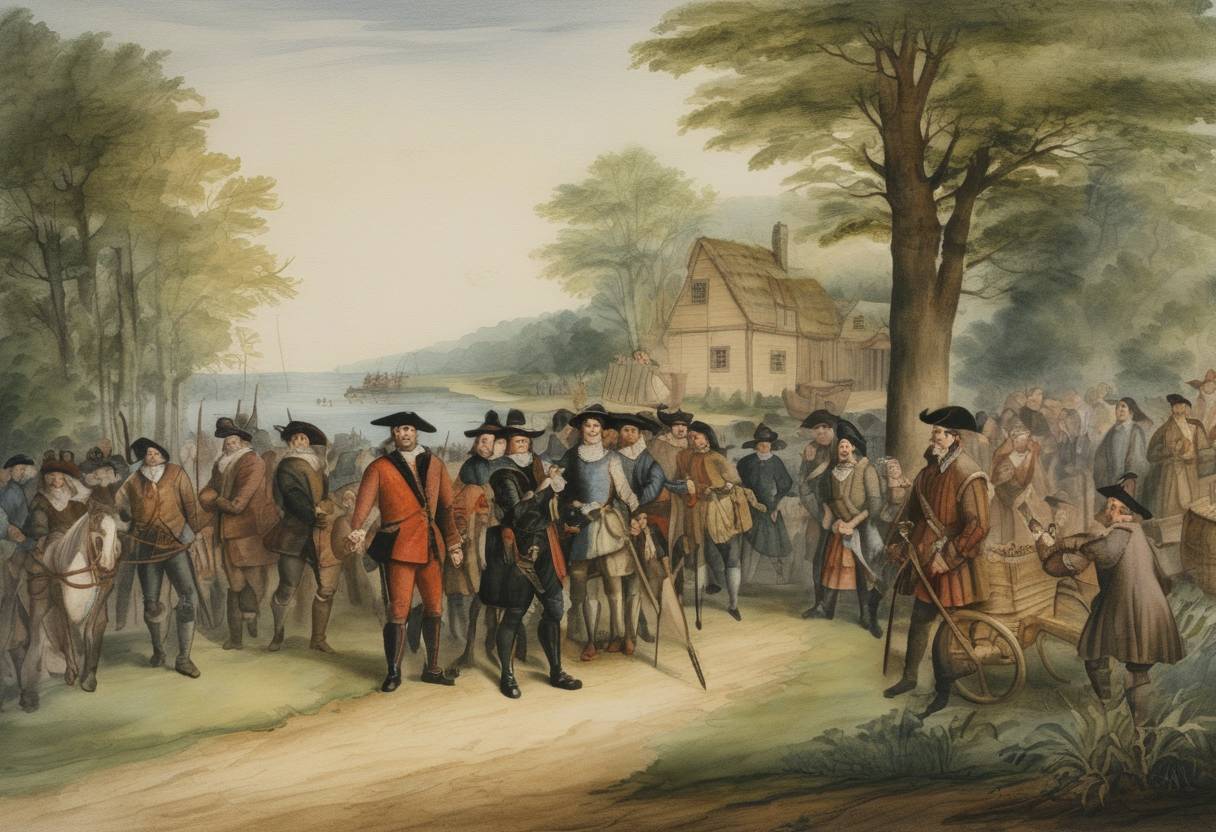
On October 16, 1590, John White, the governor of the Roanoke Colony, returned to England after a failed attempt to locate the missing settlers of what became known as the “Lost Colony.” This event is a pivotal moment in the early history of English attempts to establish a permanent settlement in North America.
The Roanoke Colony was established in 1585 on Roanoke Island, in present-day North Carolina, under a charter granted by Queen Elizabeth I to Sir Walter Raleigh. The initial settlement faced numerous challenges, including supply shortages and tense relations with local Indigenous peoples. John White, an artist and mapmaker, became the governor of a new expedition in 1587 to establish a more permanent presence.
Shortly after the birth of his granddaughter, Virginia Dare—the first English child born in the Americas—White returned to England in August 1587 to procure more supplies. His return was severely delayed due to the Anglo-Spanish War, rendering him unable to return to Roanoke until 1590. Upon his arrival, White found the settlement abandoned with no trace of the 115 colonists, including his daughter and granddaughter.
The only clue to their whereabouts was the word “CROATOAN” carved into a post of the fort and “CRO” carved into a nearby tree. These markings suggested the colonists might have moved to Croatoan Island (now Hatteras Island), but adverse conditions and White’s subsequent return to England prevented further search efforts.
This unexplained disappearance remains one of America’s oldest unsolved mysteries. Theories include assimilation with local tribes, death due to conflict or starvation, or relocation further inland. The fate of the settlers has become a subject of legend and scholarly debate, symbolizing early colonial struggles and the dangers faced by the first attempts at European settlement in the New World.
John White’s return without his fellow colonists marked the end of direct efforts to locate them, yet tales of the Lost Colony have persisted into modern times, capturing the imagination of generations. This endeavor laid the groundwork for future successful settlements, such as Jamestown in 1607, and remains a significant cultural reference point in U.S. history.
Source: en.wikipedia.org