Establishment of the Visegrád Group
1992 · Visegrád, Hungary
The Visegrád Group is established with the signing of a declaration by Czechoslovakia, Hungary, and Poland to foster cooperation and further their European integration.
December 1, 1335
The Congress of Visegrád concludes as a result of a two-month gathering, establishing a cooperative framework between the kings of Poland, Hungary, and Bohemia.
Visegrád, Kingdom of Hungary (modern-day Hungary) | Delegation of Kings
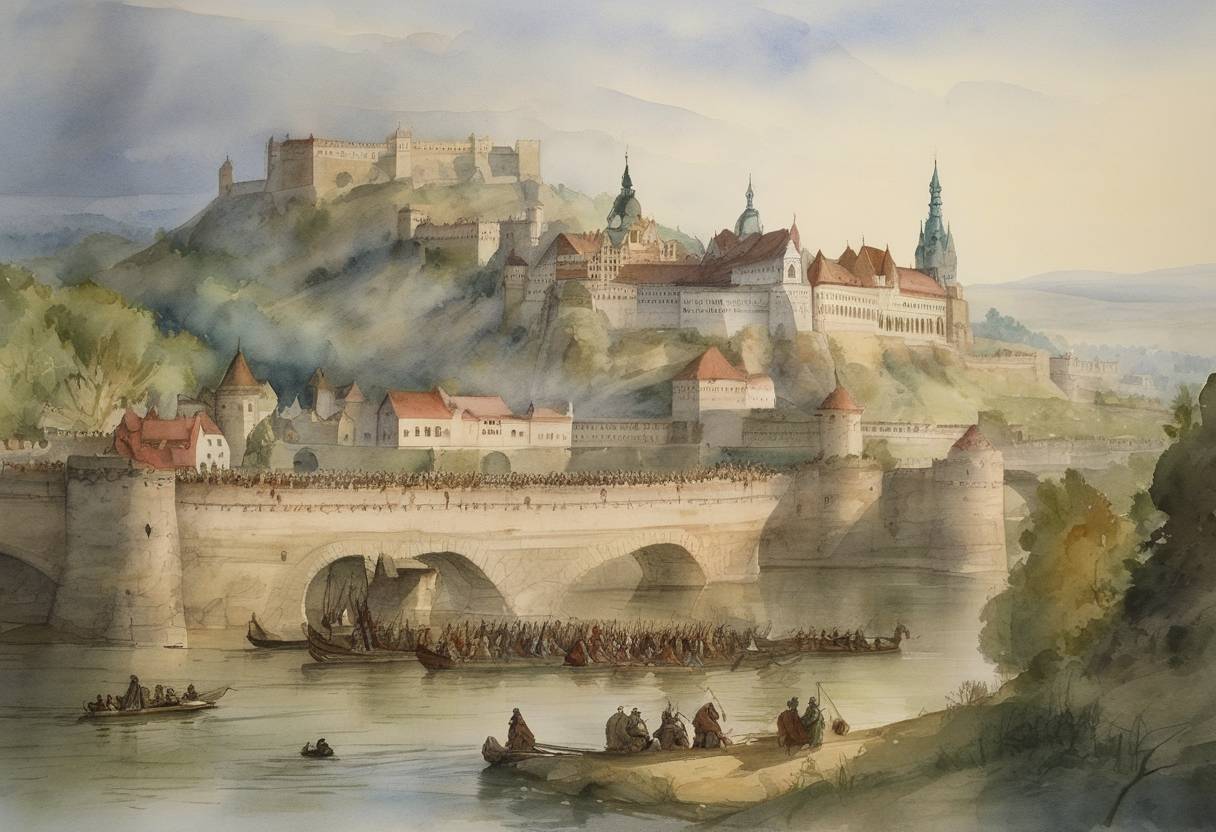
On December 1, 1335, the Congress of Visegrád concluded after approximately two months of diplomatic discussions. This significant event marked the end of comprehensive talks between three prominent Central European monarchs: King Charles I of Hungary, King Casimir III of Poland, and King John I of Bohemia. The gathering took place in the town of Visegrád, located in present-day Hungary, and resulted in the establishment of a framework for political and economic cooperation among the three kingdoms.
In the early 14th century, the political landscape of Central Europe was characterized by complex interdynastic rivalries and territorial disputes. Notably, the region faced ongoing tensions involving claims to various thrones and territories, necessitating dialogue among regional leaders to stabilize their realms and assert influence. The Congress of Visegrád aimed to address these challenges through negotiation and collaboration.
Dynastic Disputes: Conflicts over the succession of the Bohemian and Polish thrones contributed to regional instability. The congress intended to resolve some of these longstanding disputes and prevent further conflict.
Economic Interests: Trade routes, particularly along the Danube River, were vital to the economic prosperity of Central Europe. Promoting free and secure trade was a core objective of the conclave.
Political Alignments: Forming alliances was critical in countering the influences outside the region, such as the growing power of the Holy Roman Empire under Emperor Louis IV.
Reestablishment of Peace and Alliances: The congress succeeded in easing tensions between the involved parties. It forged stronger diplomatic alliances, minimizing potential conflicts among the neighboring states.
Economic Cooperation: Agreements were reached to facilitate trade by reducing tariffs and tolls across the territories of the three kingdoms. This agreement aimed to bolster economic ties and enhance prosperity in the region.
Support for Polish Claims: King John of Bohemia agreed to abandon his claims to the Polish throne, which strengthened King Casimir III’s position and sovereignty.
Coordination Against Common Threats: The monarchs agreed to collaborate against external threats, particularly from the Holy Roman Empire and other regional powers.
The Congress of Visegrád is often seen as an early example of regional cooperation in Europe, foreshadowing more modern integrated frameworks. It reinforced the interconnectedness of Central European politics and set a precedent for future diplomatic gatherings. The positive impacts on trade and political stability had lasting effects on the development of the involved kingdoms.
This congress is sometimes viewed as a precursor to later cooperative efforts, highlighting the importance of dialogue and collaboration among states with shared interests and challenges.
Source: en.wikipedia.org