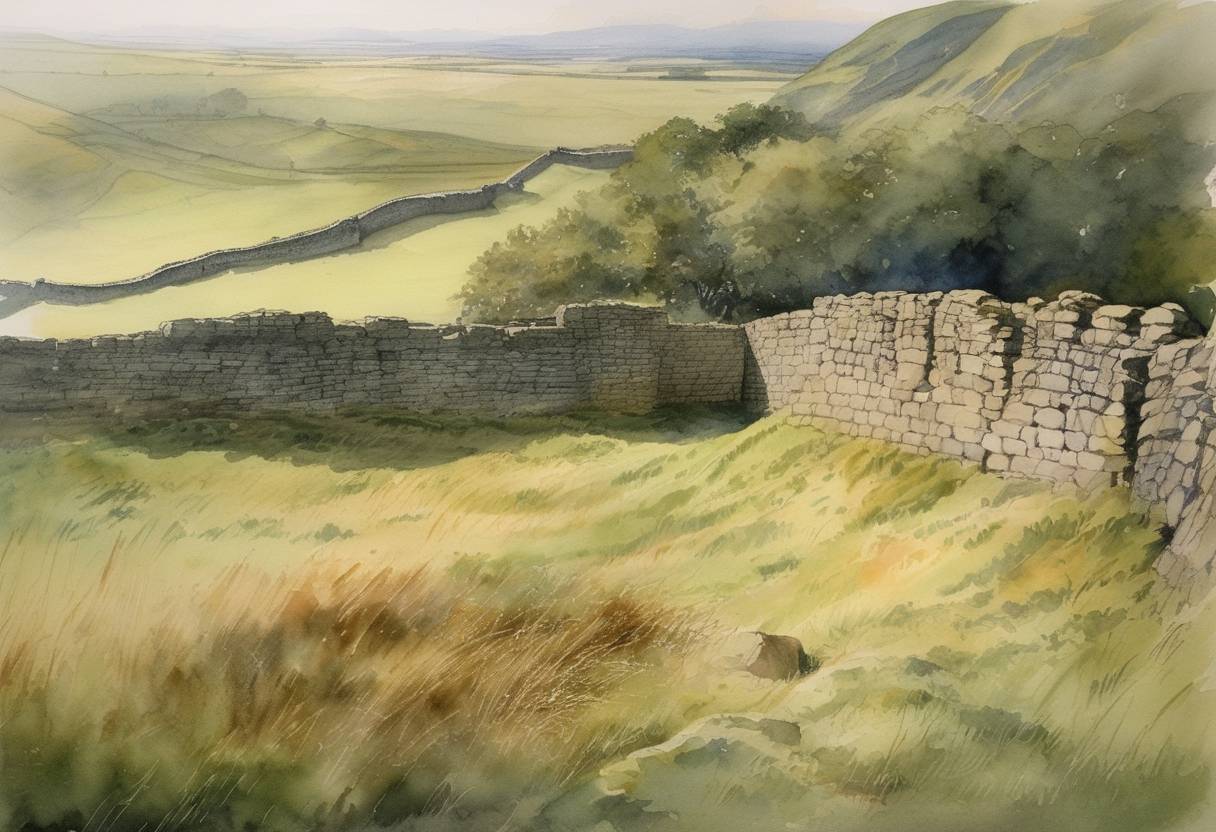
Construction of Hadrian’s Wall Begins on September 13, 122
On September 13, 122, the Roman Emperor Hadrian initiated the construction of what would become known as Hadrian’s Wall, setting a definitive mark on the landscape of Roman Britain. The wall was commissioned as part of Hadrian’s broader efforts to consolidate and fortify the boundaries of the Roman Empire, rather than expand them.
Background and Purpose
At the time of its construction, the Roman Empire faced numerous challenges at its borders, especially from tribes in Britannia, such as the Picts in the north. The wall was intended to serve both as a physical barrier to control movement and to display the might of Rome. Unlike offensive campaigns led by previous emperors, Hadrian chose to focus on fortifying the empire’s existing frontiers.
Construction and Features
The wall stretched approximately 73 miles (about 117 kilometers) across the north of England, from Wallsend on the River Tyne in the east to Bowness-on-Solway on the Solway Firth in the west. It was an ambitious project consisting of stone and turf sections, depending on the local resources available. The design included a series of forts, smaller milecastles, and watchtowers positioned at regular intervals, allowing for efficient monitoring and communication along the border.
Impact and Legacy
Upon completion, Hadrian’s Wall marked the northernmost boundary of Roman Britain and it became a symbol of Roman engineering prowess. It influenced subsequent military architectures and fortifications across Europe. Despite facing several attacks and breaches, the wall remained a functional defense line for centuries and was progressively modified and manned until the Roman withdrawal from Britain in the early 5th century.
Today, Hadrian’s Wall is recognized as a UNESCO World Heritage Site, drawing scholars and tourists alike who seek to understand its historical significance and the broader impact of Roman rule in ancient Britain.