1717 · The Hague, Netherlands
The Netherlands, Great Britain, and France signed the Triple Alliance to counter the power of Spain.
September 8, 1701
The Treaty of The Hague was signed between England, the Holy Roman Empire, and the Dutch Republic to secure a mutual defense against France and Spain.
The Hague, Netherlands | European Alliance
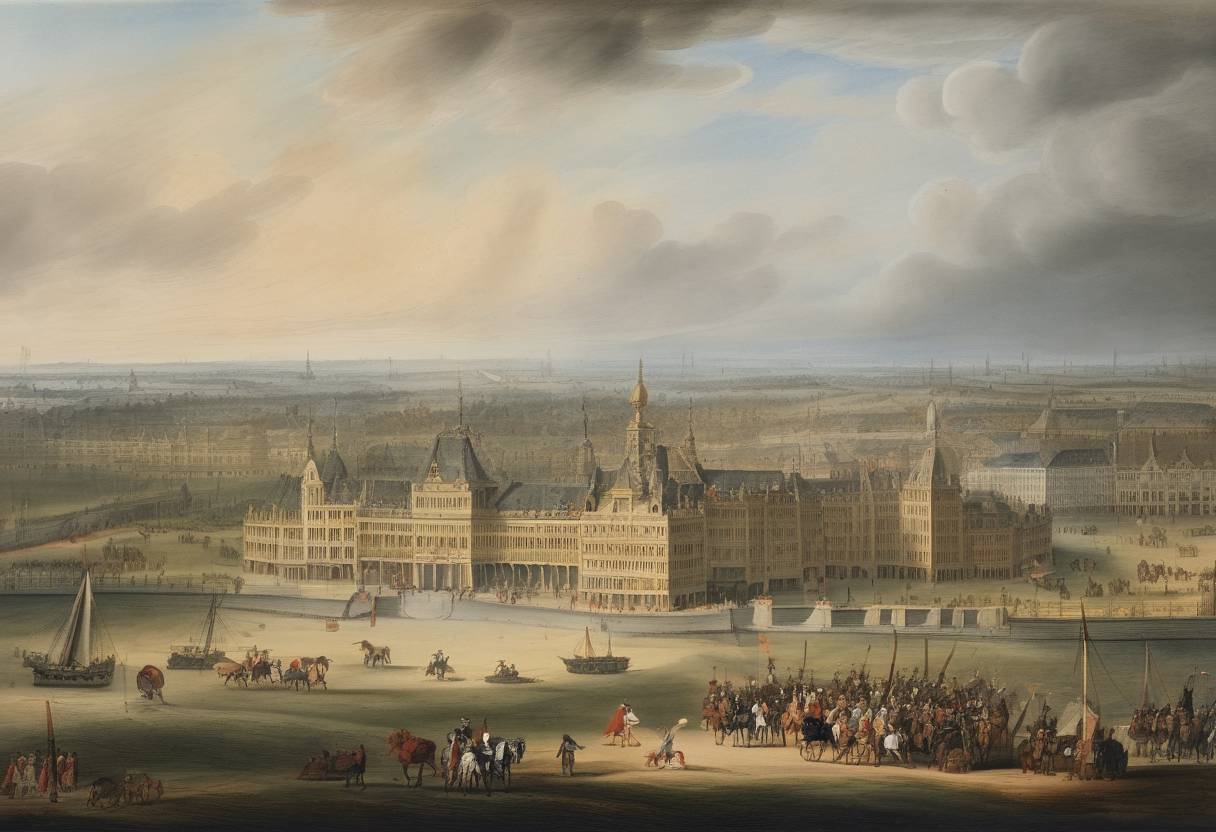
On September 8, 1701, a significant diplomatic agreement known as the Treaty of The Hague was signed between England, the Holy Roman Empire, and the Dutch Republic. This treaty played a critical role in the formation of the Grand Alliance and aimed to create a united front against the growing power of France and its ally Spain under the rule of Louis XIV.
The late 17th and early 18th centuries were marked by the aggressive expansionist policies of Louis XIV of France, who sought to extend France’s influence across Europe. The War of the Spanish Succession was imminent due to the impending death of the childless Charles II of Spain, which left a vacuum for control over the Spanish Empire. France’s ambitions under Louis XIV threatened the balance of power in Europe, causing anxiety among neighboring nations such as England, the Holy Roman Empire, and the Dutch Republic.
The Treaty of The Hague established mutual defense obligations among signatory nations. Its main provisions included:
The Treaty of The Hague was instrumental in setting the stage for the War of the Spanish Succession (1701-1714). The treaty’s formation of the Grand Alliance helped to unite the coalition of powers determined to counterbalance French hegemony. It also underscored the importance of diplomatic agreements in maintaining geopolitical stability.
The war that followed resulted in significant territorial and power shifts across Europe and ended with the Treaty of Utrecht in 1713. This reaffirmed the importance of alliances and treaties in the governance of international relations during this period.
In summary, the Treaty of The Hague was a pivotal moment in early 18th-century European diplomacy, reflecting the intricate web of alliances and rivalries that defined the era’s political landscape.
Source: www.britannica.com