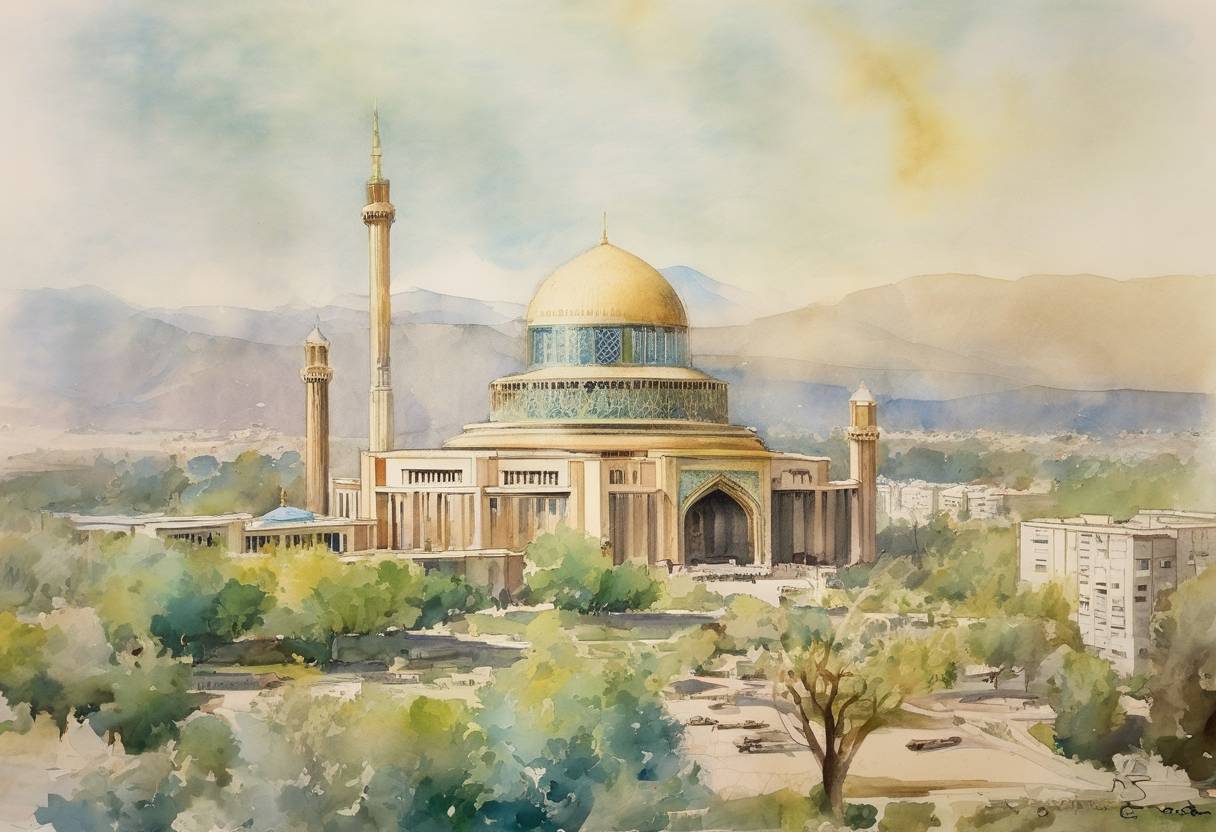
Iran Becomes an Islamic Republic - April 1, 1979
On April 1, 1979, Iran officially became an Islamic Republic following a national referendum. This pivotal event marked the end of the Pahlavi monarchy and the beginning of a new era of theocratic rule under Ayatollah Ruhollah Khomeini. The transformation was a culmination of widespread dissatisfaction with the Shah’s regime and a series of revolutionary activities that had been building momentum throughout the 1970s.
Background
The Pahlavi Dynasty: The Pahlavi monarchy, led by Shah Mohammad Reza Pahlavi, had ruled Iran since 1925. The Shah’s regime was characterized by rapid modernization and Westernization, which, while modernizing the country, also led to significant social and economic disparities.
Opposition to the Shah: Discontent with the Shah’s authoritarian rule, his close ties with Western powers, and the perceived erosion of Islamic values fueled opposition. This opposition was diverse, including secular nationalists, leftists, and religious groups.
Ayatollah Khomeini: A prominent cleric and vocal critic of the Shah, Ayatollah Khomeini became the symbolic leader of the revolution. Exiled for his opposition, Khomeini’s messages were disseminated widely, galvanizing support across various segments of Iranian society.
The Revolution
Protests and Unrest: Throughout 1978, Iran experienced escalating protests and strikes. The Shah’s attempts to quell dissent through military force only intensified public anger.
The Shah’s Departure: In January 1979, facing insurmountable pressure, the Shah left Iran for an “extended vacation,” effectively abdicating his throne.
Khomeini’s Return: On February 1, 1979, Ayatollah Khomeini returned to Iran from exile, greeted by millions of supporters. His arrival marked a turning point, as he quickly assumed leadership of the revolutionary movement.
The Referendum
Voting Process: The referendum, held on March 30-31, 1979, asked Iranians to vote on whether they wanted to replace the monarchy with an Islamic Republic. The question was straightforward: “Islamic Republic: Yes or No?”
Results: The results were overwhelmingly in favor, with over 98% of voters supporting the establishment of an Islamic Republic. On April 1, 1979, the new government was officially declared.
Aftermath and Significance
Constitutional Changes: The new government quickly moved to draft a constitution that enshrined the principles of Islamic governance. This included the establishment of the position of Supreme Leader, a role filled by Khomeini, granting him significant authority over the state.
Impact on Iran and the World: The establishment of the Islamic Republic had profound implications for Iran and the broader Middle East. It led to a reorientation of Iran’s foreign policy, strained relations with Western countries, particularly the United States, and inspired Islamic movements across the region.
Legacy: The revolution and the establishment of the Islamic Republic remain pivotal in understanding Iran’s contemporary political and social landscape. It represents a significant shift from secular monarchy to religious governance, influencing Iran’s domestic policies and international relations to this day.
The transformation of Iran into an Islamic Republic on April 1, 1979, was a defining moment in 20th-century history, reshaping the nation’s identity and altering the geopolitical dynamics of the Middle East.