Incorporation of the Standard Oil Company
1870 · Cleveland, United States
John D. Rockefeller incorporated the Standard Oil Company in Ohio, which would become the largest oil refinery firm in the world by the end of the 19th century.
August 27, 1859
Petroleum was discovered in Titusville, Pennsylvania, leading to the first commercially successful oil well, drilled by Edwin Drake. This event marked the beginning of the modern petroleum industry.
Titusville, United States | Seneca Oil Company
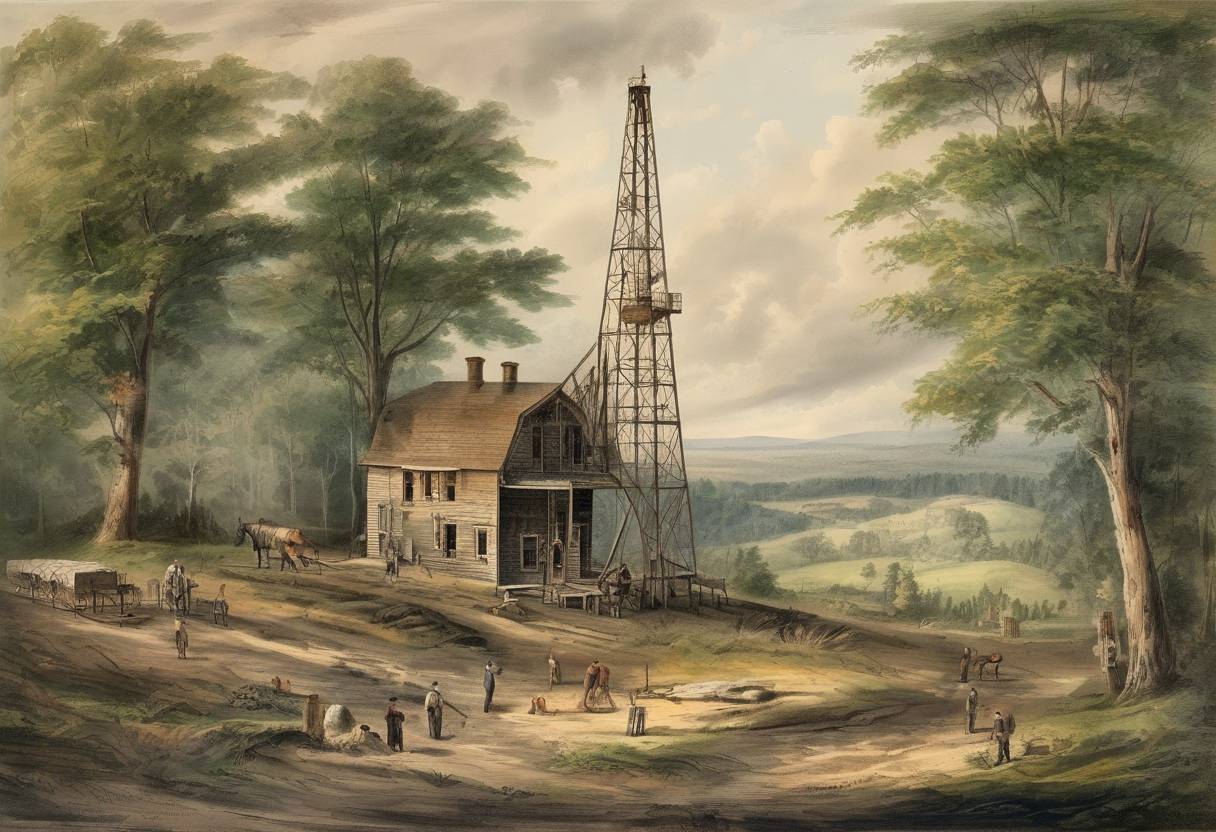
On August 27, 1859, a pivotal moment in industrial history occurred when Edwin Drake successfully drilled the first commercially viable oil well in Titusville, Pennsylvania. This event marked the inception of the modern petroleum industry, fundamentally transforming energy production and consumption worldwide.
Before Drake’s discovery, oil was primarily collected from surface seeps and used in limited quantities for medicinal purposes and as a lubricant. The demand for a more efficient and abundant source of lighting fuel was rising, driven by the limitations of whale oil and other traditional sources.
Investment and Innovation: Edwin Drake, a former railroad conductor, was hired by the Seneca Oil Company to explore the possibility of extracting oil from beneath the earth’s surface. Despite having no formal training in geology or engineering, Drake was determined to succeed.
Drilling Techniques: Drake employed a steam-powered drill, a novel approach at the time, to penetrate the earth. He faced numerous challenges, including financial constraints and technical difficulties, but persisted in his efforts.
Successful Drilling: On August 27, 1859, Drake’s well struck oil at a depth of 69.5 feet (approximately 21 meters). The well produced about 25 barrels of oil per day, proving the commercial viability of drilling for oil.
Immediate Impact: The discovery quickly attracted attention and investment, leading to a rush of drilling activity in the region. Titusville became a booming oil town, and the success of Drake’s well demonstrated the potential for oil as a major energy source.
Growth of the Petroleum Industry: The success of Drake’s well spurred the rapid development of the petroleum industry. Oil soon became a critical component of the global economy, fueling advancements in transportation, manufacturing, and energy production.
Technological Advancements: The drilling techniques pioneered by Drake laid the groundwork for future innovations in oil extraction and production, leading to the development of more efficient and deeper drilling methods.
Economic and Social Impact: The oil boom contributed to significant economic growth and urbanization in the United States. It also played a crucial role in shaping the geopolitical landscape, as nations sought to secure oil resources to power their economies and militaries.
Edwin Drake’s successful drilling of the first commercial oil well in Titusville, Pennsylvania, on August 27, 1859, marked the dawn of the modern petroleum industry. This discovery not only revolutionized energy production but also had profound and lasting effects on global economic and social structures, setting the stage for the industrial advancements of the 20th century and beyond.
Source: www.britannica.com