The Amistad Rebellion: July 2, 1839
1839 · Near Cuba, Spain
Twenty miles off the coast of Cuba, 53 rebelling African slaves led by Joseph Cinqué take over the Spanish ship Amistad.
September 9, 1739
The Stono Rebellion, the largest slave uprising in the British mainland colonies prior to the American Revolution, began in the colony of South Carolina.
Stono, United States | British Colonies
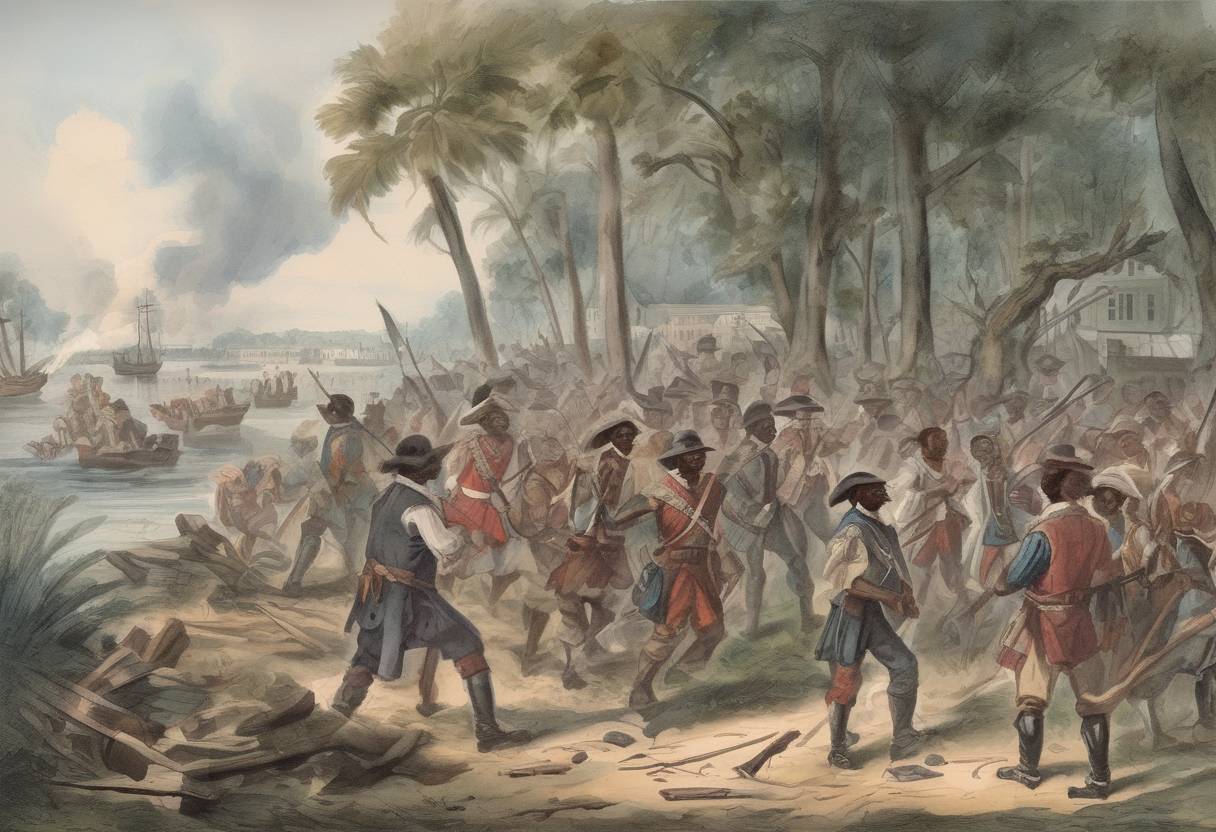
The Stono Rebellion, which began on September 9, 1739, stands as the largest slave uprising in the British mainland colonies prior to the American Revolution. This significant event took place in the colony of South Carolina and had profound implications for the future of slavery in America.
In the early 18th century, South Carolina was a burgeoning colony with a growing economy heavily reliant on slave labor, particularly in the rice and indigo plantations. The enslaved population, primarily of African descent, outnumbered the white settlers, creating a tense and volatile environment.
Several factors contributed to the unrest that led to the rebellion:
On the morning of September 9, 1739, a group of about 20 enslaved Africans, led by a man named Jemmy (or “Cato”), gathered near the Stono River, approximately 20 miles southwest of Charleston. They seized weapons and ammunition from a local store, killing the storekeepers in the process.
As they marched southward, the group grew in number, reaching an estimated 60 to 100 participants. They chanted for “liberty” and carried banners, hoping to reach Spanish Florida where they believed freedom awaited them.
The rebels attacked several plantations along their route, killing around 20 white settlers and burning properties. However, their progress was halted by a well-armed militia that confronted them near the Edisto River. In the ensuing battle, most of the rebels were killed, and those captured were later executed or sold off to the West Indies.
The Stono Rebellion had significant repercussions:
The Stono Rebellion remains a critical event in American history, illustrating the complexities of colonial society and the enduring human spirit in the face of oppression.
Source: en.wikipedia.org