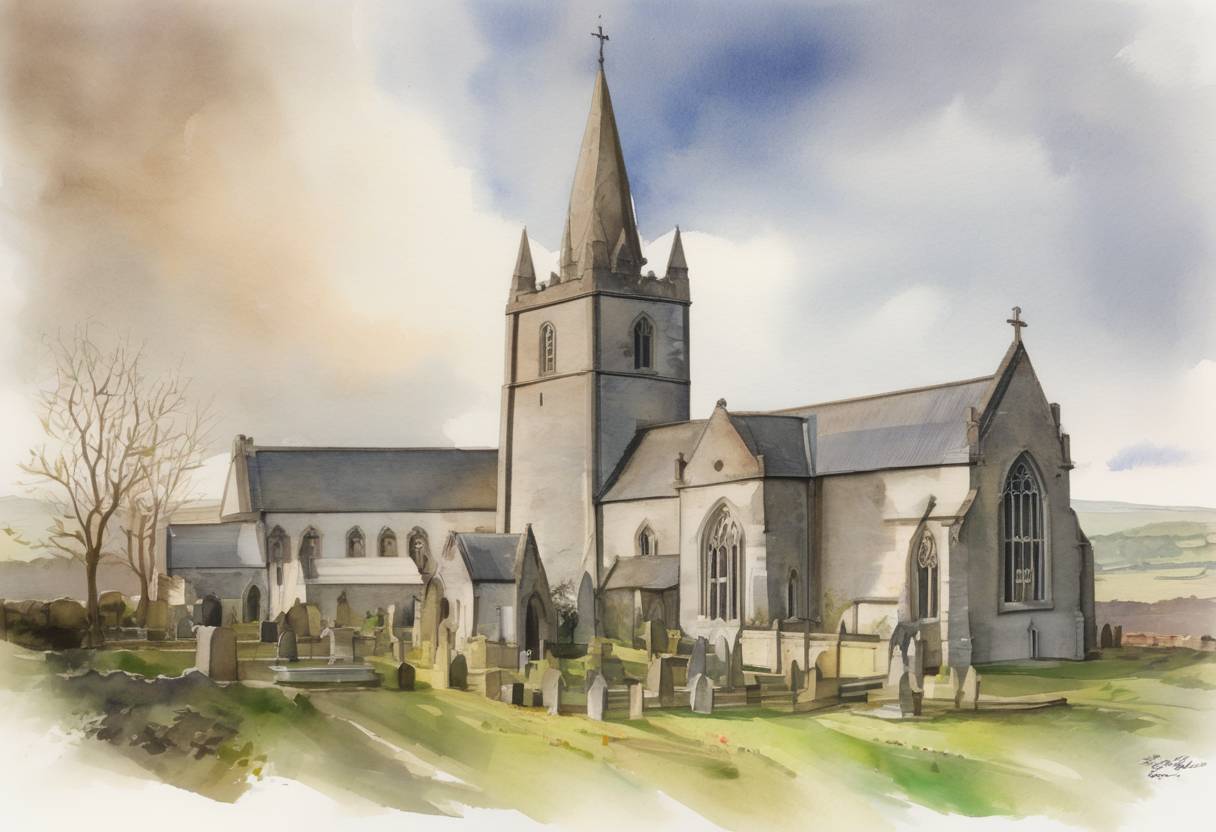
The Synod of Ráth Breasail
The Synod of Ráth Breasail, held in 1111, was a pivotal church council in Ireland that marked a significant step in the organization of the Irish church into dioceses. This event was crucial in aligning the Irish ecclesiastical structure more closely with the Roman Catholic Church’s practices across Europe.
Historical Context
Before the Synod of Ráth Breasail, the Irish church was primarily organized around monastic settlements rather than diocesan structures. Monasteries were the central religious and cultural hubs, often led by abbots who wielded considerable influence. This monastic system was somewhat unique compared to the diocesan model prevalent in continental Europe, where bishops held ecclesiastical authority over defined geographical areas.
Key Events Leading to the Synod
Reform Movement: By the 11th century, there was a growing movement within the Irish church to reform and standardize practices in line with broader European norms. This was partly influenced by the Gregorian Reform, which sought to address issues like clerical celibacy and simony across Christendom.
Papal Influence: The papacy, particularly under Pope Gregory VII, encouraged reforms that would bring the Irish church into greater conformity with Roman practices. This included the establishment of diocesan boundaries and the appointment of bishops with clear territorial jurisdictions.
The Synod of Ráth Breasail
Date and Location: The synod took place in 1111 at Ráth Breasail, a location believed to be near modern-day Mountrath in County Laois, Ireland.
Decisions Made: The synod was presided over by Gillebert (Gilbert), the Papal Legate to Ireland, and it resulted in the formal establishment of diocesan boundaries. The synod delineated two archbishoprics: Armagh and Cashel, and approximately 24 dioceses across Ireland.
Impact on the Irish Church: This reorganization was a significant shift from the monastic-centric model to a more hierarchical diocesan system. It laid the groundwork for a more unified church structure, facilitating better governance and alignment with the Roman Catholic Church.
Aftermath and Significance
Implementation: While the synod’s decisions were not immediately implemented everywhere, they set a precedent for future reforms. Over the subsequent decades, the diocesan system became more entrenched, particularly after the Synod of Kells in 1152, which further solidified the diocesan structure.
Cultural and Religious Impact: The Synod of Ráth Breasail was a crucial step in integrating the Irish church into the broader European ecclesiastical framework. It marked the beginning of a transition that would see Ireland’s religious practices increasingly influenced by continental norms.
In conclusion, the Synod of Ráth Breasail was a landmark event in Irish ecclesiastical history, representing a significant move towards the standardization and centralization of church governance in Ireland. This synod not only reshaped the religious landscape but also played a role in Ireland’s broader integration into the medieval European world.