Succession of Justin II as Byzantine Emperor
565 · Constantinople, Byzantine Empire
The Byzantine Emperor Justin II succeeds his uncle Justinian I as Emperor of the Byzantine Empire.
February 20, 0530
The Byzantine Emperor Justinian I issues the Codex Justinianus, a fundamental work in the history of Western law, as part of his comprehensive legal reforms.
Constantinople, Byzantine Empire | Byzantine Empire
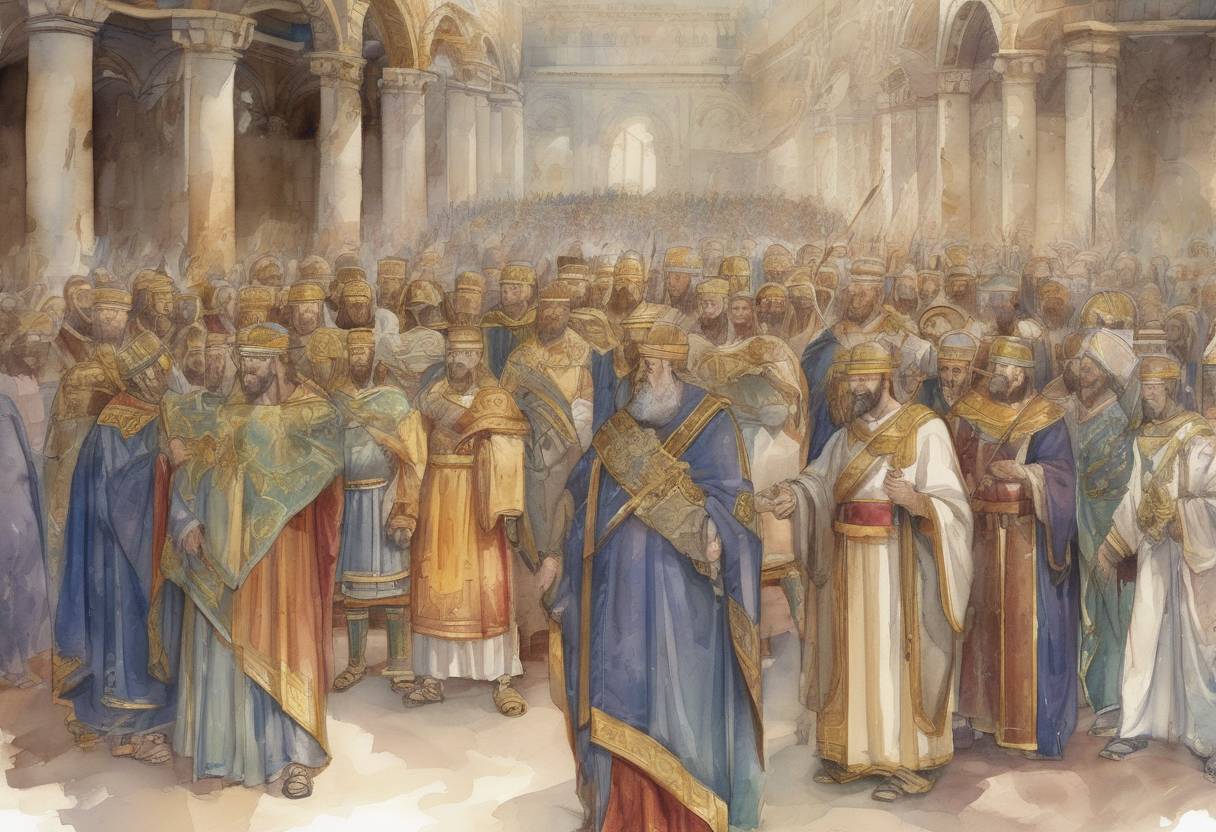
On February 20, 530, the Byzantine Emperor Justinian I issued the Codex Justinianus, a cornerstone in the history of Western law. This legal codification was part of Justinian’s broader ambition to consolidate and reform the legal system of the Byzantine Empire, ensuring its coherence and accessibility.
Justinian I ascended to the throne in 527 and quickly embarked on a series of ambitious reforms aimed at restoring the glory of the Roman Empire. One of his primary objectives was to address the chaotic state of Roman law, which had become a complex and unwieldy collection of statutes, legal opinions, and imperial edicts accumulated over centuries.
The Codex Justinianus was the first part of Justinian’s comprehensive legal reform, known collectively as the Corpus Juris Civilis, or the “Body of Civil Law.” The Codex was a compilation of existing imperial constitutions, systematically organized to eliminate contradictions and redundancies. It was intended to serve as the authoritative source of law for the empire.
The Codex Justinianus was followed by other critical components of the Corpus Juris Civilis:
The Codex Justinianus and the broader Corpus Juris Civilis had a profound and lasting impact on the development of legal systems in Europe and beyond:
In summary, the issuance of the Codex Justinianus on February 20, 530, marked a pivotal moment in legal history, reflecting Justinian’s vision of a unified and rational legal system. Its legacy endures in the legal traditions and systems that govern many parts of the world today.
Source: en.wikipedia.org