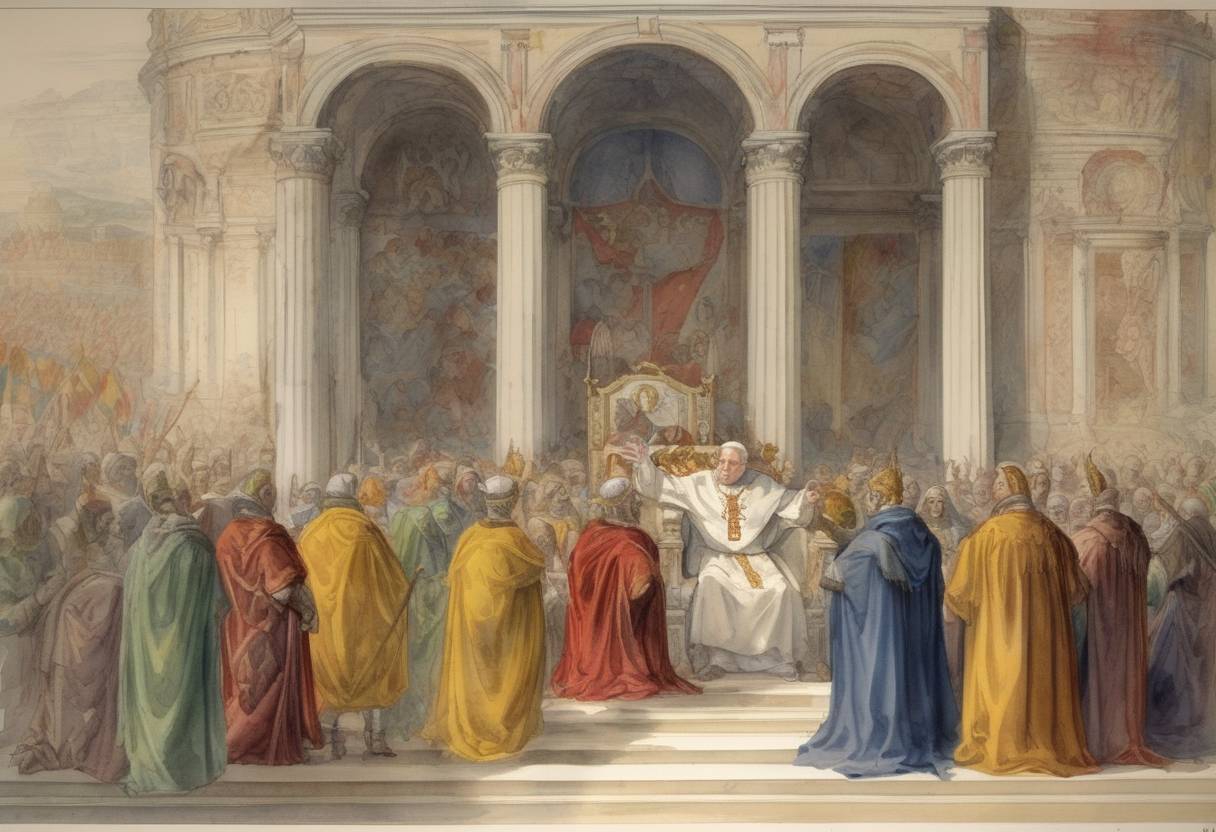
The Death of Pope Clement II and the Third Election of Pope Benedict IX
On October 9, 1047, Pope Clement II passed away, an event that set the stage for the third election of Pope Benedict IX. This period in the history of the papacy was marked by significant turmoil and controversy, reflecting the broader struggles within the Catholic Church and the political landscape of medieval Europe.
Background
Pope Clement II, born Suidger of Morsleben and Hornburg, was elected pope in December 1046. His papacy was notably short, lasting less than a year. Clement II was appointed by the Holy Roman Emperor Henry III during the Synod of Sutri, a council convened to address the corruption and moral decay within the Church, particularly the issue of simony—the buying and selling of ecclesiastical offices.
Clement II’s election was part of Henry III’s efforts to reform the papacy and restore its moral authority. During his brief tenure, Clement II convened the Council of Rome in 1047, where he enacted several reform measures aimed at curbing simony and other abuses within the Church.
The Death of Clement II
Clement II’s death on October 9, 1047, was sudden and shrouded in mystery. Some historical accounts suggest that he may have been poisoned, although this remains speculative. His death left a power vacuum in the papacy, which was quickly exploited by factions within Rome.
The Return of Pope Benedict IX
Benedict IX, born Theophylactus of Tusculum, was one of the most controversial figures in papal history. He had already served as pope twice before: first from 1032 to 1044 and then briefly in 1045. His previous papacies were characterized by scandal and accusations of immorality, leading to his eventual expulsion from Rome.
Following Clement II’s death, Benedict IX seized the opportunity to reclaim the papal throne. With the support of his powerful family, the Tusculani, he returned to Rome and was re-elected as pope for the third time. His third papacy, however, was short-lived, lasting only until July 1048, when he was again forced to abdicate.
Historical Significance
The repeated papacies of Benedict IX highlight the intense political and familial power struggles that plagued the Church during the 11th century. His controversial reigns underscored the need for reform and set the stage for the eventual Gregorian Reforms, which sought to address issues of clerical celibacy, simony, and lay investiture.
The events surrounding Clement II’s death and Benedict IX’s return also illustrate the complex interplay between secular and ecclesiastical powers, as the Holy Roman Empire and influential Roman families vied for control over the papacy.
In summary, the death of Pope Clement II and the subsequent election of Pope Benedict IX for the third time were pivotal moments in the history of the Catholic Church, reflecting the broader challenges of reform and the struggle for moral integrity within the papacy.