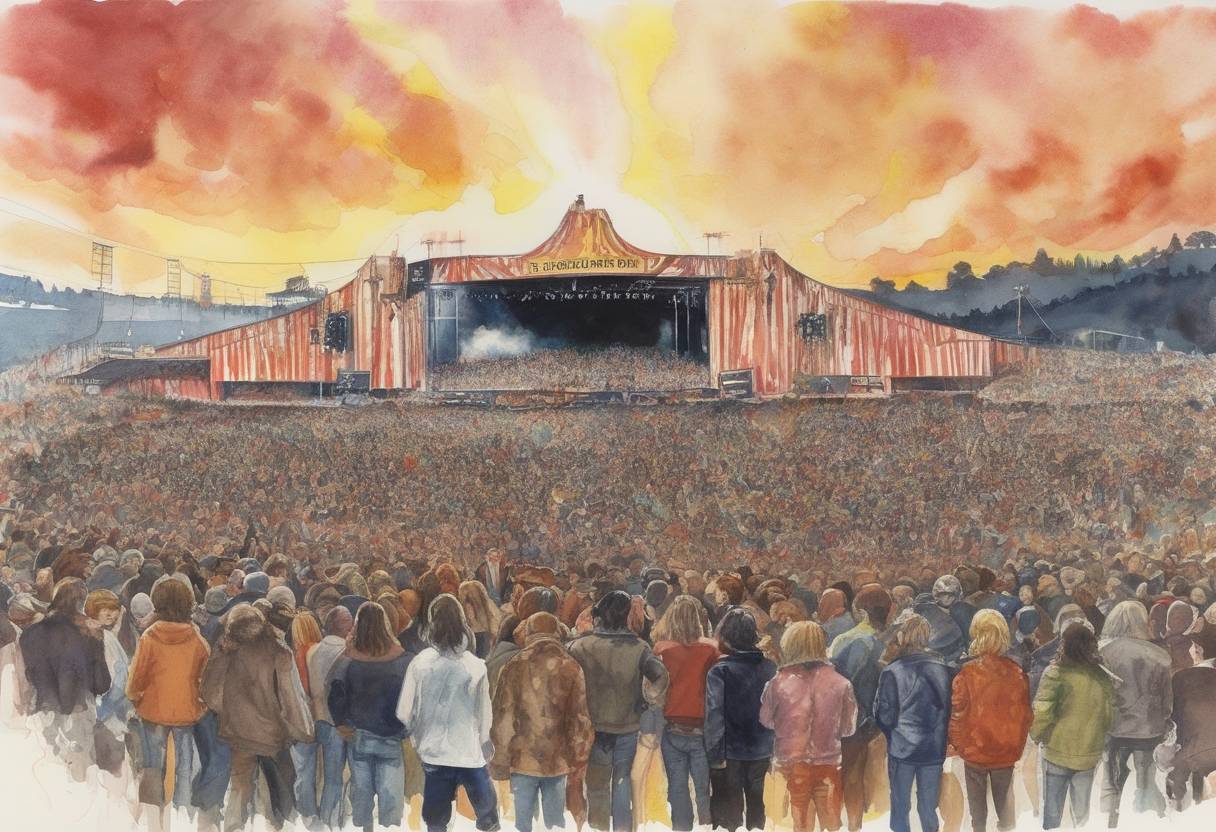
The Altamont Free Concert: December 6, 1969
On December 6, 1969, The Rolling Stones held a free concert at the Altamont Speedway in Northern California, an event that would become infamous for its chaotic and violent atmosphere. This concert was intended to be a West Coast counterpart to the Woodstock Festival, which had taken place earlier that year in August. However, the Altamont Free Concert is often remembered as a stark contrast to the peace and love ethos of Woodstock.
Background
The concert was organized on short notice, with the location being finalized just days before the event. The Rolling Stones, along with other prominent bands such as Jefferson Airplane, Santana, The Flying Burrito Brothers, and Crosby, Stills, Nash & Young, were scheduled to perform. The event drew an estimated 300,000 attendees.
Key Events
Security Concerns: One of the most critical decisions that impacted the concert’s outcome was the hiring of the Hells Angels motorcycle club to provide security. They were reportedly paid with $500 worth of beer. The Hells Angels’ presence and their methods of crowd control, which included using pool cues and motorcycle chains, contributed significantly to the day’s violence.
Violence and Chaos: The atmosphere at Altamont quickly deteriorated. There were numerous reports of fights and altercations throughout the day. The situation escalated during The Rolling Stones’ performance when a young African American man named Meredith Hunter was fatally stabbed by a Hells Angel near the stage. Hunter, who was armed with a revolver, was attacked after brandishing the weapon.
Aftermath: The stabbing was captured on film and became a central moment in the documentary “Gimme Shelter,” which chronicled The Rolling Stones’ 1969 U.S. tour. The film brought widespread attention to the incident and highlighted the darker side of the 1960s counterculture movement.
Broader Historical Significance
The Altamont Free Concert is often cited as the symbolic end of the 1960s’ idealistic era. It exposed the underlying tensions and potential for violence within the counterculture movement. The event prompted a reevaluation of concert security and organization, influencing how future large-scale music events were planned and executed.
In the years following Altamont, The Rolling Stones and other bands became more cautious about the logistics and security of their performances, leading to more professional and controlled concert environments. The tragedy at Altamont remains a poignant reminder of the complexities and contradictions of the 1960s cultural revolution.