Assassination of Emperor Gordian III
241 · Zaitha, Roman Empire
Emperor Gordian III is assassinated by mutinous soldiers in Zaitha (Mesopotamia).
September 25, 0275
The Roman Emperor Aurelian is assassinated by his own troops, leading to a brief period of instability in the Roman Empire.
Caenophrurium, Roman Empire | Roman Army
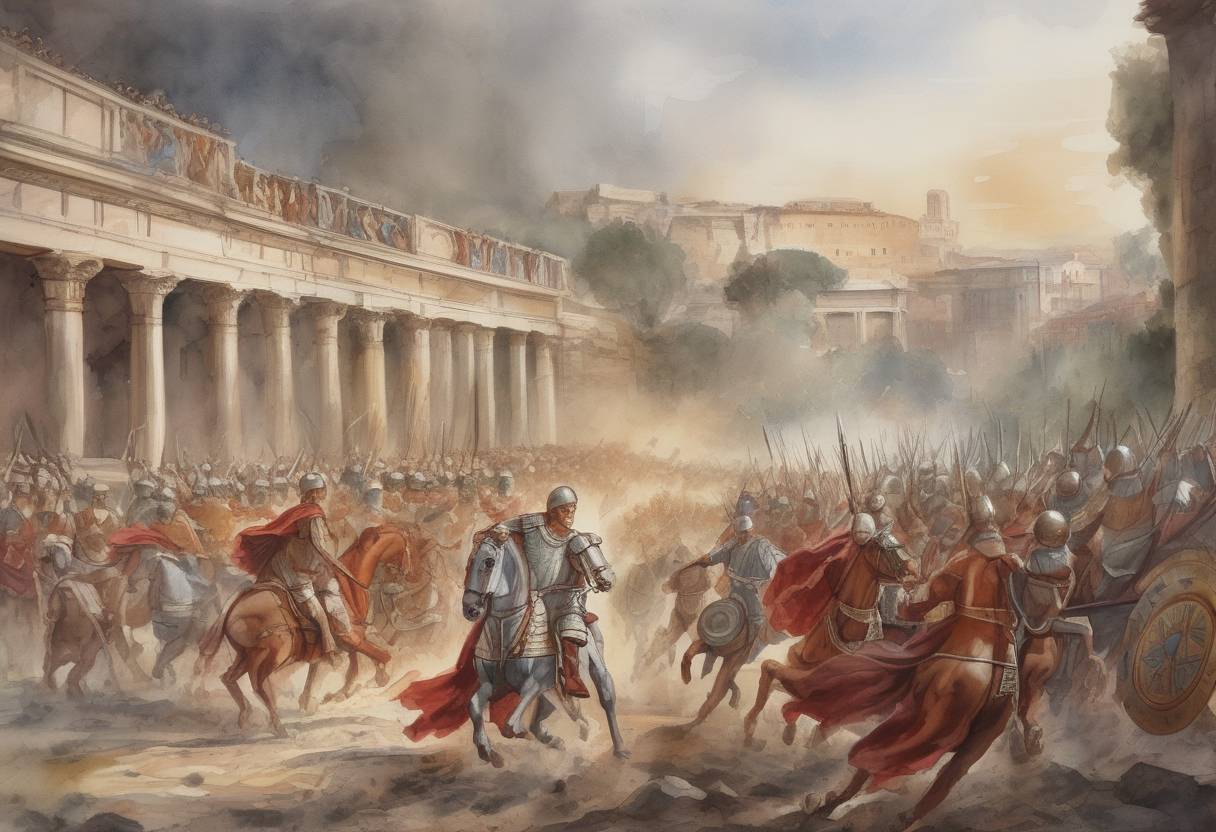
On September 25, 275, the Roman Emperor Aurelian was assassinated by his own troops, an event that precipitated a brief period of instability within the Roman Empire. Aurelian, who reigned from 270 to 275 AD, was a significant figure in Roman history, known for his military prowess and efforts to restore the empire’s boundaries and stability during the Crisis of the Third Century.
Aurelian came to power during a tumultuous period marked by internal strife, economic instability, and external threats. The Roman Empire was fragmented, with various regions breaking away to form independent states, such as the Gallic Empire in the west and the Palmyrene Empire in the east. Aurelian’s reign was characterized by his vigorous campaigns to reunify the empire and strengthen its borders.
Despite his successes, Aurelian’s reign was cut short by his assassination. The plot against him was orchestrated by members of his own military staff, reportedly due to a misunderstanding. Aurelian’s secretary, fearing punishment for a minor offense, forged a document listing high-ranking officials marked for execution. This document was shown to the troops, who, fearing for their lives, conspired to kill the emperor.
Aurelian’s death led to a brief period of uncertainty and instability. The Roman Empire faced a power vacuum, and it took six months before a new emperor, Tacitus, was chosen by the Senate. Despite the temporary chaos, Aurelian’s efforts had laid the groundwork for the eventual stabilization of the empire.
Aurelian’s assassination underscores the volatility of the Roman imperial system during the third century, where emperors often faced threats from within their own ranks. His reign, albeit short, was pivotal in restoring the integrity of the Roman Empire and setting the stage for the later reforms of Diocletian and Constantine.
Aurelian is remembered as one of the “restorer of the world” (Restitutor Orbis) for his achievements in reuniting and fortifying the Roman Empire during one of its most challenging periods.
Source: en.wikipedia.org