The Battle of Tolvajärvi: A Turning Point in the Winter War
1939 · Tolvajärvi, Finland
Winter War: The Battle of Tolvajärvi begins, marking the first Finnish victory over Soviet forces during the conflict.
November 30, 1939
The Winter War began as the Soviet Union invaded Finland, leading to a conflict that lasted until March 1940.
border regions, Finland | Soviet Union
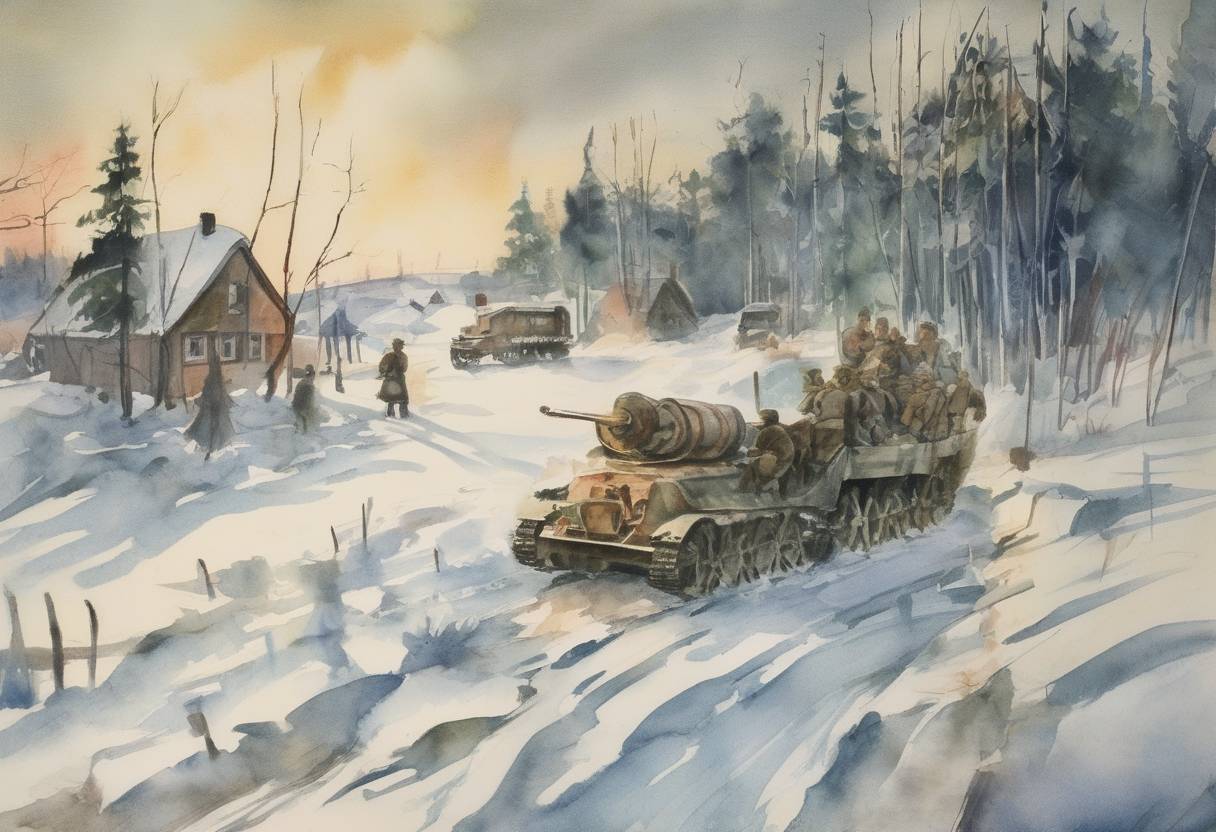
On November 30, 1939, the Soviet Union launched an invasion of Finland, marking the beginning of the Winter War. This conflict arose against the backdrop of escalating tensions in Europe, as World War II had already begun with Germany’s invasion of Poland in September 1939.
The roots of the Winter War lay in the geopolitical ambitions of the Soviet Union and its desire to secure its northwestern borders. The Soviet leadership, under Joseph Stalin, sought to gain territory from Finland to create a buffer zone against potential threats from Nazi Germany. The Soviets demanded territorial concessions from Finland, including parts of the Karelian Isthmus and islands in the Gulf of Finland, as well as the lease of the Hanko Peninsula for a naval base. Finland, valuing its sovereignty and neutrality, refused these demands.
On the morning of November 30, 1939, the Soviet Union initiated its military campaign against Finland without a formal declaration of war. The Soviet Red Army, vastly superior in numbers and equipment, expected a swift victory. However, the Finnish forces, though outnumbered, were highly motivated and utilized their intimate knowledge of the terrain to their advantage.
Initial Soviet Advances: The Soviet Union deployed over 450,000 troops, supported by tanks and aircraft, along the Finnish border. Despite their numerical superiority, the Soviets faced logistical challenges and fierce Finnish resistance.
Finnish Defense: The Finnish Army, led by Marshal Carl Gustaf Emil Mannerheim, employed guerrilla tactics and utilized the harsh winter conditions to slow the Soviet advance. The Finns were adept at using skis for mobility and camouflage in the snowy landscape.
Battle of Suomussalmi: One of the most notable Finnish victories occurred at the Battle of Suomussalmi, where Finnish forces encircled and decimated two Soviet divisions, showcasing their tactical prowess.
The Winter War lasted until March 13, 1940, when the Moscow Peace Treaty was signed. Despite their valiant defense, Finland was forced to cede approximately 11% of its territory, including parts of Karelia, to the Soviet Union. However, Finland maintained its independence and gained international sympathy for its resistance.
The conflict had significant repercussions:
Military Lessons: The poor performance of the Soviet military led to reforms and improvements, which were crucial during the later stages of World War II.
International Perception: The Soviet Union’s aggression was widely condemned, leading to its expulsion from the League of Nations.
Finnish Resolve: The war bolstered Finnish national identity and unity, setting the stage for Finland’s continued resistance during the Continuation War (1941-1944) when hostilities resumed between Finland and the Soviet Union.
The Winter War remains a testament to the resilience of the Finnish people and a significant episode in the complex history of World War II.
Source: en.wikipedia.org