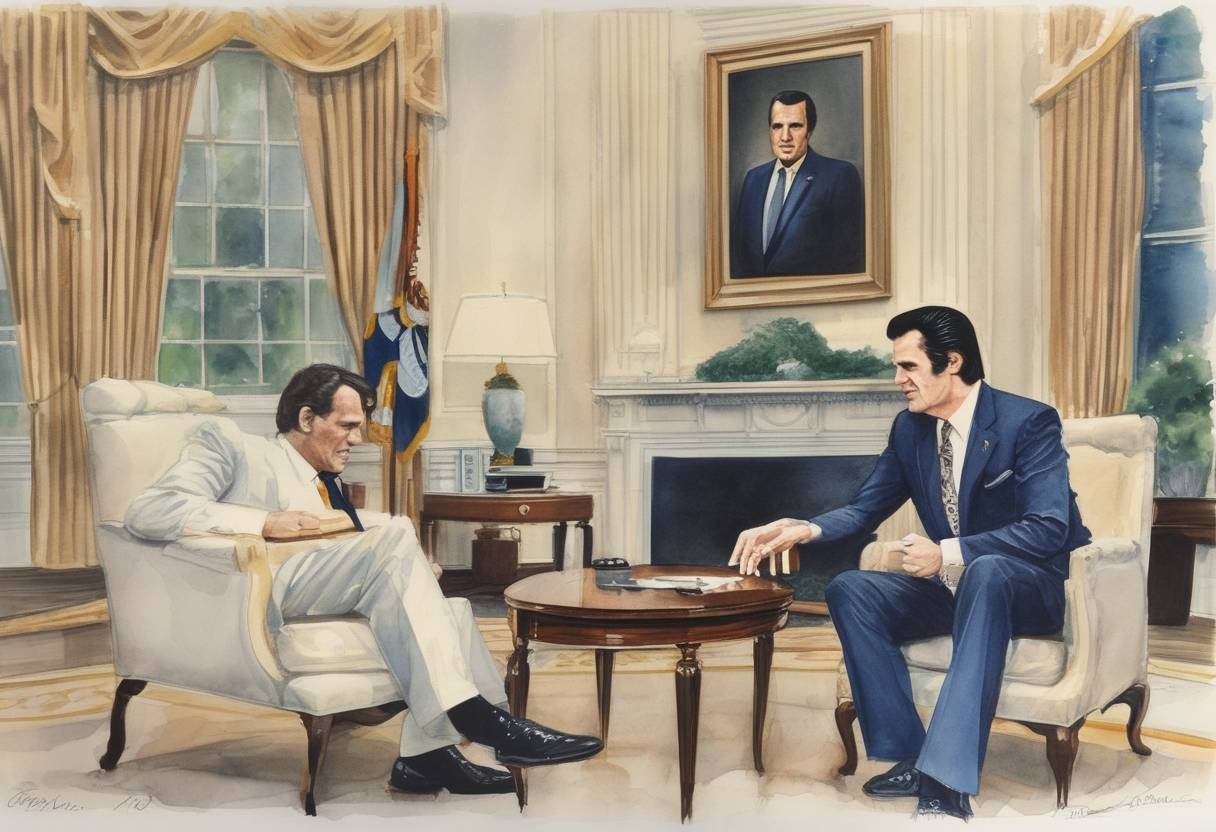
Elvis Presley Meets President Richard Nixon
On December 21, 1970, a unique and unexpected meeting took place at the White House between Elvis Presley, the “King of Rock and Roll,” and President Richard Nixon. This encounter is one of the most famous and unusual meetings in American pop culture history, primarily due to the contrasting worlds of its participants.
Background
By 1970, Elvis Presley was an iconic figure in American music and culture, known for his groundbreaking contributions to rock and roll. However, he was also deeply concerned about the direction of American society, particularly the rise of drug use and the counterculture movement. Presley believed he could use his influence to combat these issues.
President Richard Nixon, on the other hand, was in the second year of his presidency, dealing with significant domestic and international challenges, including the Vietnam War and the growing anti-establishment sentiment in the United States.
The Meeting
The meeting was initiated by Presley himself. On December 20, 1970, Elvis wrote a six-page letter to President Nixon while on a flight to Washington, D.C. In the letter, Presley expressed his desire to help combat drug use and requested a meeting with the President. He also asked to be appointed as a “Federal Agent at Large” in the Bureau of Narcotics and Dangerous Drugs.
Presley personally delivered the letter to the White House gate, and his request was surprisingly granted. The meeting was arranged for the following day, December 21, 1970.
Key Events
Arrival and Gifts: Elvis arrived at the White House dressed in a flamboyant purple velvet suit and a large gold belt. He brought gifts for the President, including a Colt .45 pistol mounted in a display case and family photos.
Discussion: During the meeting, Presley expressed his concerns about the influence of drug culture and the Beatles, whom he saw as anti-American. He offered his services to help promote patriotism and combat drug abuse.
Nixon’s Response: President Nixon was reportedly amused and intrigued by the encounter. He listened to Presley and agreed to give him a badge from the Bureau of Narcotics and Dangerous Drugs, which Elvis had requested as a symbol of his commitment.
Aftermath and Significance
The meeting between Elvis Presley and Richard Nixon was not widely publicized at the time, but it became legendary after photographs of the encounter were released. The image of the two figures shaking hands is one of the most requested photographs from the National Archives.
The meeting is often cited as an example of the intersection between celebrity culture and politics. It highlights the influence of popular figures in societal issues and the willingness of political leaders to engage with them.
While the meeting did not lead to any formal collaboration or significant policy changes, it remains a fascinating footnote in American history, illustrating the unique ways in which cultural icons and political leaders can interact.