The End of an Era: The Last Volkswagen Beetle
2019 · Puebla, Mexico
The last Volkswagen Beetle rolled off the assembly line in Puebla, Mexico, marking the end of production for the iconic car model.
February 17, 1972
The Volkswagen Beetle becomes the world's best-selling car, surpassing the previous record held by the Ford Model T.
Wolfsburg, Germany | Volkswagen
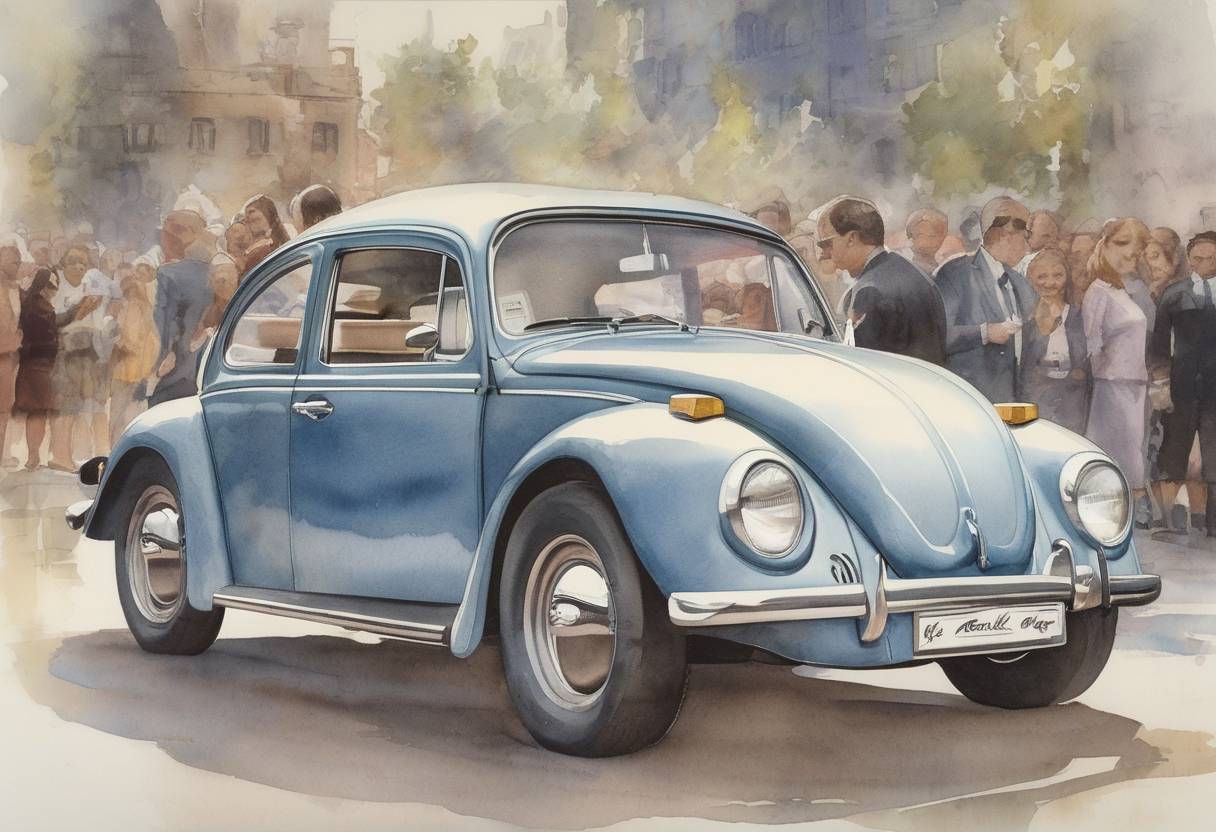
On February 17, 1972, the Volkswagen Beetle achieved a significant milestone in automotive history by surpassing the Ford Model T as the world’s best-selling car. This event marked a pivotal moment in the automotive industry, highlighting the Beetle’s global appeal and enduring popularity.
Ford Model T: Introduced by Henry Ford in 1908, the Model T revolutionized the automobile industry with its affordability and mass production techniques. By the time production ended in 1927, over 15 million units had been sold, setting a record that stood for decades.
Volkswagen Beetle: Originally conceived in the 1930s by Ferdinand Porsche, the Beetle was designed to be an affordable and practical car for the masses. Its production began in earnest after World War II, with the Beetle becoming a symbol of Germany’s post-war recovery and economic resurgence.
Post-War Production: After WWII, the Beetle’s production ramped up under the management of the British Army and later the German government. The car’s simple design, reliability, and affordability contributed to its widespread appeal.
Global Expansion: Throughout the 1950s and 1960s, Volkswagen expanded its market reach, establishing manufacturing plants in Brazil, Mexico, and other countries. This global production capability helped the Beetle penetrate markets worldwide.
Cultural Icon: The Beetle became more than just a car; it was a cultural icon. Its distinctive shape and association with the counterculture movement of the 1960s and 1970s further boosted its popularity.
On this date, Volkswagen announced that the Beetle had surpassed the Ford Model T’s sales record, with the production of the 15,007,034th Beetle. This achievement underscored the Beetle’s status as a global phenomenon and a testament to its enduring design and appeal.
Continued Production: The Beetle continued to be produced for several more decades, with the last original Beetle rolling off the assembly line in Mexico in 2003. By then, over 21 million units had been produced.
Legacy: The Beetle’s success paved the way for Volkswagen’s growth into one of the world’s leading automobile manufacturers. The car’s legacy lives on in modern iterations, such as the New Beetle introduced in the late 1990s.
Cultural Impact: The Beetle remains an enduring symbol of innovation, resilience, and cultural significance, celebrated in various media and by car enthusiasts worldwide.
In summary, the Volkswagen Beetle’s achievement on February 17, 1972, was a landmark event in automotive history, reflecting its widespread appeal and the transformative impact of its design and production strategies.
Source: en.wikipedia.org