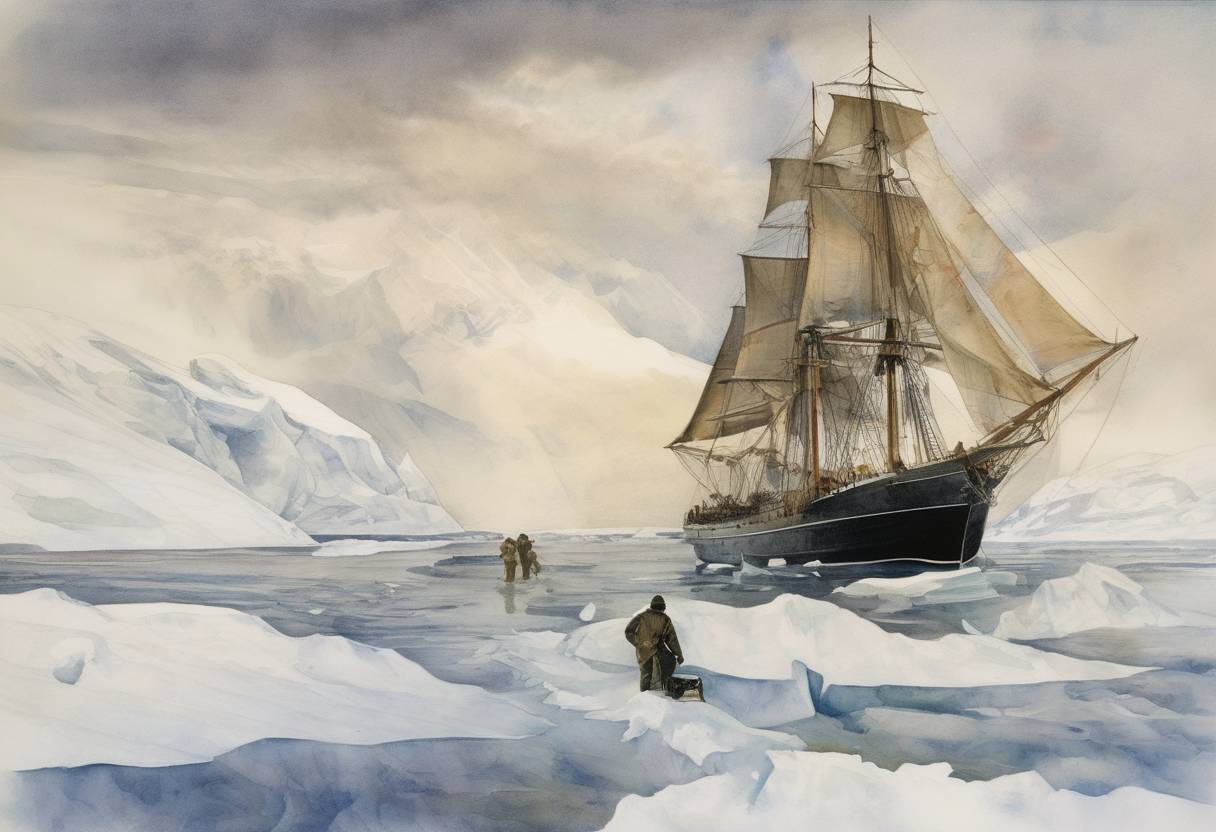
Ernest Shackleton and the Nimrod Expedition: Reaching Farthest South on January 9, 1909
On January 9, 1909, the British explorer Ernest Shackleton and his team achieved a remarkable feat during the Nimrod Expedition by reaching a point just 97 nautical miles from the South Pole. This was the farthest south any human had ventured at that time, marking a significant milestone in the age of Antarctic exploration.
Background
The Nimrod Expedition, officially known as the British Antarctic Expedition 1907–1909, was Shackleton’s first major expedition as a leader. After participating in Robert Falcon Scott’s Discovery Expedition (1901–1904), Shackleton was determined to lead his own journey to the Antarctic. The primary goals of the Nimrod Expedition were to reach the South Pole and conduct scientific research.
The Journey South
Shackleton’s team set sail aboard the ship Nimrod in 1907. The expedition faced numerous challenges, including financial constraints and logistical difficulties. Despite these obstacles, Shackleton and his team established a base at Cape Royds on Ross Island.
The journey to the pole began in October 1908. Shackleton, along with three companions—Frank Wild, Eric Marshall, and Jameson Adams—set out on a grueling trek across the harsh Antarctic landscape. They faced extreme cold, treacherous terrain, and dwindling supplies as they pushed further south.
Reaching Farthest South
On January 9, 1909, Shackleton and his team reached a latitude of 88°23′S, just 97 nautical miles from the South Pole. This was the closest any expedition had come to the pole at that time. Shackleton made the difficult decision to turn back, prioritizing the safety of his team over the glory of reaching the pole. His decision was later praised for its wisdom and leadership.
Aftermath and Significance
The Nimrod Expedition returned to England in 1909, where Shackleton was celebrated for his achievements. Although he did not reach the South Pole, Shackleton’s expedition provided valuable scientific data and demonstrated the feasibility of polar exploration. His leadership and decision-making under extreme conditions became legendary, influencing future explorers.
The expedition’s success laid the groundwork for subsequent Antarctic expeditions, including Roald Amundsen’s successful attainment of the South Pole in 1911 and Robert Falcon Scott’s ill-fated attempt in 1912.
Legacy
Ernest Shackleton’s Nimrod Expedition remains a testament to human endurance and exploration. His ability to lead and make critical decisions in the face of adversity has cemented his place as one of the most respected figures in the history of polar exploration. The journey to “Farthest South” is remembered not only for its achievements but also for the spirit of exploration and discovery it embodied.