Henry VI of England Crowned King of France
1431 · Paris, France
Henry VI of England is crowned King of France at Notre Dame in Paris.
August 31, 1422
King Henry V of England dies unexpectedly in France, leaving his infant son, Henry VI, as king.
Vincennes, France | English Monarchy
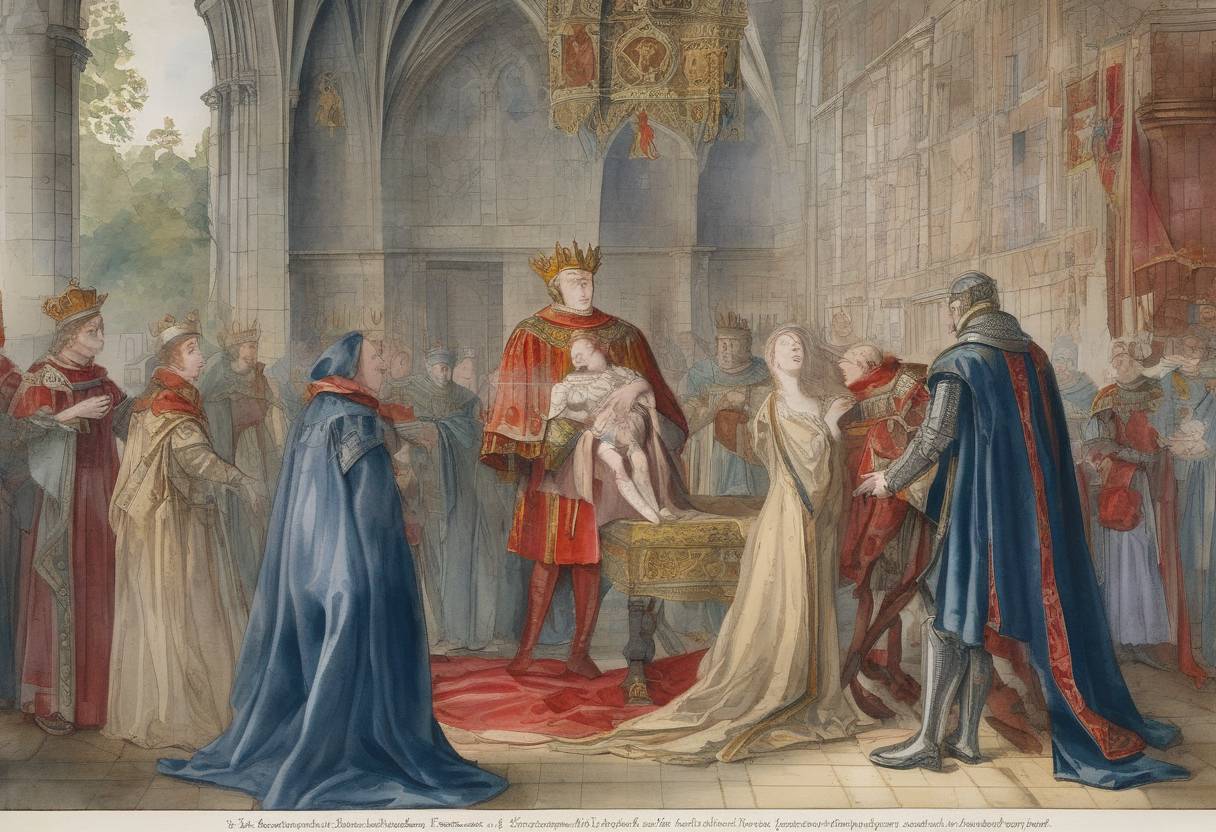
On August 31, 1422, King Henry V of England died unexpectedly in France, a significant event that marked a pivotal moment in English and French history. His death left his infant son, Henry VI, as the new king, setting the stage for a complex period of regency and political maneuvering.
Henry V was a prominent figure in the Hundred Years’ War, a protracted conflict between England and France over territorial claims and the right to the French throne. His reign was marked by significant military successes, most notably the Battle of Agincourt in 1415, where his forces achieved a decisive victory against the French despite being heavily outnumbered.
Following Agincourt, Henry V continued his campaigns in France, securing the Treaty of Troyes in 1420. This treaty recognized him as the heir to the French throne and arranged his marriage to Catherine of Valois, the daughter of King Charles VI of France. This alliance was intended to solidify English claims to the French crown.
Henry V’s death at the age of 35 was unexpected and occurred during a military campaign in France. The exact cause of his death is uncertain, but it is often attributed to dysentery, a common and deadly illness at the time. His untimely demise left his nine-month-old son, Henry VI, as the king of England and the titular king of France.
The death of Henry V had profound implications:
Regency and Governance: With Henry VI being an infant, a regency was established to govern in his stead. The regency was led by Henry V’s brothers, John, Duke of Bedford, and Humphrey, Duke of Gloucester. This period was marked by internal power struggles and challenges in maintaining control over English territories in France.
Continued Conflict: The English hold on French territories weakened over time. The lack of a strong, adult monarch to lead military campaigns and the resurgence of French nationalism, partly inspired by figures like Joan of Arc, contributed to the gradual loss of English possessions in France.
Impact on the Hundred Years’ War: Henry V’s death shifted the momentum of the Hundred Years’ War. The French, under the leadership of Charles VII, began to reclaim territories, eventually leading to the end of the war in 1453 with the English retaining only Calais.
Legacy of Henry V: Despite his short reign, Henry V is remembered as one of England’s greatest warrior kings. His military achievements and the cultural impact of his reign, immortalized in Shakespeare’s play “Henry V,” continue to shape his legacy.
In conclusion, the death of King Henry V on August 31, 1422, was a turning point in the late medieval period, influencing the political landscape of England and France and altering the course of the Hundred Years’ War.
Source: en.wikipedia.org