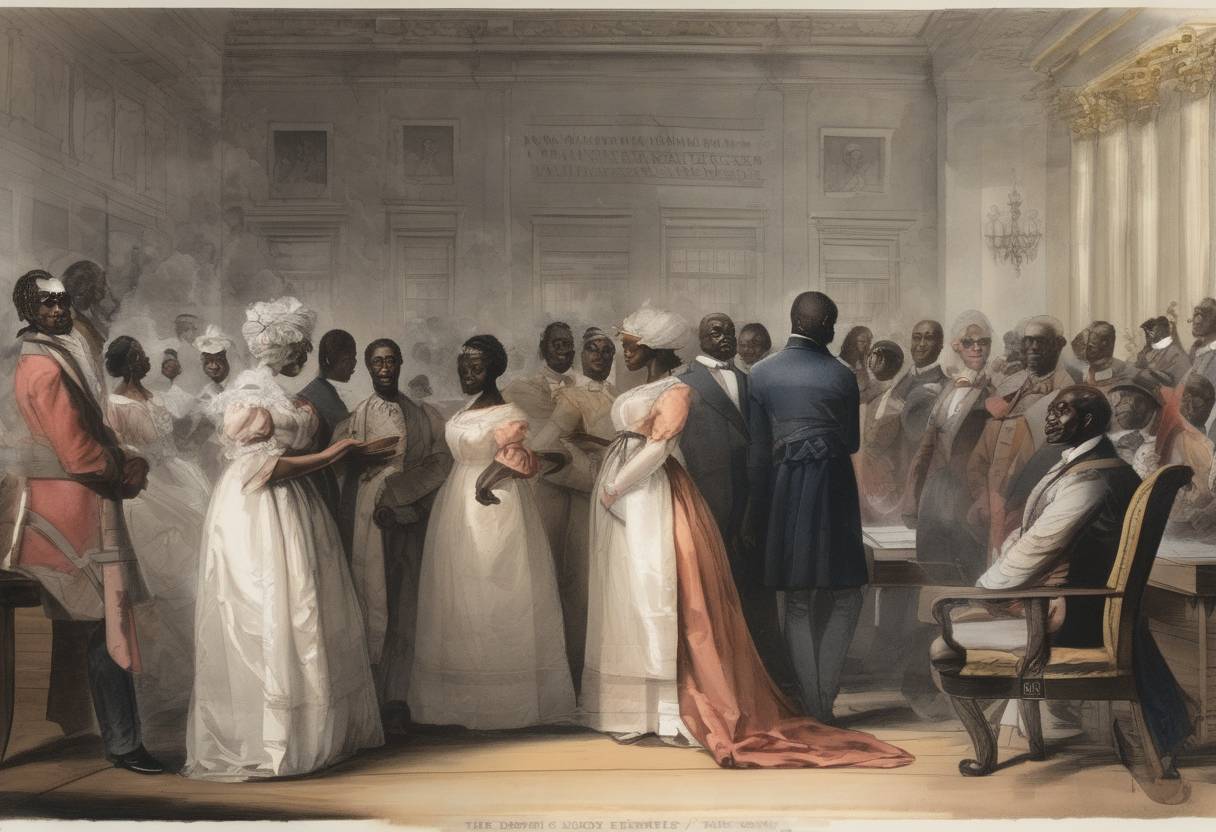
The Slavery Abolition Act of 1833
On August 28, 1833, the Slavery Abolition Act received Royal Assent, marking a pivotal moment in the history of the British Empire. This legislation effectively abolished slavery throughout most of the British Empire, a significant step in the global movement towards the eradication of slavery.
Historical Context
The movement to abolish slavery in the British Empire gained momentum in the late 18th and early 19th centuries, driven by a combination of moral, economic, and political factors:
Moral and Religious Campaigns: The abolitionist movement was significantly influenced by religious groups, particularly the Quakers and Evangelical Christians, who viewed slavery as a moral abomination. Figures like William Wilberforce, a member of the British Parliament, played a crucial role in advocating for abolition.
Economic Changes: The Industrial Revolution shifted economic interests. The profitability of slave labor was increasingly questioned as industrialization offered new economic opportunities that did not rely on slavery.
Previous Legislation: The Slave Trade Act of 1807 had already made the transatlantic slave trade illegal within the British Empire. However, this did not free those already enslaved.
Key Provisions of the Act
The Slavery Abolition Act of 1833 included several critical components:
Emancipation: The Act declared that slavery would be abolished in most of the British Empire, effective August 1, 1834. However, it excluded territories controlled by the East India Company, Ceylon (now Sri Lanka), and Saint Helena, where slavery was abolished later.
Apprenticeship System: To ease the transition from slavery to freedom, the Act introduced an “apprenticeship” system. Former slaves were required to work for their former masters for a period of four to six years, which was met with significant resistance and was eventually abolished in 1838.
Compensation: The Act provided for compensation to slave owners, allocating £20 million (a substantial sum at the time) to reimburse them for the loss of their “property.” This compensation was controversial, as it did not provide reparations to the enslaved individuals.
Aftermath and Significance
Immediate Impact: The Act led to the emancipation of over 800,000 enslaved Africans in the Caribbean, South Africa, and Canada, among other regions.
Global Influence: The abolition of slavery in the British Empire set a precedent and provided momentum for abolitionist movements worldwide, influencing other nations to reconsider their own policies on slavery.
Continued Struggles: Despite the Act, the fight for full civil rights and equality for former slaves and their descendants continued. The legacy of slavery and the challenges of integration and equality persisted long after abolition.
The Slavery Abolition Act of 1833 remains a landmark in the history of human rights, symbolizing a significant victory for the abolitionist movement and a crucial step towards the global eradication of slavery.