Abraham Lincoln's Inauguration as the 16th President of the United States
1861 · Washington, D.C., United States
Abraham Lincoln was inaugurated as the 16th President of the United States.
November 6, 1860
Abraham Lincoln was elected as the 16th President of the United States, the first Republican to win the presidency, which set the stage for the American Civil War.
Washington D.C., United States | Republican Party
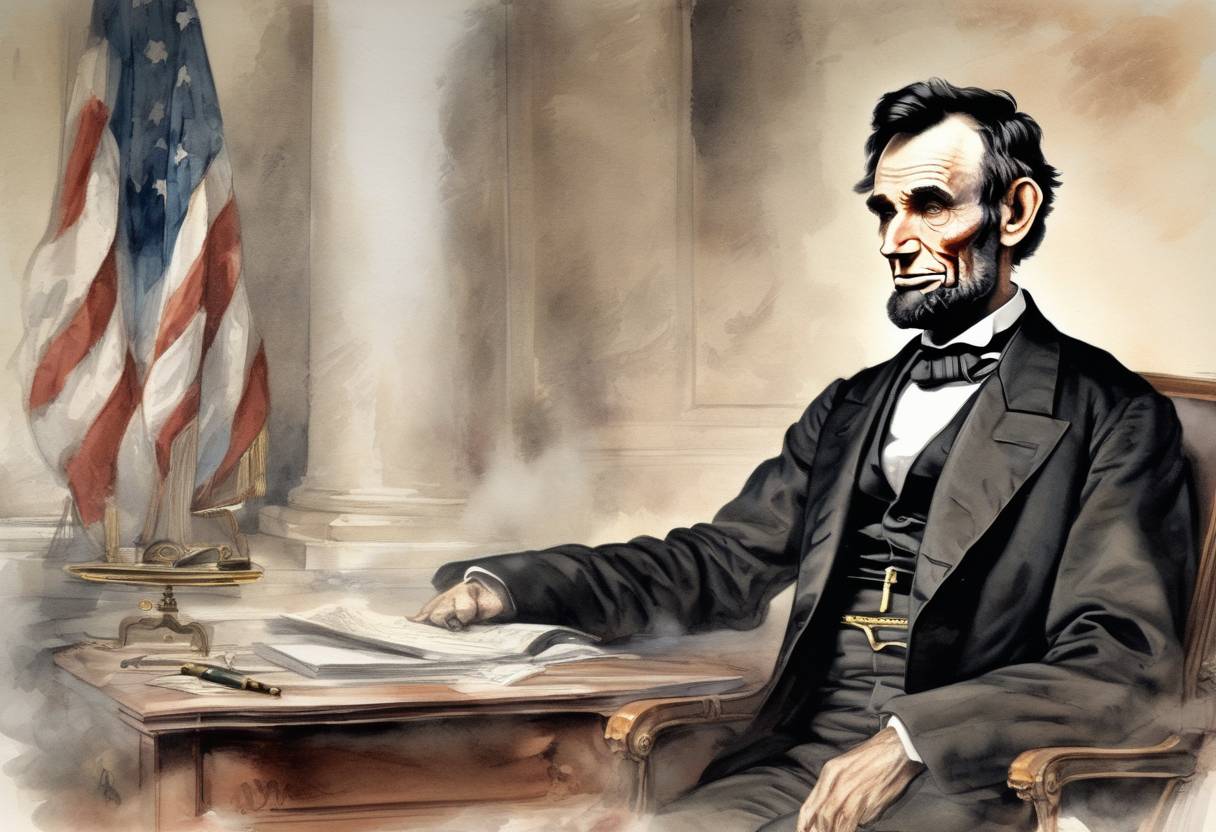
On November 6, 1860, Abraham Lincoln was elected as the 16th President of the United States, marking a pivotal moment in American history. This election was significant not only because Lincoln was the first Republican to win the presidency, but also because it set the stage for the American Civil War.
The United States in the mid-19th century was deeply divided over the issue of slavery. The northern states, where industrialization was taking root, largely opposed the expansion of slavery into new territories and states. In contrast, the southern states, whose economies were heavily dependent on agriculture and slave labor, sought to protect and expand the institution of slavery.
The Republican Party, founded in the 1850s, emerged as a political force opposing the spread of slavery. Abraham Lincoln, a former Congressman from Illinois, became the party’s candidate for the 1860 presidential election. His platform was based on halting the expansion of slavery, though he did not advocate for its immediate abolition in states where it already existed.
The election of 1860 was one of the most contentious in American history. It featured four main candidates:
Lincoln won the election with a decisive victory in the Electoral College, securing 180 out of 303 electoral votes. However, he received only about 40% of the popular vote, reflecting the deep divisions within the country.
Lincoln’s election was unacceptable to many in the southern states. His victory, without carrying a single southern state, underscored the sectional divide. Fearing that Lincoln’s presidency would lead to the abolition of slavery, several southern states moved towards secession.
Lincoln’s election and the subsequent secession crisis highlighted the irreconcilable differences between the North and South. The Civil War, which began in April 1861, would become the defining conflict of Lincoln’s presidency and a turning point in American history.
Lincoln’s election is often seen as a catalyst for the Civil War, a conflict that would ultimately lead to the abolition of slavery and a redefinition of the United States as a nation. His leadership during the war and his vision for a united country have left a lasting legacy on the American political landscape.
In summary, the election of Abraham Lincoln on November 6, 1860, was a critical event that not only shaped the course of American history but also underscored the profound divisions within the nation that would lead to the Civil War.
Source: www.history.com