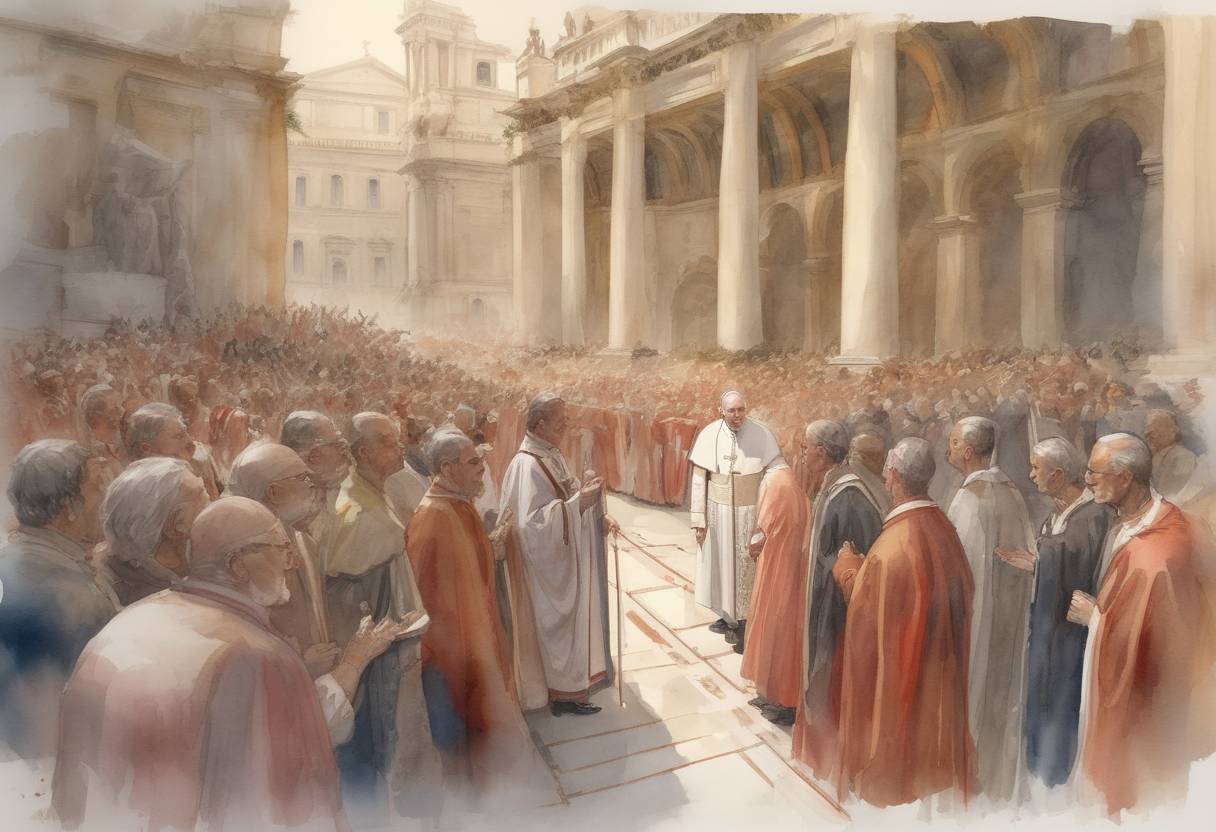
Election of Pelagius I as Pope
On April 16, 556, Pelagius I was elected as the Pope of the Catholic Church, succeeding Pope Vigilius. This event marked a significant moment in the history of the papacy during a turbulent period for the Church, characterized by theological disputes and political challenges.
Background
Pelagius I was born around 500 AD into a Roman noble family. Before becoming pope, he served as a deacon and was deeply involved in the ecclesiastical and political affairs of the time. He was a trusted advisor to Pope Agapetus I and played a crucial role during the papacy of Pope Vigilius. Pelagius was known for his diplomatic skills, which were particularly evident during his time as a papal representative in Constantinople.
Context Leading to His Election
The period leading up to Pelagius I’s papacy was marked by the ongoing conflict over the “Three Chapters,” a theological controversy that involved the condemnation of certain writings and authors associated with the Nestorian heresy. This controversy had significant implications for the relationship between the Eastern and Western Churches.
Pope Vigilius, Pelagius’s predecessor, had a tumultuous papacy, largely due to his vacillating stance on the Three Chapters. Vigilius initially resisted the condemnation but eventually acquiesced under pressure from the Byzantine Emperor Justinian I. This decision led to a schism with the Western bishops and created a challenging environment for his successor.
Pelagius I’s Papacy
Upon his election, Pelagius I faced the daunting task of reconciling the divisions within the Church. He worked to restore unity by addressing the concerns of the Western bishops who were opposed to the condemnation of the Three Chapters. Despite his efforts, Pelagius’s papacy was met with resistance, and he struggled to gain widespread acceptance.
Pelagius I also focused on administrative reforms and the welfare of the poor. He was committed to rebuilding Rome, which had suffered from wars and natural disasters. His papacy was characterized by efforts to strengthen the Church’s infrastructure and support the clergy.
Aftermath and Significance
Pelagius I’s papacy lasted until his death in 561. Although he faced significant challenges, his efforts to heal the divisions within the Church laid the groundwork for future reconciliation. His papacy is often seen as a period of transition, bridging the gap between the controversies of the past and the more stable papacies that followed.
The election of Pelagius I highlights the complex interplay between theology and politics in the early medieval Church. His leadership during a time of crisis underscores the enduring challenges faced by the papacy in maintaining doctrinal unity and navigating the shifting political landscape of the time.