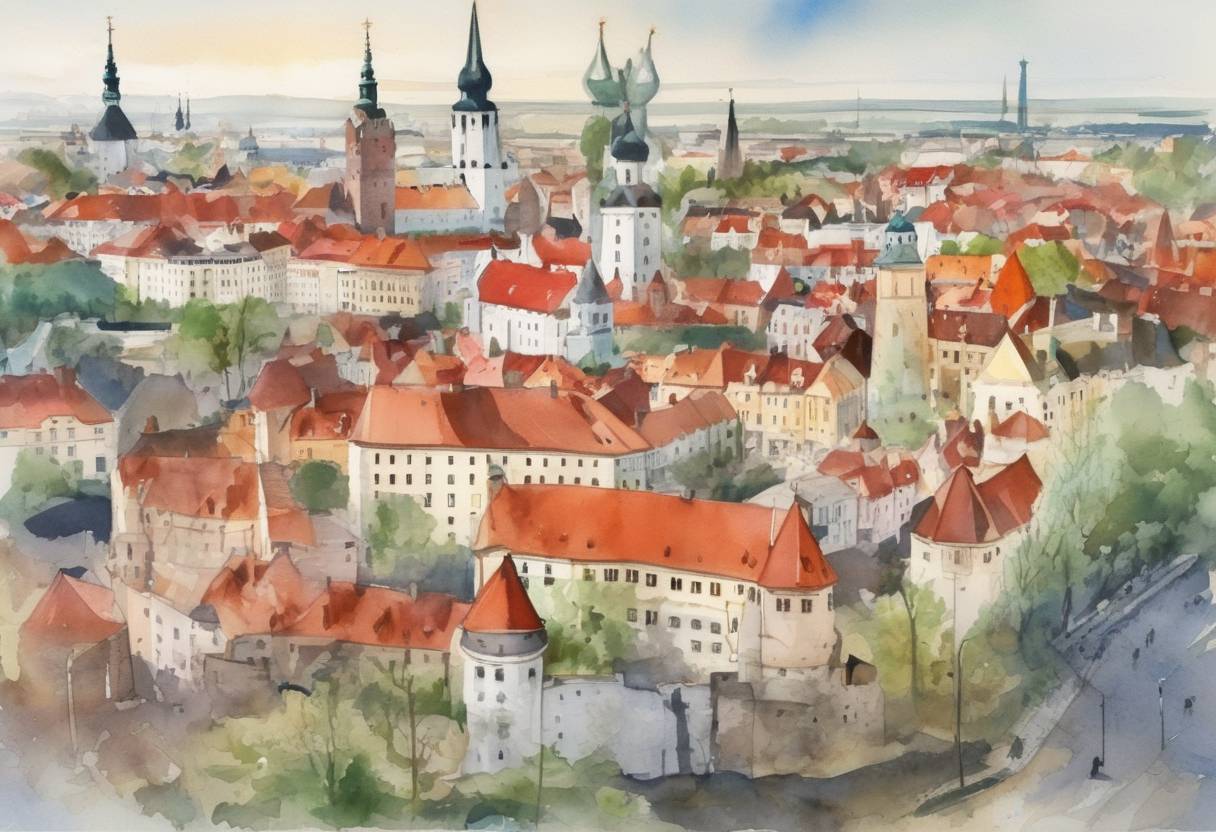
Estonia Declares Independence from the Soviet Union - August 20, 1991
On August 20, 1991, Estonia took a decisive step in its quest for sovereignty by declaring independence from the Soviet Union. This momentous event marked the culmination of a series of political and social movements aimed at restoring Estonia’s status as a free and independent nation.
Historical Context
Estonia, along with Latvia and Lithuania, was forcibly incorporated into the Soviet Union in 1940 following the Molotov-Ribbentrop Pact between Nazi Germany and the Soviet Union. This annexation was never recognized by many Western countries, which continued to view the Baltic states as independent nations under Soviet occupation.
The late 1980s saw a wave of reformist movements across the Soviet Union, spurred by Mikhail Gorbachev’s policies of glasnost (openness) and perestroika (restructuring). In the Baltic states, these policies ignited a resurgence of national identity and a push for independence.
Key Events Leading to Independence
The Singing Revolution: Beginning in 1987, Estonians engaged in a series of peaceful protests and cultural events, collectively known as the Singing Revolution. These gatherings often featured the singing of national songs and became a powerful symbol of resistance against Soviet rule.
The Baltic Way: On August 23, 1989, approximately two million people from Estonia, Latvia, and Lithuania formed a human chain spanning 600 kilometers (about 373 miles) across the three countries. This demonstration commemorated the 50th anniversary of the Molotov-Ribbentrop Pact and highlighted the Baltic states’ desire for independence.
The Estonian Congress: In 1990, the Estonian Congress was established as a representative body advocating for independence. It played a crucial role in organizing and legitimizing the independence movement.
Declaration of Independence
On August 20, 1991, amidst the backdrop of a failed coup attempt by hardline Soviet leaders in Moscow, the Estonian Supreme Council took the opportunity to declare the restoration of Estonia’s independence. The declaration was passed with overwhelming support, signaling the end of Soviet authority in Estonia.
Aftermath and Significance
International Recognition: Estonia’s declaration was quickly recognized by many countries around the world. The Soviet Union itself recognized Estonia’s independence on September 6, 1991.
United Nations Membership: Estonia became a member of the United Nations on September 17, 1991, further solidifying its status as an independent nation on the global stage.
European Integration: In the years following independence, Estonia pursued integration with Western institutions. It joined the European Union and NATO in 2004, marking a significant shift in its geopolitical alignment.
The declaration of independence on August 20, 1991, was a pivotal moment in Estonia’s history, symbolizing the triumph of peaceful resistance and national determination. It set the stage for Estonia’s development as a democratic and prosperous nation in the post-Soviet era.