Ronald Reagan's Farewell Address - January 11, 1989
1989 · Washington, D.C., United States
President Ronald Reagan delivered his farewell address to the nation.
February 26, 1987
The Iran-Contra affair: The Tower Commission rebuked U.S. President Ronald Reagan for not controlling his national security staff, leading to a major political scandal.
Washington, D.C., United States | Tower Commission
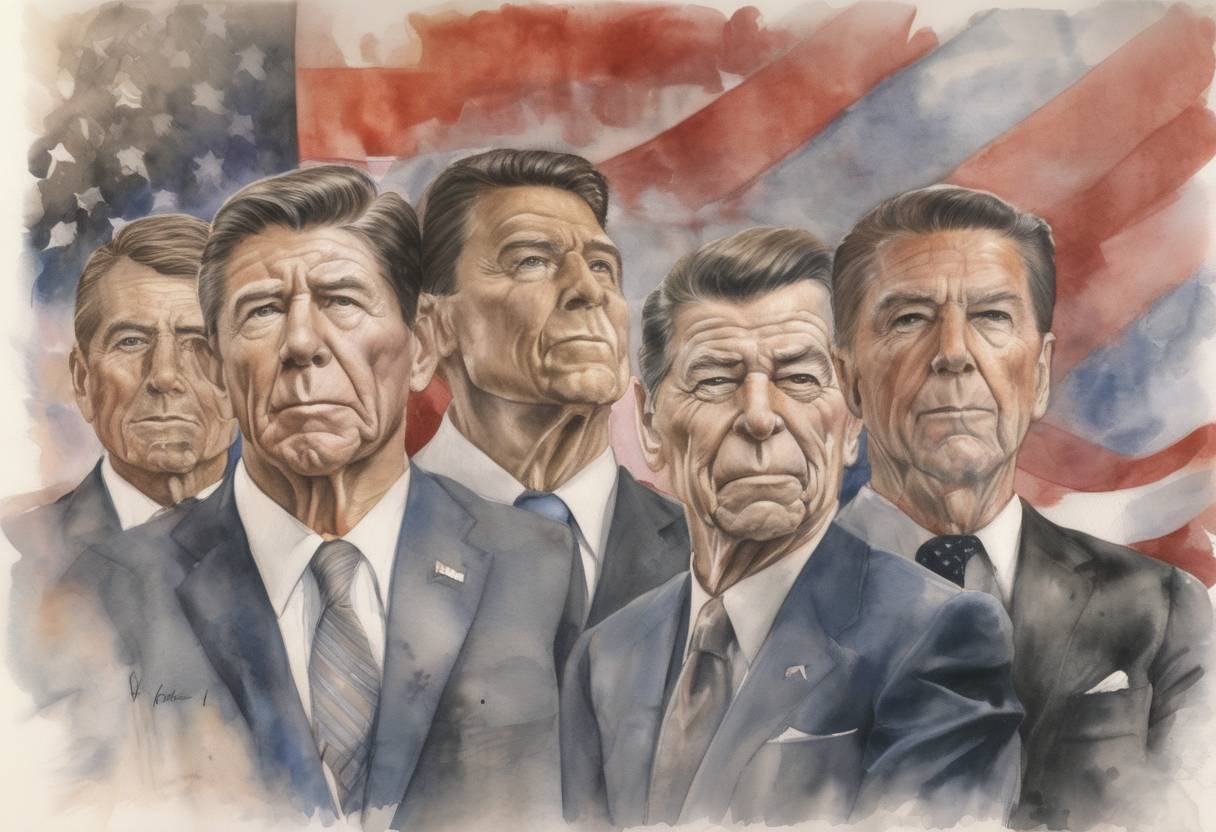
The Iran-Contra Affair was a significant political scandal in the United States during the 1980s, involving secret U.S. arms sales to Iran and the illegal funding of Contra rebels in Nicaragua. The scandal unfolded during President Ronald Reagan’s second term and had profound implications for his administration.
Iran Hostage Crisis and Arms Sales: In the early 1980s, the U.S. sought to improve relations with Iran, partly to secure the release of American hostages held by Hezbollah in Lebanon. Despite an arms embargo, the Reagan administration secretly facilitated arms sales to Iran.
Funding the Contras: Concurrently, the administration aimed to support the Contras, a rebel group opposing the Sandinista government in Nicaragua. Congress had restricted funding to the Contras through the Boland Amendment, prompting the administration to seek alternative funding sources.
Diversion of Funds: Profits from the arms sales to Iran were clandestinely diverted to support the Contras, bypassing congressional oversight and violating U.S. law.
On February 26, 1987, the Tower Commission, a special review board appointed by President Reagan, released its report on the Iran-Contra Affair. The commission was chaired by former Senator John Tower and included former Secretary of State Edmund Muskie and former National Security Advisor Brent Scowcroft.
Lack of Oversight: The Tower Commission criticized President Reagan for failing to adequately supervise his national security staff. The report highlighted a lack of clear communication and accountability within the administration.
Management Failures: The commission identified significant management failures, particularly within the National Security Council (NSC), which allowed the covert operations to proceed without proper oversight.
Policy and Decision-Making: The report noted that the decision-making process was flawed, with key decisions made by a small group of officials without broader consultation or legal review.
Political Repercussions: The Tower Commission’s findings led to a major political scandal, damaging President Reagan’s credibility and leading to multiple investigations by Congress and independent prosecutors.
Legal and Institutional Reforms: The scandal prompted reforms aimed at improving oversight of covert operations and clarifying the roles and responsibilities of the NSC and other executive agencies.
Public Perception: While Reagan’s approval ratings initially suffered, his personal popularity and the economic prosperity of the late 1980s helped him recover politically.
The Iran-Contra Affair underscored the challenges of balancing national security interests with legal and ethical governance. It highlighted the importance of transparency and accountability in government operations, influencing future U.S. foreign policy and executive branch oversight. The scandal remains a cautionary tale about the risks of circumventing established legal frameworks in pursuit of policy objectives.
Source: en.wikipedia.org