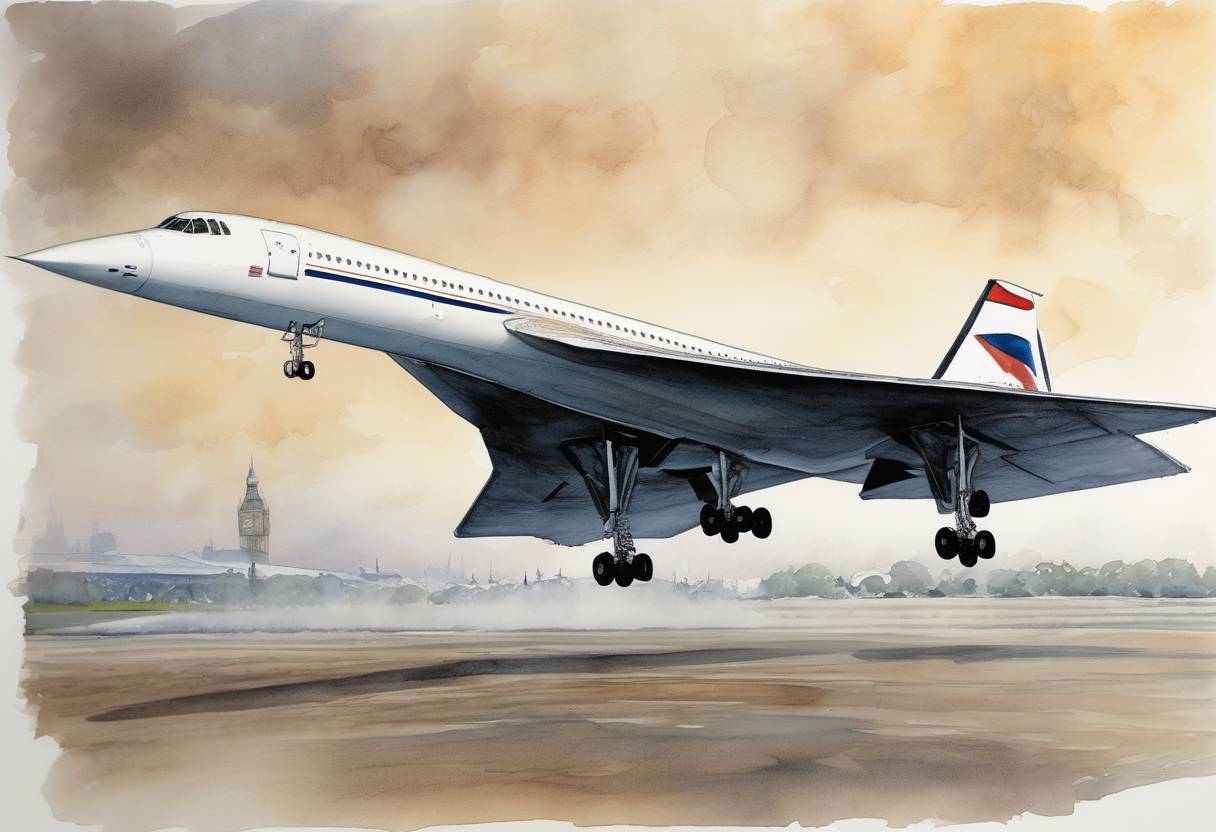
The Last Commercial Flight of the Concorde: October 24, 2003
On October 24, 2003, the Concorde made its final commercial flight, marking the end of an era in supersonic passenger travel. This event was a significant milestone in aviation history, as the Concorde had been a symbol of technological advancement and luxury since its introduction.
Background and Development
The Concorde was a product of a joint venture between British and French aerospace companies, British Aircraft Corporation and Aérospatiale, respectively. The project began in the early 1960s, with the aim of creating a supersonic passenger aircraft that could drastically reduce flight times. The Concorde first took to the skies in 1969 and entered commercial service in 1976.
Key Features
- Speed and Performance: The Concorde was capable of cruising at speeds of Mach 2.04 (approximately 1,354 mph or 2,180 km/h), more than twice the speed of sound. This allowed it to cut transatlantic flight times in half, making it possible to fly from London to New York in just about 3.5 hours.
- Design: Its sleek, delta-wing design and droop-nose feature were not only iconic but also essential for its supersonic capabilities.
- Luxury: The Concorde was synonymous with luxury, offering an exclusive experience with high-end service, attracting celebrities, business executives, and affluent travelers.
The Final Flight
The last commercial flight of the Concorde was operated by British Airways, flying from New York’s John F. Kennedy International Airport to London Heathrow. The aircraft, with tail number G-BOAG, carried 100 passengers, including celebrities and aviation enthusiasts, marking the end of its 27-year service.
Reasons for Retirement
Several factors contributed to the retirement of the Concorde:
- Economic Viability: The Concorde was expensive to operate and maintain, with high fuel consumption and limited seating capacity, making it less economically viable in the long term.
- Environmental Concerns: The aircraft faced criticism for its noise pollution and environmental impact, particularly its high fuel consumption and emissions.
- Technological Advancements: As subsonic aircraft became more efficient and comfortable, the demand for supersonic travel diminished.
- Safety Concerns: The crash of Air France Flight 4590 in July 2000, which resulted in the loss of all passengers and crew, raised safety concerns and led to a temporary grounding of the fleet.
Legacy and Impact
The Concorde remains an iconic symbol of aviation history, representing a bold leap in technology and design. Its retirement marked the end of commercial supersonic travel, a feat yet to be replicated by any other passenger aircraft. The Concorde’s legacy continues to inspire new generations of aerospace engineers and enthusiasts, as efforts to develop new supersonic and hypersonic passenger aircraft continue.
The final flight of the Concorde was not just the end of a particular aircraft’s service but the closing chapter of an ambitious era in aviation history.