Michelle Bachelet's Victory in the 2013 Chilean Presidential Election
2014 · Santiago, Chile
President Michelle Bachelet of Chile won the second round of the presidential election, returning to office for a non-consecutive term.
October 20, 2019
Protests erupted in Chile over a metro fare increase, leading to widespread demonstrations against inequality and prompting the government to declare a state of emergency.
Santiago, Chile | Government of Chile
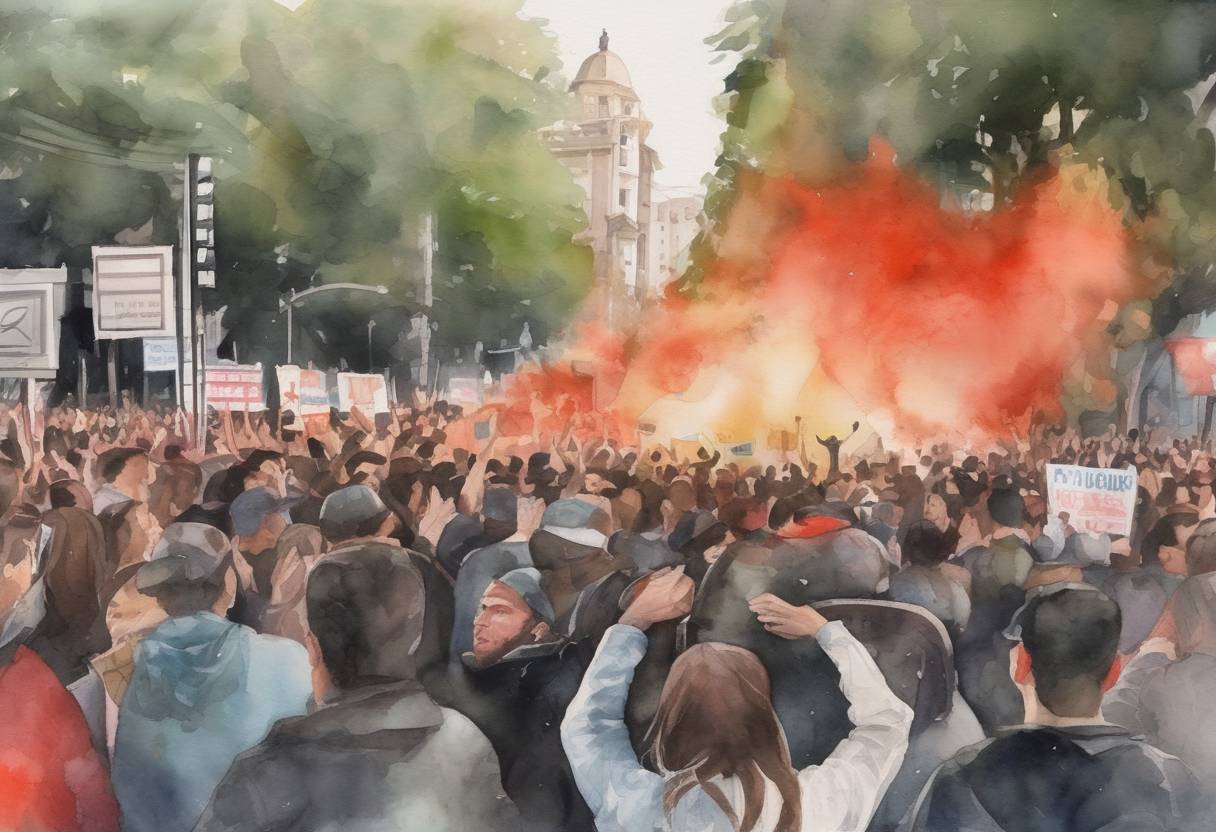
On October 20, 2019, Chile witnessed significant protests that erupted in response to a metro fare increase in Santiago, the nation’s capital. These demonstrations quickly evolved into a broader movement against social inequality and economic policies perceived as unjust by many Chileans. The events of this day were pivotal in highlighting the deep-seated frustrations within Chilean society.
Economic Context: Chile, often seen as one of Latin America’s most stable and prosperous nations, has long grappled with stark economic inequalities. Despite economic growth, many Chileans felt left behind, facing high costs of living, inadequate pensions, and expensive healthcare and education systems.
Metro Fare Increase: The immediate trigger for the protests was a modest increase in metro fares, from 800 to 830 Chilean pesos (approximately \(1.12 to \)1.16 USD). While seemingly minor, this increase was the tipping point for many citizens already struggling with the cost of living.
Initial Protests: The protests began with students organizing fare-dodging campaigns, jumping over turnstiles in metro stations as a form of civil disobedience. These actions quickly gained traction and spread across Santiago.
Escalation: As the protests grew, they expanded beyond the fare increase to address broader issues such as income inequality, privatization of basic services, and perceived government indifference. Demonstrations turned violent in some areas, with reports of vandalism, arson, and clashes with police.
Government Response: In response to the escalating unrest, President Sebastián Piñera declared a state of emergency on October 19, 2019, and deployed military forces to restore order. A curfew was imposed in Santiago and other cities.
Social Unrest: The protests marked one of the most significant periods of social unrest in Chile since the end of Augusto Pinochet’s dictatorship in 1990. They underscored the public’s demand for substantial reforms in areas such as pensions, wages, and public services.
Political Consequences: The government’s initial response, perceived as heavy-handed, further fueled public anger. President Piñera later announced a series of reforms aimed at addressing some of the protesters’ demands, including increased pensions and a higher minimum wage.
Constitutional Reform: One of the most significant outcomes of the protests was the decision to hold a national referendum on drafting a new constitution. This was seen as a crucial step towards addressing systemic inequalities and was approved by a large majority in October 2020.
The events of October 20, 2019, were a catalyst for change in Chile, highlighting the urgent need for addressing social and economic disparities. The protests not only reshaped the political landscape but also sparked a national conversation about the future direction of the country.
Source: www.reuters.com