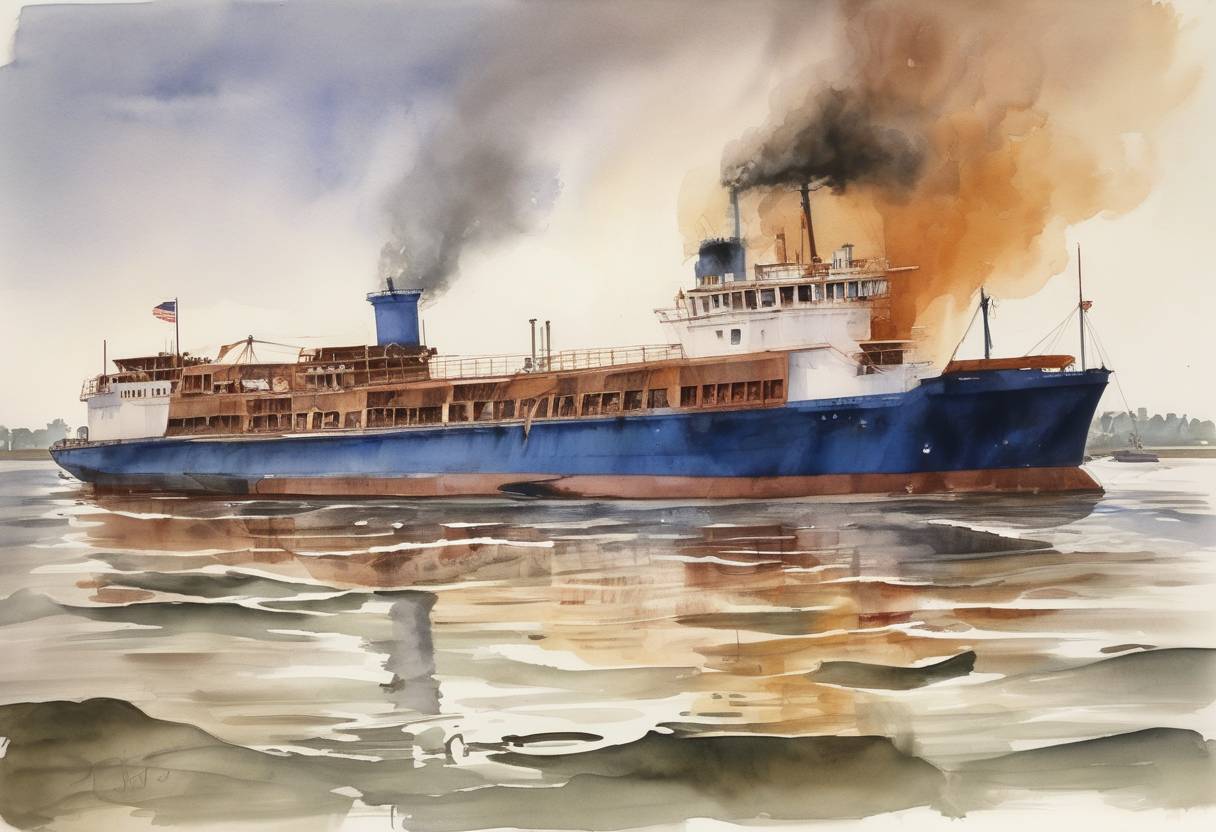
The MV George Prince Ferry Disaster
On October 20, 1976, one of the deadliest ferry disasters in United States history occurred when the MV George Prince was struck by a tanker on the Mississippi River near New Orleans, Louisiana. This tragic event resulted in the deaths of 78 people.
Background
The MV George Prince was a commuter ferry operated by the Louisiana Department of Highways, providing transportation across the Mississippi River between Destrehan and Luling, Louisiana. On the morning of the disaster, the ferry was carrying 94 passengers and crew members.
The Collision
At approximately 6:00 AM, the MV George Prince was crossing the river in dense fog when it was struck by the Norwegian tanker SS Frosta. The tanker, which was navigating upriver, collided with the ferry on its starboard side. The impact was catastrophic, causing the ferry to capsize almost immediately.
Contributing Factors
Several factors contributed to the disaster:
- Visibility: The dense fog on the river severely limited visibility, complicating navigation for both vessels.
- Communication: There was a lack of effective communication between the ferry and the tanker, which might have helped avoid the collision.
- Navigation Practices: Investigations revealed that the ferry’s pilot had not followed standard navigation practices, such as sounding the ferry’s horn to signal its position.
Aftermath
The collision resulted in the deaths of 78 people, including the ferry’s pilot. Only 16 passengers survived, many of whom were rescued by nearby vessels and emergency responders.
The disaster prompted extensive investigations by the U.S. Coast Guard and other agencies. The findings led to several safety reforms, including:
- Improved Communication Systems: Enhancements in communication protocols between vessels on the Mississippi River.
- Navigation Training: Increased emphasis on navigation training and adherence to safety procedures for ferry operators.
- Regulatory Changes: Implementation of stricter regulations governing ferry operations and safety standards.
Historical Significance
The MV George Prince disaster remains one of the deadliest ferry accidents in U.S. history. It highlighted the critical need for stringent safety measures in maritime operations and led to significant improvements in ferry safety protocols. The tragedy is remembered as a somber reminder of the potential dangers of river transportation and the importance of vigilance and communication in preventing such disasters.