The Siege of Vienna Lifted: October 25, 1529
1529 · Vienna, Austria
The Siege of Vienna was lifted, marking the end of the first attempt by the Ottoman Empire, led by Suleiman the Magnificent, to capture the city.
September 11, 1683
The Battle of Vienna took place, marking a turning point in the Ottoman Empire's expansion into Europe.
Vienna, Austria
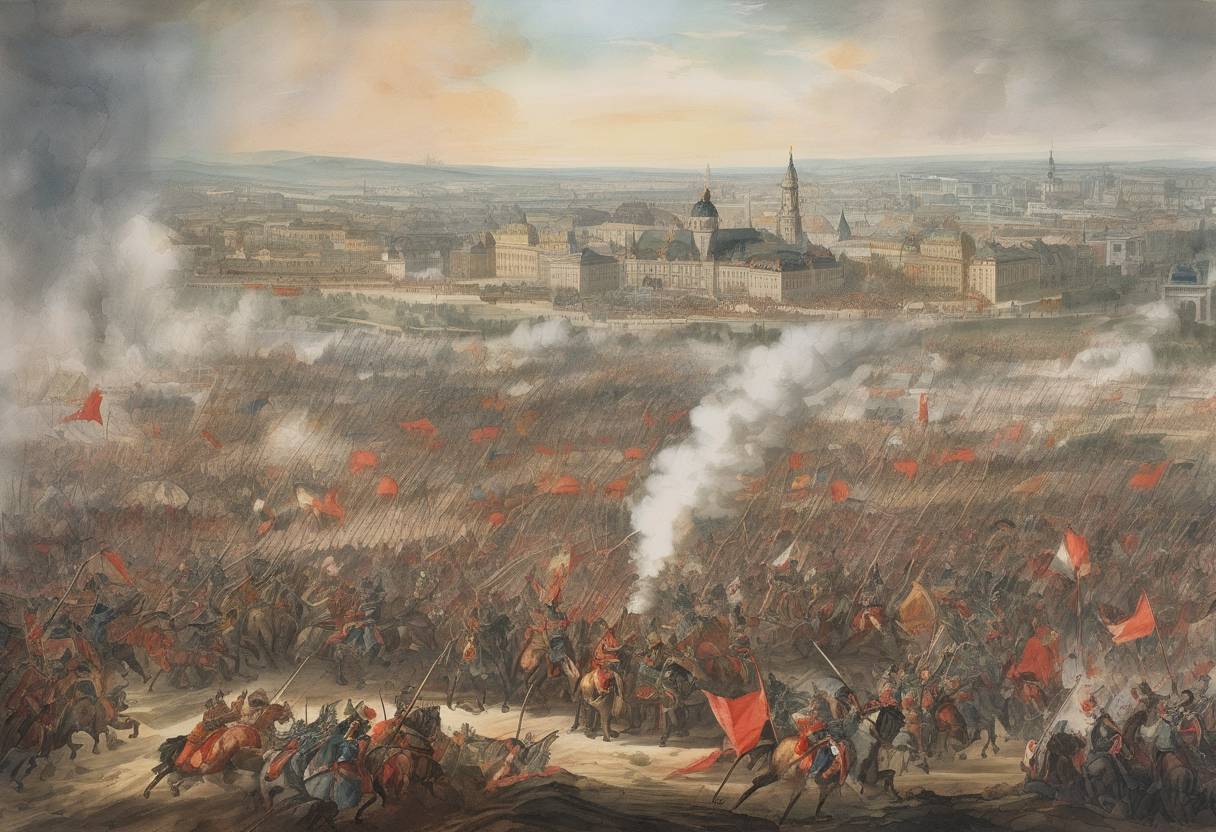
The Battle of Vienna, fought on September 11-12, 1683, was a pivotal moment in European history, marking a significant turning point in the Ottoman Empire’s expansion into Europe. This battle was the culmination of a two-month siege by the Ottoman forces and is often regarded as a critical event that halted the advance of the Ottoman Empire into Central Europe.
The Ottoman Empire, under the leadership of Sultan Mehmed IV, had been expanding its territories into Europe for centuries. By the late 17th century, the Ottomans had established a formidable presence in the Balkans and were eyeing further expansion into Central Europe. Vienna, the capital of the Habsburg Monarchy, was a strategic target due to its political and economic significance.
In 1683, the Ottoman Grand Vizier, Kara Mustafa Pasha, led an army estimated to be between 90,000 and 150,000 men to lay siege to Vienna. The city was defended by a much smaller force of approximately 15,000 soldiers under the command of Count Ernst Rüdiger von Starhemberg.
The siege began in July 1683, with the Ottomans employing extensive siege tactics, including mining and artillery bombardment, to breach the city’s defenses. The defenders, despite being outnumbered, held out for several weeks, awaiting reinforcements from the Holy League, a coalition of European powers formed to counter the Ottoman threat.
On September 12, 1683, a relief force arrived, led by King John III Sobieski of Poland. The coalition army, comprising Polish, Austrian, and German troops, numbered around 70,000 men. The decisive battle took place on the Kahlenberg Mountain, overlooking Vienna.
King Sobieski’s forces launched a surprise attack on the Ottoman camp, with the Polish Winged Hussars playing a crucial role in the charge that broke the Ottoman lines. The battle was intense but relatively short, with the coalition forces achieving a decisive victory by the end of the day.
The defeat at Vienna marked the beginning of the decline of the Ottoman Empire’s influence in Europe. The victory bolstered the morale of European states and led to a series of military campaigns known as the Great Turkish War, which further pushed back Ottoman territories in Europe.
The Battle of Vienna is often seen as a turning point in European history, symbolizing the end of Ottoman expansion and the rise of European powers. It also strengthened the alliance between the Habsburg Monarchy and Poland, setting the stage for future cooperation against common threats.
In summary, the Battle of Vienna was a crucial event that not only saved Vienna from Ottoman conquest but also shifted the balance of power in Europe, curbing Ottoman ambitions and paving the way for the rise of European states in the subsequent centuries.
Source: en.wikipedia.org