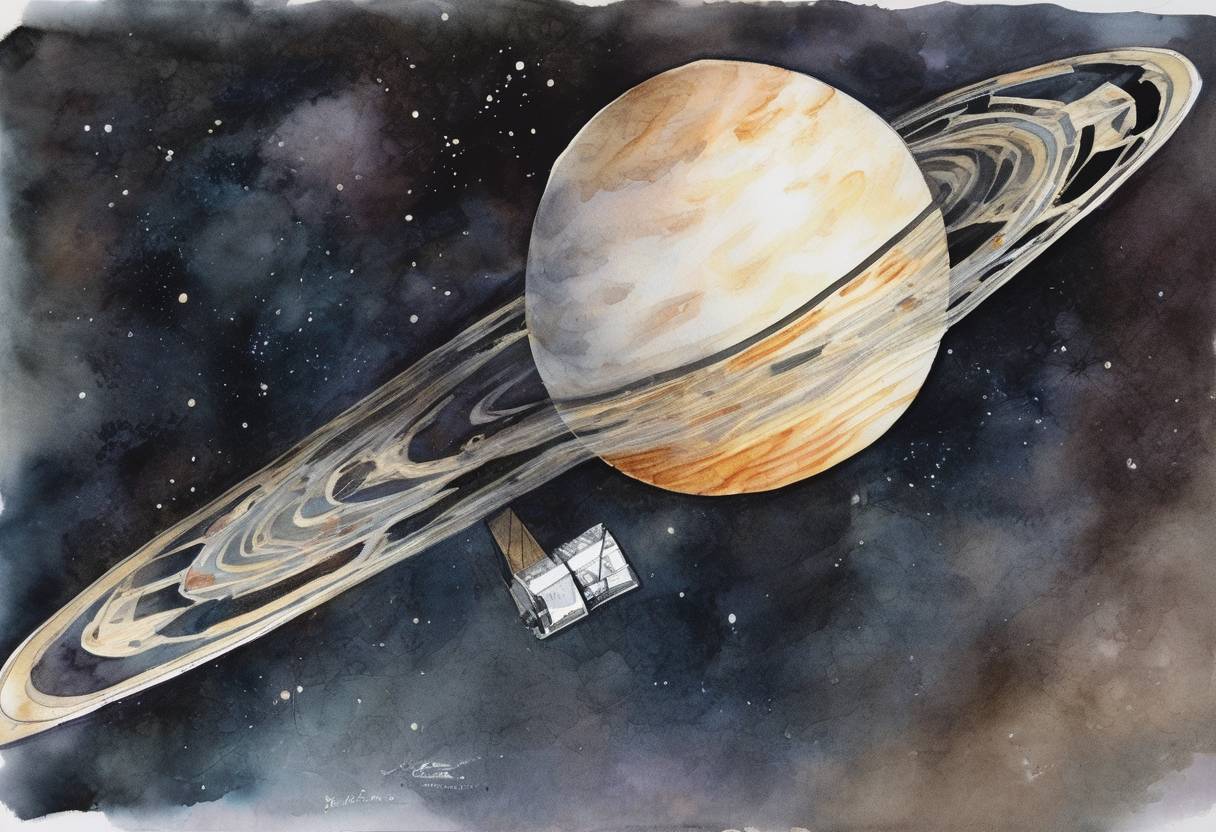
Pioneer 10: Crossing the Orbit of Pluto on April 25, 1983
On April 25, 1983, Pioneer 10, a trailblazing spacecraft launched by NASA, achieved a significant milestone by crossing the orbit of Pluto. This event marked Pioneer 10 as the first human-made object to leave the proximity of the major planets of the Solar System, venturing into the vast expanse of interstellar space.
Background and Launch
Pioneer 10 was launched on March 2, 1972, from Cape Canaveral, Florida. It was part of NASA’s Pioneer program, designed to explore the outer planets and the farthest reaches of our Solar System. The spacecraft was equipped with a suite of scientific instruments intended to study the environment of space beyond Mars, including the asteroid belt and the outer planets.
Journey Through the Solar System
Asteroid Belt
Pioneer 10 was the first spacecraft to successfully navigate through the asteroid belt, a region filled with rocky debris located between the orbits of Mars and Jupiter. This journey, completed in 1973, demonstrated that spacecraft could safely traverse this region, paving the way for future missions.
Jupiter Flyby
On December 3, 1973, Pioneer 10 made its closest approach to Jupiter, providing humanity with its first close-up images of the gas giant. The spacecraft’s instruments collected valuable data on Jupiter’s atmosphere, magnetic field, and moons, significantly enhancing our understanding of the largest planet in our Solar System.
Crossing Pluto’s Orbit
By April 25, 1983, Pioneer 10 had traveled approximately 3.8 billion miles (6.1 billion kilometers) from Earth, reaching the orbit of Pluto. At this point, it became the first spacecraft to move beyond the orbits of all the major planets, symbolizing humanity’s first step into the interstellar medium.
Significance and Legacy
Pioneer 10’s journey was a monumental achievement in space exploration. It provided critical data that informed subsequent missions to the outer planets, such as the Voyager and Galileo missions. Additionally, Pioneer 10 carried a gold plaque designed by Carl Sagan and Frank Drake, intended to communicate the existence of humanity to any potential extraterrestrial life forms.
The last weak signal from Pioneer 10 was received on January 23, 2003. By then, the spacecraft was over 12 billion kilometers from Earth. Although it no longer communicates with Earth, Pioneer 10 continues to travel outward, a silent emissary of human curiosity and exploration.
Pioneer 10’s crossing of Pluto’s orbit on April 25, 1983, remains a testament to human ingenuity and the desire to explore the unknown, marking a significant milestone in the history of space exploration.