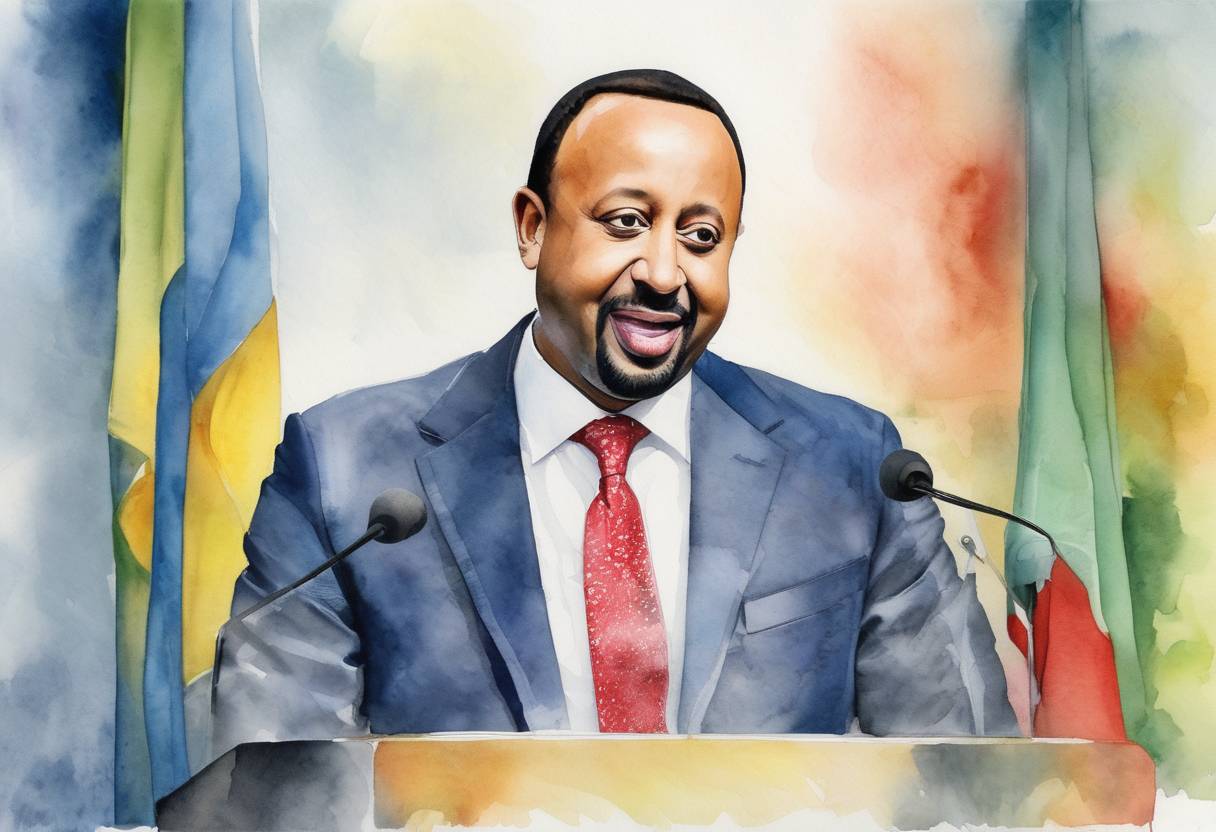
Nobel Peace Prize Awarded to Ethiopian Prime Minister Abiy Ahmed
On October 11, 2019, Ethiopian Prime Minister Abiy Ahmed was awarded the Nobel Peace Prize for his significant efforts in promoting peace and international cooperation, particularly for his decisive initiative to resolve the long-standing border conflict with neighboring Eritrea.
Background
The conflict between Ethiopia and Eritrea dates back to the Eritrean War of Independence, which lasted from 1961 until Eritrea gained independence in 1993. However, tensions remained high, leading to the Eritrean-Ethiopian War from 1998 to 2000, a brutal conflict that resulted in tens of thousands of casualties. Despite a peace agreement in 2000, known as the Algiers Agreement, the two countries remained in a state of “no war, no peace” for nearly two decades, with unresolved border disputes and hostilities.
Abiy Ahmed’s Initiative
Abiy Ahmed became Prime Minister of Ethiopia in April 2018. Almost immediately, he embarked on a series of reforms aimed at democratizing Ethiopia and fostering peace in the region. One of his most significant actions was reaching out to Eritrea to end the stalemate. In July 2018, Abiy and Eritrean President Isaias Afwerki signed a historic peace agreement, formally ending the state of war between the two nations. This agreement reopened borders, restored diplomatic relations, and resumed trade and communication between the countries.
Significance of the Nobel Peace Prize
The Nobel Committee awarded Abiy Ahmed the Peace Prize in recognition of his efforts to achieve peace and international cooperation. The committee highlighted his courage and leadership in taking the first steps toward reconciliation with Eritrea, which had a ripple effect in promoting stability and cooperation in the Horn of Africa. The award also acknowledged his broader reform agenda within Ethiopia, which included releasing political prisoners, lifting bans on political parties, and increasing freedom of the press.
Aftermath and Broader Impact
The peace agreement between Ethiopia and Eritrea was seen as a hopeful development for the region, potentially paving the way for increased economic collaboration and regional stability. However, the peace process faced challenges, including the slow implementation of some aspects of the agreement and internal political tensions within Ethiopia.
Abiy Ahmed’s Nobel Peace Prize highlighted the potential for transformative leadership in conflict resolution and underscored the importance of dialogue and cooperation in achieving lasting peace. His efforts have been viewed as a significant step toward a more peaceful and integrated Horn of Africa, although the complexities of regional politics continue to pose challenges.
In summary, the awarding of the Nobel Peace Prize to Abiy Ahmed on October 11, 2019, was a recognition of his bold initiatives to resolve a protracted conflict and his broader vision for peace and reform in Ethiopia and the surrounding region.