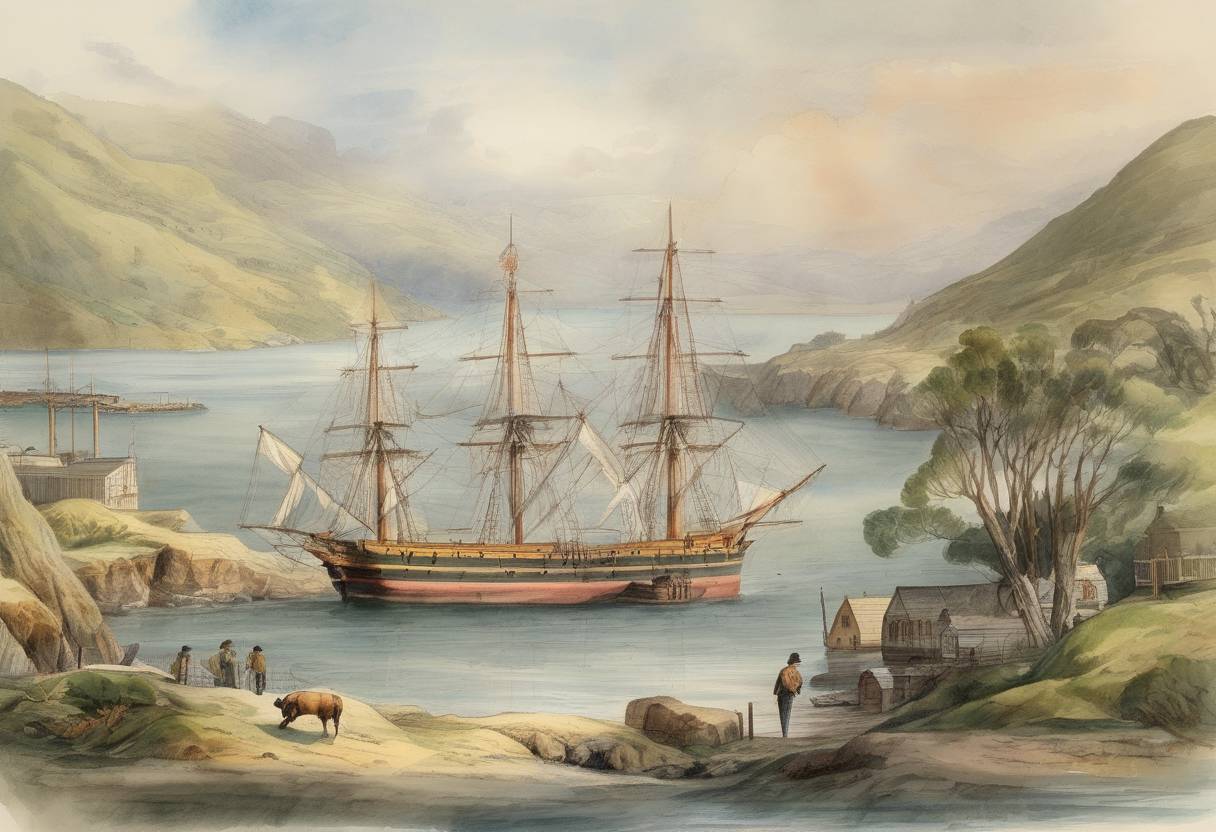
Arrival of the John Wickliffe at Port Chalmers
On March 23, 1848, the ship John Wickliffe arrived at Port Chalmers, marking a significant moment in the history of New Zealand as it heralded the beginning of European settlement in the Otago region. This event is a cornerstone in the establishment of Dunedin and the wider Otago province.
Background
The settlement was part of a planned colonization effort by the Free Church of Scotland, which aimed to create a new settlement in New Zealand that reflected their religious and cultural values. The New Zealand Company, responsible for much of the early European settlement in New Zealand, facilitated this endeavor. The settlement was intended to be a “New Edinburgh,” reflecting the Scottish heritage of its settlers.
The Voyage
- Ship Details: The John Wickliffe was a 662-ton barque, named after the English theologian John Wycliffe.
- Departure: The ship departed from Gravesend, England, on November 24, 1847.
- Passengers: It carried around 97 passengers, including settlers and officials who were to establish the new colony.
Arrival and Settlement
Upon its arrival at Port Chalmers, the settlers disembarked and began the arduous task of establishing a settlement. The site chosen for the settlement was at the head of Otago Harbour, which would later become the city of Dunedin.
- Initial Challenges: The settlers faced numerous challenges, including rugged terrain, isolation, and the need to establish infrastructure from scratch.
- Development: Despite these challenges, the settlement grew steadily. The settlers built homes, roads, and public buildings, laying the foundation for what would become a thriving community.
Significance
The arrival of the John Wickliffe is a pivotal moment in New Zealand’s history for several reasons:
- Cultural Impact: It marked the beginning of a significant Scottish influence in the region, which is still evident in Dunedin’s culture and architecture today.
- Economic Development: The settlement contributed to the economic development of the South Island, particularly through agriculture and later, the gold rushes of the 1860s.
- Population Growth: It was the start of a wave of European immigration that would significantly alter the demographic landscape of New Zealand.
Aftermath
Following the arrival of the John Wickliffe, another ship, the Philip Laing, arrived on April 15, 1848, bringing additional settlers. Together, these arrivals laid the groundwork for the establishment of Dunedin, which would become one of New Zealand’s major cities.
The settlement of Otago played a crucial role in the broader narrative of New Zealand’s colonization, contributing to the nation’s cultural diversity and economic development. The legacy of these early settlers is still celebrated in Otago today, with events and landmarks commemorating their contributions.